Two investors are working together with analyzing the stock data graphs in the paper and viewing the data on the laptop screen. istock photo for BL | Photo Credit: wutwhanfoto
Q4 Results Today, May 1, 2026, Live Updates: Find the latest Q4 updates of Jindal Steel, Punjab Chemicals, ZEN Technologies and more. Adani Enterprises, Adani Ports, HUL, Bajaj Finserv, Mazagon, Edelweiss and more in focus
For Q4 FY26, the company posted consolidated revenue of ₹10,738 crore, marking a 26 per cent year-on-year increase. EBITDA rose 20 per cent to ₹6,020 crore, while net profit grew 9 per cent to ₹3,308 crore, indicating resilient operational performance despite ongoing global trade uncertainties.
May 1, 2026 10:49
Quarterly results
Indiamart Intermesh Q4 results live: Net profit falls
Indiamart Intermesh Ltd, a B2B e-commerce company, on Thursday reported a 72.2 per cent decline in consolidated net profit to ₹50.2 crore for the March quarter.
Indiamart Intermesh Q4 net profit falls 72.2% to ₹50 cr
May 1, 2026 10:48
Quarterly results
Adani Enterprises Q4 results live: Strong revenue, infra momentum; depreciation drag leads to net loss
Adani Enterprises Ltd (AEL) ended Q4 FY26 with robust revenue growth and stable operating performance, driven by momentum in its incubating infrastructure businesses. However, higher depreciation from newly commissioned assets, including the Navi Mumbai airport and its copper plant, weighed on the bottom line, resulting in a reported net loss for the quarter.
Japanese tech giant Fujitsu has confirmed the demise of its mainframe business in the year 2035 and hinted it’s working on significant defense projects.
CEO Takahito Tokita confirmed the 2035 death date earlier this week when delivering a briefing on the company’s medium-term management plan and future directions. He used that moment to note that Fujitsu will turn 100 in 2035, share his view that the company will enjoy its most impactful years between now and its centenary, and suggest AI is the reason the company will remain relevant.
By 2035, he expects Fujitsu’s hardware engine will be either what he called “AI supercomputers” – powered by the “Monaka” CPUs it’s building with Broadcom and inferencing chips it’s working on with French concern Scaleway – or quantum computers. He said those machines will become mainstream workhorses in the same year as Fujitsu’s mainframes die,
The CEO said everything Fujitsu does in the future will involve AI, and the company will eat its own AI dogfood.
“We have built a globally standardized data platform,” Tokita said. “Starting this fiscal year, based on this data platform, we will accelerate the full-scale implementation of AI-driven management using our own AI. This will enhance both the speed and quality of decision-making and management judgments.”
Fujitsu will use its experience to make itself into a case study of clankers running companies.
The company will also persist with the “Uvance” brand under which it blends consultancy services and IT-as-a-service.
But the company will shift away from systems integration work and charging by the hour to what Tokita described as “an earnings structure based on value and outcomes.”
“We have long managed our business under a highly risky structure in which revenue was heavily concentrated in the fourth quarter,” the CEO told investors in a Q&A session. “We believe that achieving a more even distribution of revenue across quarters is extremely important for improving the quality of our management, although it is a gradual process,” he added. Customers are apparently on board with this plan, even though the CEO admitted “There is still plenty of room for further improvement in our pricing model, which outlines our approach for how we provide various technologies.”
More changes are in the works: “I would like to consider an approach in which we charge customers based on factors such as the workload of our personnel and the amount of data required to provide such technologies,” Tokita said.
Speaking of personnel, Tokita said Fujitsu Japan has stopped its annual graduate intake, and is instead now hiring people with specific skills it needs.
Asked about the importance of work for the defense sector, Tokita offered the following tantalizing response:
Fujitsu needs this plan to work, because full-year revenue fell 1.3 percent year-over-year to $22.3 billion, although profit popped 31 percent to $2.2 billion. ®
{“_id”:”69f434305b5c5cd9770b2e28″,”slug”:”rakhi-murder-case-throat-slit-with-knife-body-thrown-in-sack-2026-05-01″,”type”:”feature-story”,”status”:”publish”,”title_hn”:”Rakhi murder case: Throat slit with a knife, body thrown in a sack, lover was about to marry Vikrant for the third time girl”,”category”:{“title”:”City & states”,”title_hn”:”City & States”,”slug”:”city-and-states”}}
Samvad News Agency, Saharanpur
Published by: Akash Dubey
Updated Fri, 01 May 2026 10:41 AM IST
On April 27, Rakhi’s body was found in a sack in Rajbeh. Police found a sack and rope from the spot. It is suspected that the body was thrown after the murder. Rakhi and Vikrant were going to get married soon.
Rakhi murder case
– Photo: Amar Ujala
Expansion
Rakhi’s body was thrown in a sack on April 27 in Rajbeh near Nauganwa village in Mirzapur police station area. A plastic sack and rope were recovered from the spot, which sheds light on the manner in which the dead body was disposed of after the murder.
When the sun rises at dawn on Friday, hundreds of St Andrews University students will brave the chilly North Sea for the annual May Dip, an undergraduate ritual said to bring good luck in exams. But the students won’t be alone at the beach. In recent years this quirky ritual has become a target for agency and freelance photographers looking to cash in on images of students in bikinis, including some who camp out overnight on the East Sands dunes near the Fife coastal path.
“It ruined my night,” said Anna, one of the students whose photo appeared in a spread published by the Scotsman. “Now when I think about that May Dip, I think about that image, and that’s it.”
Like many of her classmates, Anna hadn’t thought twice about taking part in the dip at dawn. Hours later, she was in tears after discovering a photo of herself in swimwear published online without her consent. “I clicked on it and my heart sank,” she said. “I’m quite insecure about my appearance. I was thinking: how do I get rid of this? How do I make sure no one else sees this?”
She contacted the newspaper immediately to request the image be taken down but it had already gone to print for the following day’s edition. Anna’s photograph appeared alongside dozens of others, mostly of young women, published across national newspapers including the Daily Mail, the Scotsman and the Sun.
Groups of agency and freelance photographers have become increasingly known to stake out the event, waiting in the dark with long lenses until sunrise to capture images of students running into the sea. Although they claim to be documenting the university’s tradition, the images overwhelmingly focus on female students.
“It felt like it was just girls in bikinis getting pictures taken,” Anna said. “It wasn’t a picture of the whole beach – I was in focus, and everyone else wasn’t.”
While the university warns students in advance that they may be photographed, it has no power to prevent the press from attending the event, as the dip takes place on a public beach where photography is unrestricted.
Olivia, another student whose image was published, said she spotted a man with a camera camping out on the beach the night before. “He was putting out a one-man tent, hiding in the dunes and camping there from 9pm. It just seems really wrong.” She added: “They know what they’re doing, they know exactly who they’re picking out.”
A spokesperson for the university said: “There are, and always have been, sections of the media that seek to sexualise and objectify for commercial gain the young women who attend this event. Every year ahead of May Dip, the proctor emails students with guidance to keep them safe, including a reminder that press photographers often attend the event and any images taken can go round the world.
“We abhor this practice, and it is why we have included a specific caution in communications to our students prior to the Dip. It is, however, a symptom of a much wider societal malaise which continues to enable the objectification of women, despite the clear evidence of the harm this causes.”
Reader comments beneath the photos online are often overtly objectifying. Olivia said she was disgusted by what she saw under the post she appeared in. One comment on the Daily Mail’s post read: “The 4 in the first picture are fire. Most blokes would pile in.” Another user wrote: “No hippos or tattoos, what a nice change that makes.”
Anna said: “To have comments on your body just feels really repulsive. We’re just girls on the beach in our swimsuits.”
More than 60% of adults in the UK report negative feelings about their body image. For the students as young as 18, having photos published online without their consent can be upsetting and harmful to their mental health.
Alex Chun, the president of wellbeing and community in the St Andrews students’ association, said: “I understand the fear of not being able to take something off the internet. You might not even notice that your photo is being taken. To see that later and have that immortalised by the press is anxiety-inducing.”
Anna said: “It’s quite a vulnerable position to be in. It made me feel uncomfortable. I didn’t even look at it much because I don’t want to zoom in and pick it apart.”
The Scotsman, the Sun and the Daily Mail were contacted for comment.
Access Denied
You don’t have permission to access “http://hindi.news18.com/cricket/ipl-2026-gt-vs-rcb-shubman-gill-9-word-insta-post-goes-viral-after-virat-kohli-enthusiastic-celebration-10425308.html” on this server.
The United Nations has warned Denmark that the treatment of a Greenlandic mother whose newborn child was removed by Danish authorities as a result of controversial parenting competency tests “may amount to ethnic discrimination”.
Keira Alexandra Kronvold’s daughter, Zammi, was taken away from her when she was two hours old and placed in foster care in November 2024 after Kronvold was subjected to so-called FKU (parental competence) psychometric tests. At the time, she was told that the test was to see if she was “civilised enough”.
On Friday, Kronvold, whose case prompted widespread outrage and contributed to Denmark’s subsequent decision to ban the use of such tests, will go to the Danish high court in the latest attempt to win back custody of her child.
She is understood to be one of dozens of Inuit women living in Denmark who remain separated from their children after undergoing the discredited tests.
In a move that will raise pressure on Copenhagen, it has now emerged that Reem Alsalem, the UN special rapporteur on violence against women and girls, has written to the government asking it to answer questions about the treatment of Kronvold and other families with a Greenlandic background.
Alsalem, who wrote the letter along with the UN special rapporteur on the rights of Indigenous peoples and the special rapporteur on contemporary forms of racism, said on Thursday she and her colleagues had reason to believe that “that violations of human rights have occurred”.
Denmark ruled Greenland as a colony until 1953 and, despite the Arctic island’s largely autonomous status now, people of Greenlandic origin in Denmark say they are still subject to systemic discrimination.
The FKU tests, which campaigners had criticised for years as culturally unsuitable for Greenlandic people and other minorities, were seen as a particularly striking example of this before they were abruptly ditched by the Danish government last May.
In the letter, sent late last month, the UN officials say they expressed concern over the “disproportionate impact of FKU assessment on Greenlandic parents, which may amount to ethnic discrimination”.
Zammi was removed from her mothr, Keira Alexandra Kronvold, just two hours after she was born in November 2024. Photograph: Juliette Pavy/The Guardian
Alsalem added: “While we welcome the decision that such tests should not be used for Greenlandic parents in the future, those that have been subjected to decisions using the FKU assessment should have access to justice and remedies.”
A year after the law was changed, Kronvold remains separated from her daughter, who is now nearly 18months old and living with a Danish family. She is only allowed to spend short periods of time with her daughter under supervision.
The UN officials said the decision to remove Kronvold’s children from her without consent “may be discriminatory and disproportionate”, citing the “apparent disrespect to her decisions regarding procreation and contraception choices over the years and which clearly has caused her enormous psychological suffering”.
Alsalem said: “In this respect, we recalled the fact that Indigenous women and girls are often subjected to multifaceted and complex spectrum of mutually reinforcing human rights violations, including in the context of sexual and reproductive health services and childbirth.
“Such intersecting forms of discrimination and violence experienced by Indigenous women and girls also disrupts their spiritual and cultural lives and impacts the very essence of their family units and social fabric of their communities and nations.”
Alsalem said she would be following the outcome of Kronvold’s court case and how the Danish authorities responded before deciding on further action.
“In the interim, I hope that the authorities give due attention to the concerns we have raised, particularly in relation to Denmark’s binding human rights obligations,” she added.
Kronvold hopes her legal case and the intervention of the UN will bring change for her and other mothers. Photograph: Juliette Pavy/The Guardian
For Kronvold, the consequences of her separation from Zammi have been devastating.
“I am not allowed to be connected with my daughter as I should as a mother. She has to make a connection to the foster parents and it hurt me so much that she called them Mum and Dad,” she said.
Kronvold hopes her case and the intervention of the UN will lead to change for herself and for other Greenlandic people who have been separated from their children by Danish authorities. FKU tests, she said, should be “erased”, and the law changed to better protect Inuit people.
Kronvold’s lawyer, Jeanette Gjørret, from Stage law firm, who specialises in children’s rights, said the high court case was symbolic and could help other Greenlandic parents.
“There are many parents who are in the same situation, so we want the high court to look at the case and see: was it [the use of the tests] right or wrong?” said Gjørret.
In response to a request for comment, the Danish social affairs ministry confirmed the UN letter had been received but added: “Denmark is currently without a government and cannot respond to the inquiry at the present time.”
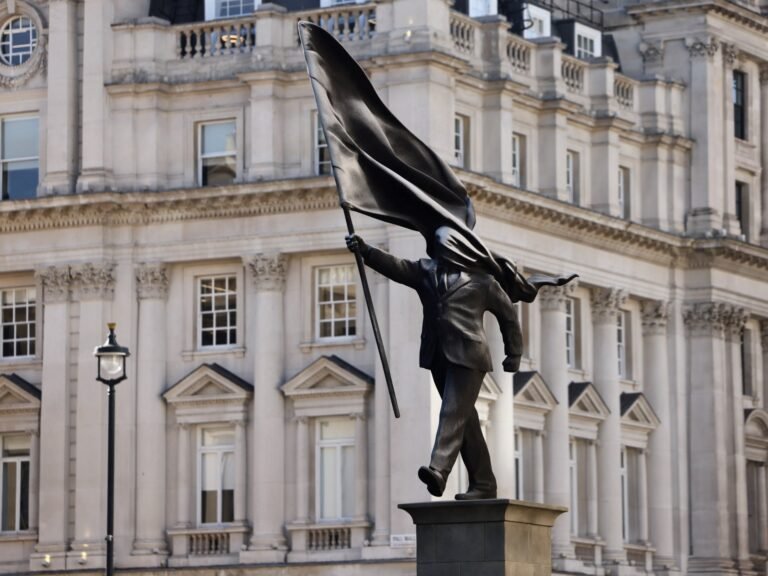
Banksy has unveiled a new sculpture of a man stepping off a stone base with his face obscured by a flag. The overnight installation in Waterloo Place, London, was revealed in a video shared by the artist, and has drawn fans of his politically charged works.
The Iran war could have “dramatic consequences”, causing food shortages and price rises in some of Africa’s poorest and most vulnerable communities, the head of the world’s largest fertiliser company has said.
Svein Tore Holsether, the chief executive of Yara International, said world leaders needed to guard against soaring prices and shortages of fertiliser causing a de facto global auction that would leave the poorest countries, particularly in Africa, scrambling for supplies they could ill afford.
“The most important thing we can do now is raise the alarm on what we are seeing right now – that there is a risk of a global auction on fertiliser that means it becomes unaffordable for those most vulnerable,” he said.
“Africa is actually quite well positioned to be a major food producer, not only for self-sufficiency, but even for exports to the rest of the world, but the reality is that they are massive food importers.
“But we need to be aware in this part of the world of the potential consequences that if we get to a global auction on food, there will not be a famine in Europe – but we need to be aware of who we are taking the food away from.”
Yara International is a Norwegian multinational with plants in 60 countries and sales in 140.
Holsether stopped short of predicting actual food shortages in parts of Africa but said he was in London to draw attention of world leaders to the possibility of things spiralling before action was taken.
“It is important to communicate the message about the danger of what potentially could happen before it is too late,” he said.
The financial intelligence company S&P Global said the impact of the war was already deepening into supply chains.
Chris Rogers, the head of supply chain research at S&P Global Market Intelligence, said: “Food supply chains face both direct and indirect challenges from fuel and fertiliser restrictions.
“The variability in Africa’s dependence on Middle East nitrogenous fertilisers is high, with Ethiopia and Kenya heavily exposed in sub-Saharan Africa.”
With 35% of the world’s supply of urea, a key ingredient in fertiliser coming from Gulf states, Yara has already seen supplies choked and the price of urea up by between “60% and 70% since the US and Israel launched their war on Iran at the end of February”.
The increase in price “has some rather dramatic consequences for those that cannot afford them”, Holsether said.
Then there is the issue of squeezed reserves and production.
“At some point you run out of inventory space,” said Holsether. “And there’s a limit to how much you can store within the production plants.”
In a double whammy, supplies of ammonia, a foundational raw material for nitrogen-based fertilisers, have also been torpedoed by the war.
Ammonia is a toxic substance that can cause serious respiratory tract damage and keeping inventories in war is so risky, some countries like Qatar have suspended production entirely.
“We are losing production every day. It will take weeks or months to restart,” said Holsether in relation to the general fertiliser production.
Fertilisers used for the sowing season, which is starting soon in sub-Saharan Africa, is one challenge for local farmers but then they face the issue of building stockpiles this summer for 2027’s crops, a routine practice in farm planning.
The EU was already taking action to help farmers, but the same support must be given in sub-Saharan Africa, Holsether said. “We need to treat farming like a business.”
Only this week the EU announced it was loosening state subsidy rules for industries along with grant aid of up to €50,000 (£43,200) for individual farmers for the extra cost of fuel or fertiliser caused by the Iran war. But in Africa those supports do not exist. They are also started from a point of compromised soil health and lack of food reserves.
“In Europe soil conditions and farming are quite optimised already, so farmers are able to reduce fertiliser consumption somewhat without dramatic consequences on the yield,” Holsether said.
“But that’s not the same in other parts of the world. You are under-fertilising to begin with. Africa, that’s where I’m most worried right now. Yet again, we are in a situation where the most vulnerable will pay the highest price.”
Access Denied
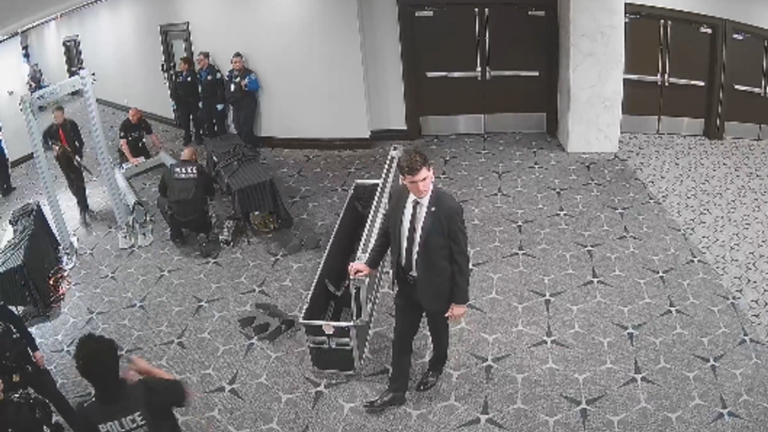
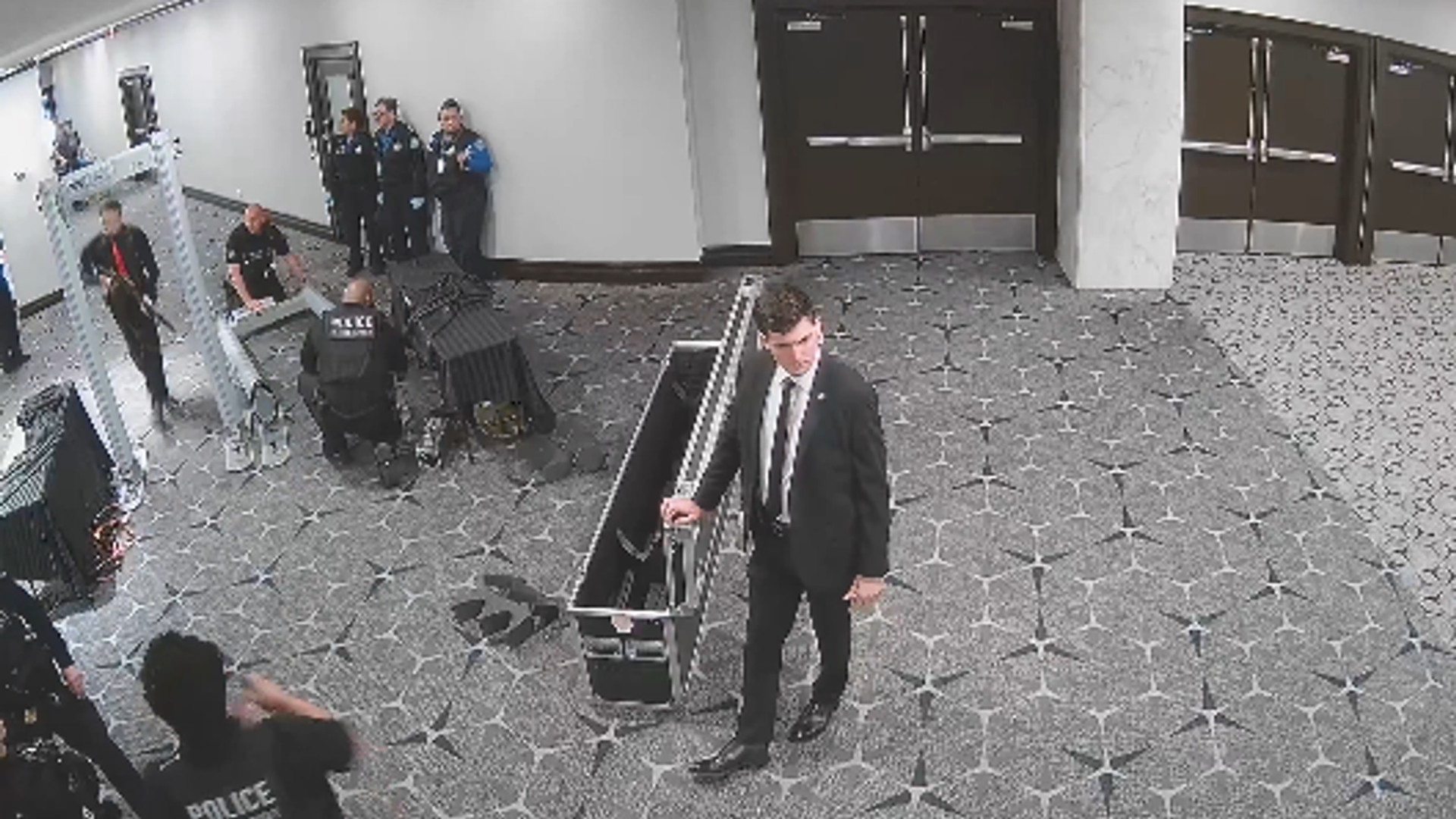
You don’t have permission to access “http://news.sky.com/story/new-footage-shows-alleged-would-be-trump-assassin-storming-security-checkpoint-13538727” on this server.
A Syrian rights commission is preparing a case accusing Fadi Saqr, a militia leader within the Assad regime, of involvement in crimes against humanity and war crimes, a senior Syrian official has told the Guardian.
Saqr is a former commander of the National Defence Forces (NDF) militia and is widely accused of involvement in the mass killing and forcible disappearance of civilians in the Tadamon neighbourhood of Damascus, as well as other parts of the Syrian capital.
After Bashar al-Assad, the former Syrian president, was ousted in December 2024, Syria’s new government collaborated with Saqr on security files, causing anger among victims who had sought accountability for his alleged crimes.
Zahra al-Barazi, the deputy chair of the National Commission for Transitional Justice and an adviser in Syria’s foreign ministry, said the commission was working with victims to build a case against Saqr. Although the commission was appointed by the Syrian government, it is an independent body that will refer its findings to the Syrian judiciary, which in turn will decide whether or not to pursue the case.
Judicial proceedings against the former militia chief would be an important milestone for Syria, which has grappled with how to establish transitional justice after more than a decade of war left hundreds of thousands dead and pitted towns and neighbourhoods against each other. Experts have said a proper transitional justice process could help to stem intercommunal violence in the country, which has seen sectarian massacres and sporadic killings since the fall of Assad.
Al-Barazi said: “There is absolutely enough evidence against Saqr. We are also working with organisations who have documented a lot of these things. He was useful for certain reasons and he’s no longer useful. No one is above the law.”
Last week Syrian authorities arrested Amjad Youssef, a main perpetrator in the Tadamon massacres.
Crowds gathered on the streets after Youssef’s detention. Photograph: Khalil Ashawi/Reuters
Videos found on the laptop of the former intelligence officer that were leaked out of the country documented the killing of nearly 300 civilians by regime forces in Tadamon in 2013. The Guardian in 2022 published a selection of the footage, which showed Youssef ordering blindfolded civilians to run forward while he shot at them, pushing them into a pit, executing them and burning their corpses.
Youssef after his arrest last week. Photograph: Interior Ministry Handout/EPA
While Youssef has become notorious because of the videos, Tadamon residents have long insisted there were many more perpetrators, including members of the NDF led by Saqr. During the celebrations of Youssef’s arrest on Friday, they called for Saqr to be detained.
Ahmed al-Homsi, 33, an activist with the Tadamon Coordination Committee, a network that documented the massacres, said: “Amjad was just a foot soldier compared to Fadi Saqr. In Tadamon, nothing happened without orders from Fadi Saqr, whether it was the robberies, the arrests, the disappearances or the killings. He was in control, he knew about it all.”
Saqr has denied responsibility for the massacres. He told the Guardian he “only learned of the massacre through the media” and said he “trusted the judicial process”.
“Anyone proven to have committed crimes against humanity must be punished,” he said. “My silence regarding the campaigns against me stems from my desire not to influence the course of the investigations.”
Saqr said he became the NDF commander in Damascus in June 2013 – two months after the public footage of Youssef’s executions of civilians by the pit was recorded. However, the Guardian has reviewed unpublished videos of additional killings carried out by Youssef and NDF personnel that includes footage shot in October 2013, four months into Saqr’s tenure.
Prof Uğur Ümit Üngör, one of the Amsterdam-based academics who obtained the videos and leaked excerpts to the Guardian, said: “What is now often described as the Tadamon massacre was not a single event, but a process of mass killing carried out throughout 2013 and in the years that followed. The NDF participated in these atrocities and Saqr, whatever his personal involvement, was part of the chain of command.”
A site commemorating the victims of the Tadamon massacre. Photograph: Mohammed Alrifai/EPA
Tadamon residents and other Syrians have long expressed their outrage at the new government’s collaboration with Saqr. Maher Rahima, a 31-year-old man who lived through the atrocities, said: “If the officials of the new government had seen what I saw in Tadamon and heard the sounds of torture and smelled the burning of bodies, they would be ashamed to look at themselves in the mirror after protecting Fadi Saqr and other criminals.”
The government has justified working with figures like Saqr by saying it is attempting to balance the need for justice with pragmatic considerations of ensuring Syria’s stability in its transitional period. Saqr has helped the government to liaise with remnants of the Assad regime who have mounted a low-level insurgency since the fall of the former Syrian president.
Al-Barazi said plans to build a case against Saqr had been in place for a few months, during which time the political cost of keeping the former militia leader onboard increased.
“I think there’s a real acknowledgment that whatever gains from him, balanced against the tension it was creating with the public, is not worth it,” she said, adding that Youssef’s arrest had “helped to push this to the forefront”.
Al-Barazi visited residents of Tadamon on Tuesday, inviting them to join forces in building a case against Saqr and explaining how the commission would ensure witness protection. “We said that we would help them come together with a case to put forward to the prosecution against Fadi Saqr,” she said. “That would mean there would be a request to arrest him.”
It is ultimately up to the Syrian judiciary, not the commission, to issue such an arrest warrant, but al-Barazi said she had “heard of no resistance” to the plans to mount a case.
In Tadamon, the prospect of Saqr facing justice has given new hope to people who saw their neighbourhood turned into a killing field and feel little has been achieved in terms of accountability. Al-Homsi said: “Fadi Saqr’s arrest would be way bigger than that of Amjad Youssef. It would be like a second liberation day.”