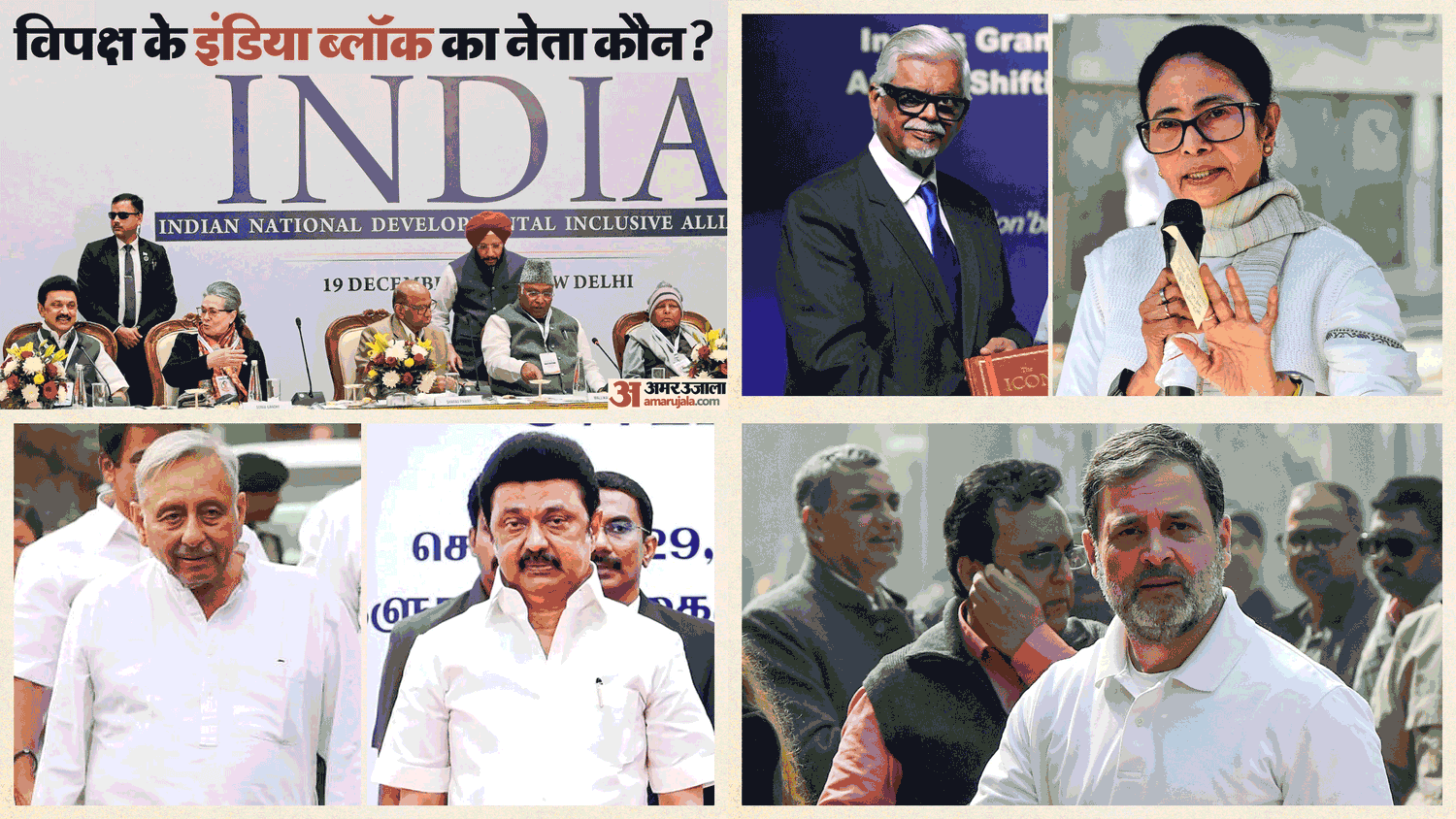
Opposition Politics: Does the opposition have a leadership crisis? Many sharp questions in Saamna’s article; Rahul-CM Mamata mentioned – Opposition Under Scanner India Bloc Leadership Saamana Questions Rahul Gandhi CM Mamata And Stalin Know Detail

0

Shiv Sena, the main opposition party in Maharashtra Uddhav Balasaheb Thackeray (UBT) on Wednesday claimed that the India Bloc now stands at a crossroads, and it will have to move beyond the internal debate and decide whether Mamata Banerjee, M.K. Whether Stalin or any other person would lead them in a national crisis or not. Internal infighting and leadership debates within the bloc and the Congress party threaten to undermine unity ahead of crucial regional elections.


Also read – Rajya Sabha Election: Elections announced for 37 Rajya Sabha seats in 10 states, know when it will be held

What was said in the editorial of Saamana?
The editorial said that
  • Mutual differences and internal fighting are increasing within the alliance.
  • This situation may weaken the unity of the opposition before the upcoming state elections.
  • This was described as ‘friendly fire’ i.e. a confrontation between one’s own comrades.

Where is the situation of mutual conflict?
According to the editorial, alliance parties in different states are seen contesting elections against each other. In this, Trinamool and Congress are face to face in West Bengal, while in Kerala there is competition between Left and Congress. With this, BJP has benefited from division at the local level in Maharashtra. Shiv Sena UBT says that the uproar in Parliament is different, but the thinking of the people in the country is changing. The opposition India alliance will soon have to decide who will lead them – Mamata, Stalin or a third leader?

Different opinions on leadership
Many leaders within the opposition India alliance have put forward different names. Former Union Minister Mani Shankar Aiyar has supported Tamil Nadu CM MK Stalin. Sanjay Baru, who was the secretary of former Prime Minister Manmohan Singh, has described West Bengal CM Mamata Banerjee as a better national leader. They say that to strengthen the alliance, it is necessary to decide on a face soon.

Also read – Maharashtra Muslim Quota Row: Big announcement by CM Fadnavis, now 5% quota will not be available in jobs and studies; The order came late at night

Congress’s challenge and allegations against BJP
The editorial said that internal differences are visible in Congress too, their senior leaders are giving different opinions, this is affecting the unity of the party, however, Rahul Gandhi’s fighting spirit was also praised. The editorial also said that the government was exploiting religious sentiments. This is affecting public thinking and the opposition needs strong leadership to respond to this.

other videos

Russia: India did not stop buying Russian oil, Russia responded to America’s claim; Emphasis on peace and energy – Russia Confirms No Change In India Stance On Russian Oil Amid Us Claims

0

Russia’s Foreign Ministry clarified on Wednesday that there has been no change in India’s stance on buying Russian oil. The ministry said the purchase of Russian hydrocarbons by India is beneficial for both countries and maintains stability in the global energy market.


“We have no reason to believe that India has changed its policy on purchases of Russian hydrocarbons,” Foreign Ministry spokeswoman Maria Zakharova said at her weekly briefing. This step is beneficial for both countries and keeps the international energy market stable.

Rejected the claims of American officials
Zakharova also rejected claims raised by US President Donald Trump and Foreign Minister Marco Rubio. He said America is trying to stop independent countries from taking decisions as per their own. This includes tariffs, sanctions, and other pressures. Last week, Rubio had claimed that India had pledged to stop buying Russian oil. Whereas India has not yet confirmed or denied this claim. Even before this, Russia had accused America of pressurizing India and other countries to stop buying Russian oil.

Recently, after the phone conversation between Prime Minister Narendra Modi and US President Trump, both the countries announced to reduce the US tariff on India from 50 percent to 18 percent. In this, 25 percent duty imposed on India’s purchase of Russian oil in August 2025 was also removed.

European countries also criticized
Zakharova also criticized European countries, whom she said did not want a peace solution. Energy cooperation between Russia and India has long been strong and both countries consider it important for global energy security and economic stability.

China’s dancing robots: how worried should we be? | China

0

Dancing humanoid robots took centre stage on Monday during the annual China Media Group’s Spring Festival Gala, China’s most-watched official television broadcast. They lunged and backflipped (landing on their knees), they spun around and jumped. Not one fell over.

The display was impressive, but prompted some to wonder: if robots can now dance and perform martial arts, what else can they do?

Experts have mixed opinions, with some saying the robots had limitations and that the display should be viewed through a lens of state propaganda.

Developed by several Chinese robotics firms, the robots performed a range of intricate stunts, including kung fu, comedy sketches and choreographed dance moves alongside human performers.

Clips circulating online quickly drew comparisons with last year’s lunar new year broadcast, which also featured dancing robots but with noticeably simpler movements.

The performance showed China’s push to develop more advanced robots powered by improved AI capabilities. Photograph: CCTV Video News Agency/Youtube

Kyle Chan, an expert in China’s technology development at Brookings Institution, a policy organisation in Washington DC, said Beijing uses these public robot performances to “dazzle domestic and international audiences with China’s technological prowess”.

“Unlike AI models or industrial equipment, humanoid robots are highly visible examples of China’s technological leadership that general audiences can see on their phones or televisions,” he said.

Pointing to intensifying competition in the tech space between China and the US, Chan added: “While China and the US are neck-and-neck on AI, humanoid robots are an area where China can claim to be ahead of the US, particularly in terms of scaling up production.”

Georg Stieler, the head of robotics and automation at the global technology consulting firm Stieler Technology and Marketing, also emphasised the symbolism of China’s prime time broadcast.

“What distinguishes the gala from comparable events elsewhere is the directness of the pipeline from industrial policy to prime-time spectacle,” Stieler said in a statement.

Comparing this year’s performances with last year’s – when viewers saw “fundamentally a single choreographic mode” with limited motions including walking, twisting and kicking – Stieler said one key signal of China’s robot progress is “the ability to run large numbers of near-identical humanoids in synchronised motion with stable gaits and consistent joint behaviour”.

But Stieler also noted: “Stage performance does not equate to industrial robustness, yet.” He said what the robots did was the result of being trained for a routine “hundreds or thousands of times – you could not just tell them to change direction or do something completely different”.

“These dance motions involve very little environmental perception and are essentially imitation learning plus a balance-keeping controller. That has little bearing on reliability in unstructured environments, a prerequisite for factory-grade deployment. Also the progress in dexterity is not as fast as in locomotion,” he added.

The unveiling of China’s latest generation of robots underscores the country’s broader technological ambitions.

By the end of 2024, China had registered 451,700 smart robotics companies, with a total capital of 6.44tn yuan (approximately $932.16bn), according to state data. Major government projects such as Made in China 2025 and the 14th Five-Year Plan, have made robotics and AI key Beijing priorities.

Morgan Stanley projects that China’s humanoid sales will more than double to 28,000 units in 2026; and Elon Musk has said he expects his biggest competitor to be Chinese companies as he pivots Tesla toward a focus on embodied AI and its flagship humanoid Optimus. “People outside China underestimate China, but China is an ass-kicker next level,” Musk said last month.

Marina Zhang, a technology professor at the University of Technology Sydney, said that such a visible showcase likely hints at a new phase in China’s manufacturing masterplan, “where robotics becomes a linchpin in the shift from low-cost assembly to high-end, smart manufacturing”.

With Reuters


Source link

Ind Vs Ned: India registered its 12th consecutive win in the T20 World Cup; Fielding weakness exposed again; Shivam Dubey shines – Ind Vs Ned T20 World Cup Match Analysis Innings Key Highlights India Vs Netherlands Scorecard News In Hindi

0

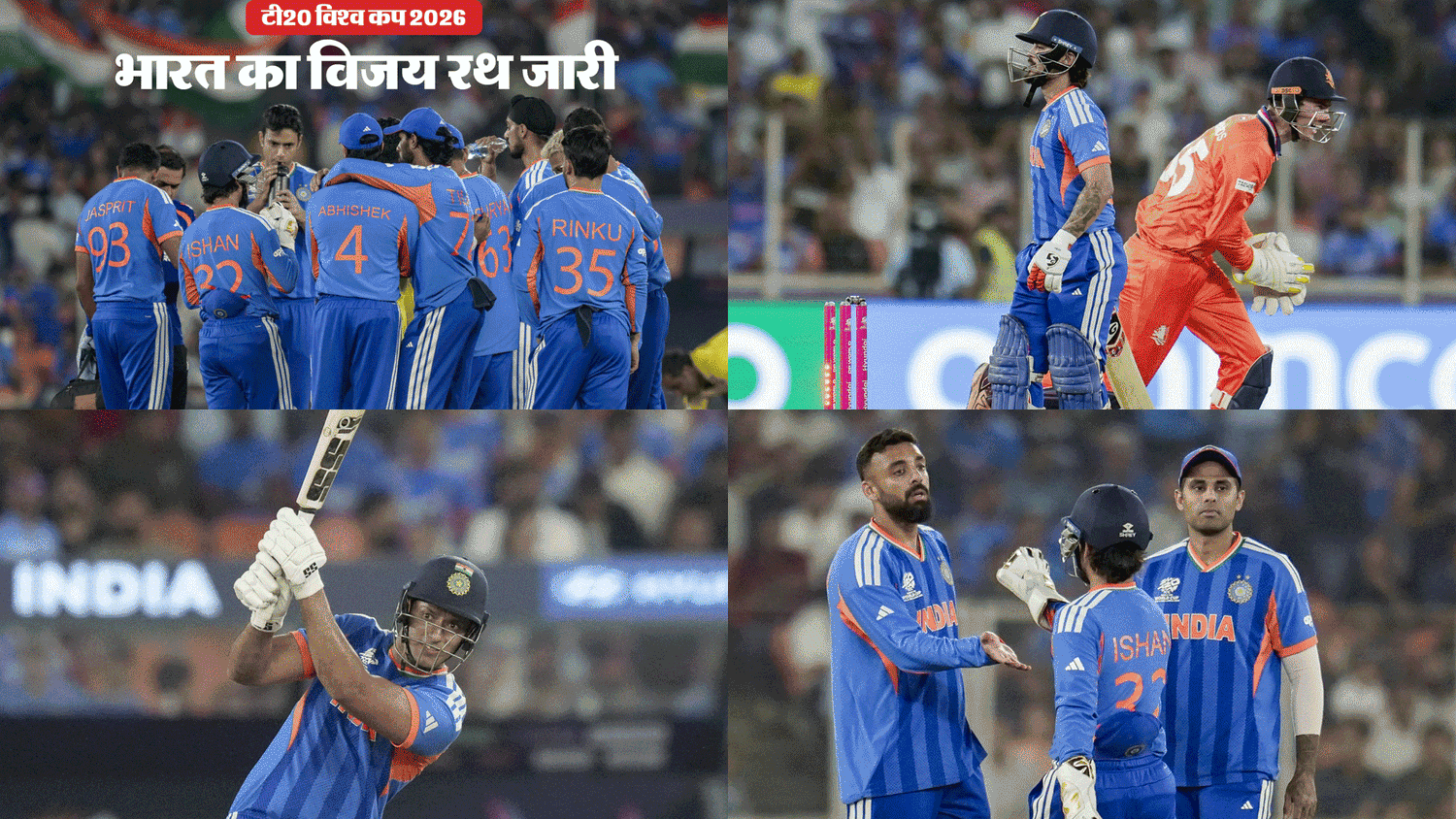
After the brilliant batting of Shivam Dubey, India defeated Netherlands by 17 runs on the strength of Varun Chakraborty’s bowling. The defending champion Indian team thus ended the group stage unbeaten. Batting first, India scored 193 runs for six wickets in 20 overs. In reply, Netherlands team could score only 176 runs for seven wickets in the stipulated overs. India registered its 12th consecutive win in the T20 World Cup. India has remained invincible in the tournament since 2024.


India topped Group A
India and Pakistan have qualified for the next round from Group A. India won all four of its matches, while Pakistan managed to take six points with three wins and one loss from four. At the same time, the journey of America, Netherlands and Namibia stopped in the initial phase itself. Namibia lost all four of its matches. The Indian team topped the group.

India dropped many catches
Even though the Indian team was successful in winning the match, its fielding was once again poor. Captain Suryakumar Yadav and Tilak Verma dropped catches for India in the match against Netherlands. Not only this, the team’s performance in batting was also not special and once again the batsmen were seen struggling. Shivam Dubey, however, batted brilliantly due to which the team could set a challenging target.

Veiled sister-in-law wreaked havoc on the stage on the song ‘Kamsin Jawaani’, children kept watching, then…

0

homeVideostrange-wonderful

Veiled sister-in-law wreaked havoc on the stage on the song ‘Kamsin Jawaani’, children kept watching, then…

X
title=

Veiled sister-in-law wreaked havoc on the stage on the song ‘Kamsin Jawaani’, children kept watching, then…

arw img

Recently, a video of a sister-in-law’s dance is becoming increasingly viral. In this video, she is seen dancing on the song ‘Tauba Re Tauba Meri Kamsin Jawani’. When this woman in a yellow saree with a veil starts wreaking havoc on the stage with her dance, the small children present there just keep staring at her. However, then a child also starts dancing with sister-in-law. The woman’s name is Chandni Chahar, who has shared this video on her Instagram account @mrs_chahar_shahab. Chandni’s dance video in yellow saree is creating a sensation on the internet.

To add News18 as your favorite news source on Google click here Do it.

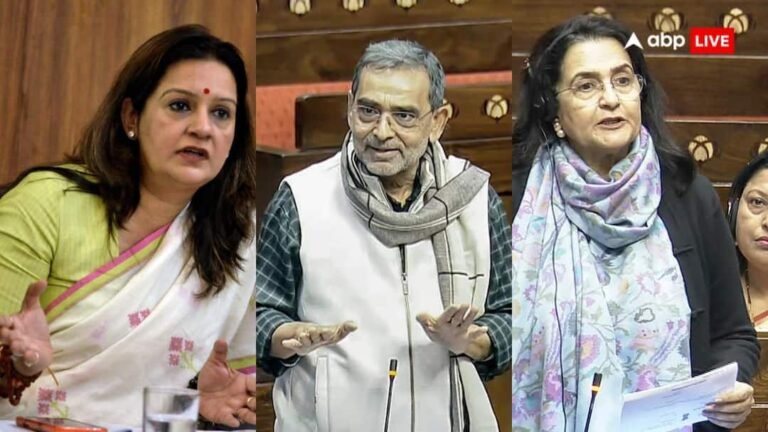
Will Upendra Kushwaha, Priyanka Chaturvedi, Kiran Chaudhary go to Rajya Sabha again? Election announced on 16 seats

0

The Election Commission of India has announced the election dates for 16 Rajya Sabha seats in Maharashtra, Chhattisgarh, Haryana, Himachal Pradesh and Bihar. After this announcement, questions have been raised on the future of many Rajya Sabha MPs. NCP Sharad faction leader Sharad Pawar has already announced that he will now retire from politics. In such a situation, questions are being raised as to who will go to Rajya Sabha in his place. Besides, due to the internal politics of the alliance in Bihar, everyone’s eyes are also on the parliamentary future of Upendra Kushwaha and Thackeray’s reduced political power in the Maharashtra Assembly.

According to the Election Commission of India, the notification for biennial elections for Rajya Sabha will be issued on 26 February 2026. The last date for nomination is March 5, 2026, while scrutiny of nomination papers will take place on March 6. Candidates will be able to withdraw their names till 9 March 2026. Voting will take place on March 16, 2026 and counting of votes will take place at 5 pm on the same day. The entire election process will be completed by 20 March 2026.

Big decision of Maharashtra government on 5 percent reservation for Muslims, this update came

The tenure of poets Tejpal Singh ‘Tulsi’ and Phulo Devi Netam from Chhattisgarh will end on 9 April 2026. Amarendra Dhari Singh, Prem Chand Gupta, Ramnath Thakur, Harivansh Narayan Singh and Upendra Kushwaha will retire from Bihar on this date. Kiran Choudhary and Ram Chander Jangra from Haryana will retire on 9 April 2026. The tenure of Dhairysheel Patil, Bhagwat Karad, Fauzia Khan, Sharad Pawar, Priyanka Chaturvedi, Ramdas Athawale and Rajni Patil from Maharashtra is ending in April 2026. Whereas Indu Bala Goswami from Himachal Pradesh will retire on 9 April 2026.

How many MPs of which party in Rajya Sabha?

Of the seats that are falling vacant in Chhattisgarh, BJP and Congress have 1 each. Whereas in Bihar, 2 RJD, 1 JDU and 1 Rashtriya Lok Morcha. Both the seats in Haryana are with BJP. On the other hand, in Maharashtra, Shiv Sena has 1 seat from UBT, NCP 1, Congress 1, Sharad faction NCP has 1 and RPI has 1 seat. Along with this, the vacant seat in Himachal is with BJP.

‘Good progress’: Iran, US move closer to a nuclear deal after Geneva talks | News

0

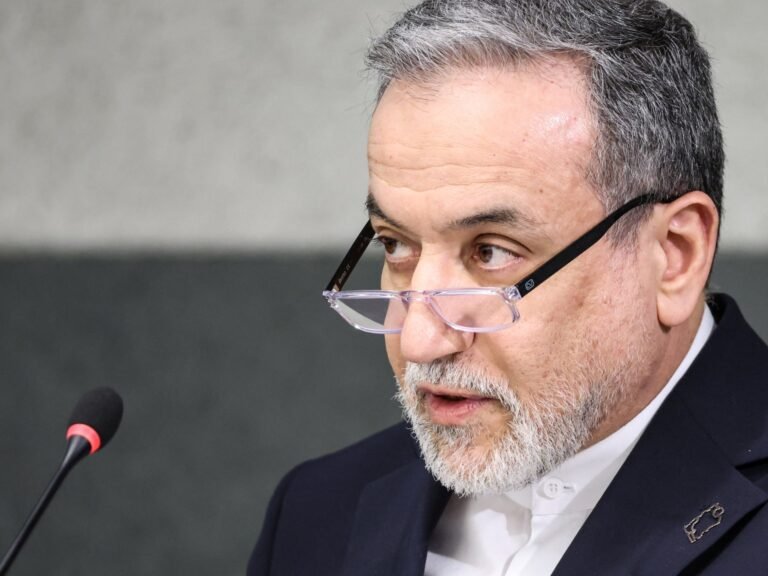
Iranian Minister of Foreign Affairs Abbas Araghchi has said that “good progress” has been made in indirect nuclear talks with the United States, as Washington warned that military action remains an option if diplomacy fails.

The talks, mediated by Oman, were held in the Swiss city of Geneva on Tuesday against a backdrop of increased military flexing by both sides in the Gulf region.

Recommended Stories

list of 4 itemsend of list

“Ultimately, we were able to reach broad agreement on a set of guiding principles, based on which we will move forward and begin working on the text of a potential agreement,” Araghchi told state television after the talks.

“Good progress” has been made, compared with the previous round in Oman earlier this month, he said, adding, “We now have a clear path ahead, which I think is positive.”

He acknowledged that it “will take time to narrow” the gap between the countries, and said that once both sides come up with draft texts for an agreement, “the drafts would be exchanged and a date for a third round [of talks] would be set”.

In Washington, DC, US Vice President JD Vance also appeared to indicate that his country preferred diplomacy, but painted a more mixed picture.

“In some ways, it went well; they agreed to meet afterwards,” Vance said in a Fox News interview.

“But in other ways, it was very clear that the president has set some red lines that the Iranians are not yet willing to actually acknowledge and work through,” Vance told The Story with Martha MacCallum programme.

“We’re going to keep on working it. But of course, the president reserves the ability to say when he thinks that diplomacy has reached its natural end,” Vance said.

Stumbling blocks

Iran has for years sought relief from sweeping sanctions imposed by the US, including a Washington-imposed ban on other countries buying its oil.

Tehran has said it wants the talks to focus on its uranium enrichment programme, insisting that any deal must deliver tangible economic benefit to Iran while maintaining its sovereignty and national security.

Washington has demanded that Iran forgo uranium enrichment on its soil, and has sought to expand the scope of talks to non-nuclear issues, such as Tehran’s missile stockpile.

Iran has said it will not accept zero uranium ‌enrichment and that its missile capabilities are off the table.

The talks come amid high tensions in the Gulf, with the US deploying two aircraft carriers to the region. The first – the USS Abraham Lincoln, with nearly 80 aircraft – was positioned about 700km (435 miles) from the Iranian coast as of Sunday, satellite images showed.

Its location puts at least a dozen US F‑35s and F‑18 fighter jets within striking distance. A second carrier was dispatched over the weekend.

Iranian Supreme Leader Ayatollah Khamenei warned on Tuesday that the country had the ability to sink a US warship. “A warship is certainly a dangerous weapon, but even more dangerous is the weapon capable of sinking it,” he said.

Iran has also sought to display its military might, with its Islamic Revolutionary Guard Corps (IRGC) beginning a series of war games on Monday in the Strait of Hormuz to prepare for “potential security and military threats”.

Iran has ⁠repeatedly threatened to close the waterway, a vital oil export route from Gulf Arab states, in retaliation for any attack. The move would choke a fifth of global oil flows and send crude prices sharply higher.

Tehran has also threatened to strike US military bases in the region in the event of an attack, prompting concerns of a wider war.

A previous attempt at diplomacy collapsed last year when Israel launched surprise strikes on Iran in June, beginning a 12-day war that Washington briefly joined to bomb three nuclear sites at Natanz, Fordow and Isfahan.

Ali Vaez, the Crisis Group’s Iran project director, told Al Jazeera he believed there is a lot of space for agreement on the nuclear front, “simply because Iran’s nuclear programme has been degraded on the ground, and so, some of the cost of the compromise has already sunk in”.

“It should be easier for the Iranians to accept zero enrichment for a period of time, because they have not spun a single centrifuge since the 12-day war back in June,” he said.

“But when it gets to non-nuclear questions, like regional activities or their missile programme, I think, at best, the Iranians will be willing to do superficial concessions, not the kind of grand bargain capitulation that the US expect,” he said.

Iranian President Masoud Pezeshkian, meanwhile, reiterated in an interview published on Tuesday that Tehran was “absolutely not seeking nuclear weapons”.

“If anyone wants to verify this, we are open to such verification to take place,” he said.

“However, we do not accept that we should be prevented from using nuclear science and knowledge to address our illnesses and to advance our industry and agriculture,” he added.


Source link

Over 80 UN member states condemn Israel’s de-facto annexation of West Bank | Occupied West Bank News

0

UN warns that Israel’s plan will lead to widespread dispossession of Palestinian land in the occupied West Bank.

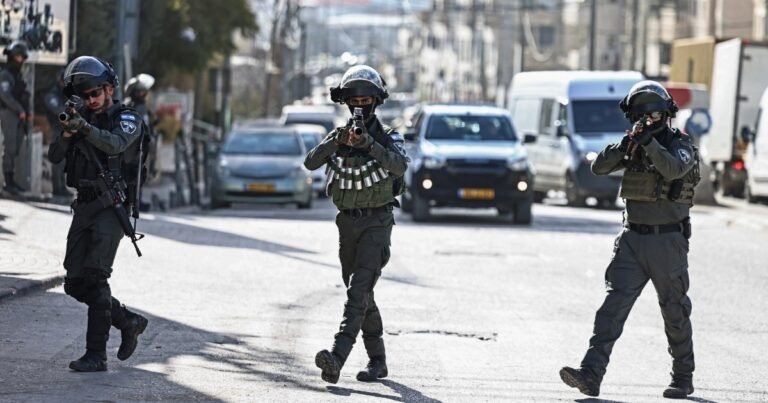
More than 80 United Nations member states have condemned Israel’s plan to expand control over the occupied West Bank and claim large tracts of Palestinian territory as Israeli “state property”.

“We strongly condemn unilateral Israeli decisions and measures aimed at expanding Israel’s unlawful presence in the West Bank,” Palestinian Ambassador to the UN Riyad Mansour said on Tuesday, speaking on behalf of the coalition of 85 member states and several international organisations.

Recommended Stories

list of 4 itemsend of list

“Such decisions are contrary to Israel’s obligations under international law and must be immediately reversed. We underline in this regard our strong opposition to any form of annexation,” Mansour said.

“We reiterate our rejection of all measures aimed at altering the demographic composition, character and status of the Palestinian territory occupied since 1967, including East Jerusalem,” he said.

“Such measures violate international law, undermine the ongoing efforts for peace and stability in the region, run counter to the Comprehensive Plan and jeopardise the prospect of reaching a peace agreement ending the conflict”, he added.

The Comprehensive Plan is a November agreement between Israel and Hamas to end Israel’s genocidal war on Gaza, which includes a halt to Israel’s illegal settlement activity in the occupied West Bank.

Signatories to the joint statement on Tuesday include Australia, Canada, China, France, Pakistan, Russia, South Korea, Saudi Arabia, Turkiye , the United Arab Emirates, the European Union, the League of Arab States and the Organisation of Islamic Cooperation.

The joint statement follows Israel’s decision to implement land registration in Section C of the West Bank for the first time since 1967, when Israel began its occupation of Palestinian territory.

Section C makes up about 60 percent of the West Bank’s territory, according to the illegal settlement monitoring organisation Peace Now.

UN Secretary-General Antonio Guterres, earlier this week, warned that Israel’s land registration plan could lead to the “dispossession of Palestinians of their property and risks expanding Israeli control over land in the area”.

Guterres warned that the process could be both “destabilising” and unlawful, citing a landmark 2024 ruling by the International Court of Justice (ICJ) that stated Israel’s occupation of the West Bank and Gaza is unlawful and must end.

Israel’s “abuse of its status as the occupying power” renders its “presence in the occupied Palestinian territory unlawful”, the ICJ said in its ruling.

“Israeli settlements in the West Bank and East Jerusalem, and the regime associated with them, have been established and are being maintained in violation of international law,” the court added.

According to the ICJ, approximately 465,000 Israeli settlers live in the occupied West Bank, spread across some 300 settlements and outposts, which are illegal under international law.

Separately on Tuesday, a 13-year-old Palestinian child was killed, and two other children were seriously injured, in the occupied West Bank’s central Jordan Valley area by ammunition discarded by the Israeli military, the Palestinian Wafa news agency reported.

The injured children, aged 12 and 14, are receiving treatment in hospital, Wafa said.


Source link

As soon as Sapna Choudhary’s song ‘TERI LAT LAG JAGI’ started playing, the women of Gurugram gathered!

0

homeVideostrange-wonderful

As soon as Sapna Choudhary’s song ‘TERI LAT LAG JAGI’ started playing, the women of Gurugram gathered!

X
title=

As soon as Sapna Choudhary’s song ‘TERI LAT LAG JAGI’ started playing, the women of Gurugram gathered!

arw img

There are many songs of Sapna Choudhary, which are considered the life of the party. One such song is ‘TERI LAT LAG JAGI’, on which women often dance vigorously in home parties, wedding ceremonies and gather gatherings. Recently, a woman named Abhilasha Singh has also shared a similar video on her Instagram account @abhilasha_singh95. In this video you can see that women in lehenga and saree have danced vigorously on the songs of Sapna Choudhary. One woman started dancing in pallu i.e. veil only. Believe me, after watching this video you too will get in the party mood.

To add News18 as your favorite news source on Google click here Do it.

Palo Alto CEO says AI isn’t great for business, yet • The Register

0

If enterprises are implementing AI, they’re not showing it to Palo Alto Networks CEO Nikesh Arora, who on Tuesday said business adoption of the tech lags consumer take-up by at least a couple of years – except for coding assistants.

“Consumers are far outstripping enterprise for the moment, but we expect enterprise will surely and slowly get on that bandwagon,” he said on the company’s Q2 earnings call.

Arora likened business uptake of AI to the cloud computing shift, which he said took two or three years before enterprises started migrating applications.

“Right now … tell me how many enterprise AI apps are you using which are driving tremendous amounts of throughput,” he asked, and answered himself “I can’t think of anything but coding apps.”

Coding apps aren’t great for Palo Alto’s business because they don’t generate a lot of network traffic to which it can apply its security smarts. Arora thinks his security vendor peers know this.

“We’re all laying the groundwork right now. It is … sort of an arms race to try and see who can get the AI security sort of platform up and running as quickly as we can.”

But the limited enterprise AI adoption Arora has seen does pose some immediate challenges to Palo Alto.

“There is now enterprise adoption that we’re beginning to see where customers are running perhaps millions of tokens in one or two particular applications they’re working with some of the LLM providers on, and that’s where we see the traffic,” he said. That traffic is on the LAN and the CEO doesn’t think existing networks struggle to handle it.

“I think the challenge right now is consolidating that traffic,” he said. “How do you get all the AI traffic to be in one place? So you can understand it, provide visibility, look at the ability to control it and be able to act on it.”

The CEO said that as this sort of AI-related traffic grows “it needs a different set of controls and tools.”

Palo Alto is already getting its hands on those tools, as on Tuesday put to bed rumours it would acquire agentic AI endpoint security startup Koi by announcing it’s done the deal.

Arora pointed to Palo Alto’s recent acquisitions of Chronosphere and CyberArk as further evidence of the company’s moves to ensure it builds a portfolio of products to secure the AI enterprises will eventually implement.

The CEO expressed confidence Palo Alto has the products it needs today, saying customers know they can’t prepare for AI if they are running a tangle of security tools and are therefore consolidating to the kind of platforms the company offers.

Demand for those products helped Palo Alto to $2.6 billion Q2 revenue for the quarter, which represented 15 percent year-over-year growth.

Execs pointed to the success of the company’s subscription offerings, noting 23 percent growth in remaining performance obligations, which now stand at $16 billion. And they predicted Q3 revenue would grow at least 28 percent to land between $2.941 billion and $2.945 billion.

All of those nice numbers didn’t impress investors, who knocked six percent off the company’s share price – perhaps because they weren’t thrilled by predictions that profits will ease. ®


Source link