Georgia man arrested after running toward Capitol with loaded shotgun

0

NEWYou can now listen to Fox News articles!

Investigators are working to determine why an 18-year-old Georgia man allegedly ran toward the West Front of the U.S. Capitol armed with a loaded shotgun Tuesday, prompting a swift response from U.S. Capitol Police.

U.S. Capitol Police Chief Michael Sullivan said the incident unfolded just before noon when Carter Camacho of Smyrna, Georgia, parked a Mercedes SUV near the Capitol, exited the vehicle and ran “several hundred yards” toward the building carrying a loaded shotgun and additional rounds of ammunition.

Officers intercepted Camacho, ordered him to drop the weapon and get on the ground, and took him into custody without incident, Sullivan said.

Authorities said Camacho was wearing a tactical vest and tactical gloves. A Kevlar helmet and gas mask were recovered from the SUV, along with multiple rounds of ammunition.

US JUDGE ORDERS SUSPECT DETAINED FOR THREATENING TO KILL RICHARD GRENELL

A man being arrested at the USCP

Police identify Carter Camacho of Smyrna, GA as armed person arrested earlier at the US Capitol in Washington, DC on Tuesday, February 17, 2026.  (USCP)

The area outside the Capitol was later cleared and reopened. Police said there did not appear to be any additional suspects or an ongoing threat.

The U.S. Capitol Police’s (USCP) Threat Assessment Section is now investigating Camacho’s motive, including whether members of Congress may have been an intended target, Sullivan said. Congress was not in session at the time of the incident. Officials said Camacho was not previously known to the agency.

Sullivan said the department has video footage of the incident and asked members of the public to provide any additional recordings.

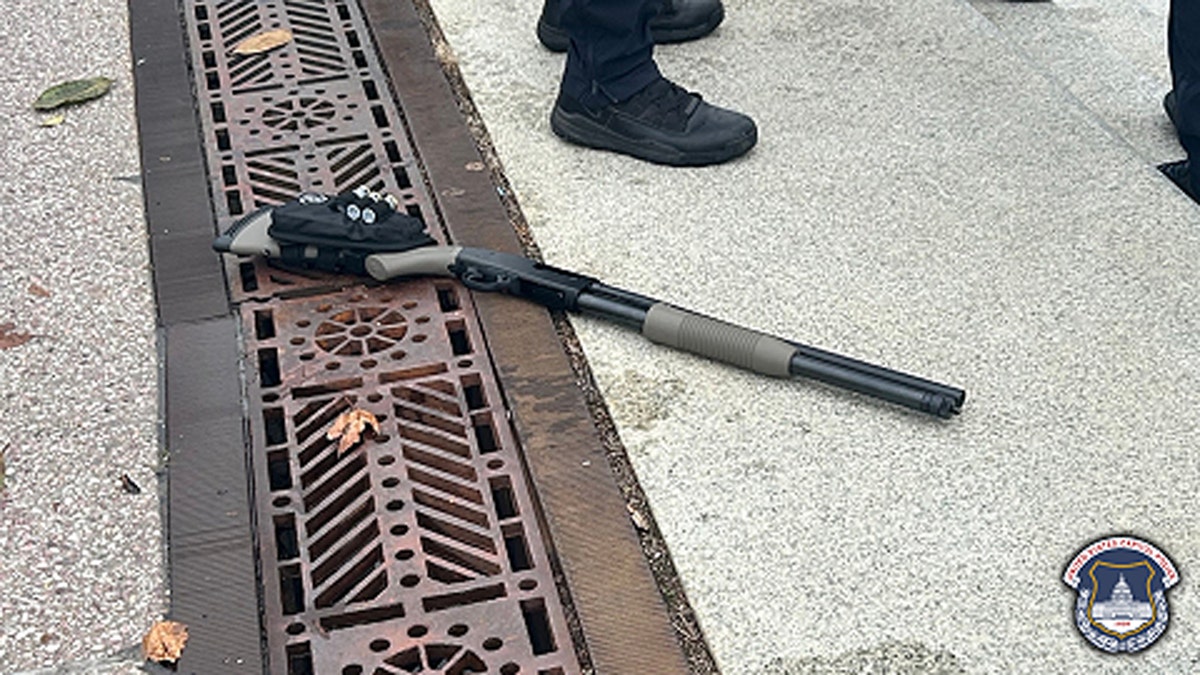
Gun confiscated by officers that a man was holding when he charged the USCP building

Police identify Carter Camacho of Smyrna, GA as armed person arrested earlier at the US Capitol in Washington, DC on Tuesday, February 17, 2026.  (USCP)

“Just last summer, we held an active threat exercise on the West Front of the U.S. Capitol – in the very location where today’s officers stopped the suspect,” Sullivan said in a news release. “These now routine exercises are planned monthly and in different areas of the Capitol Complex to keep our officers ready for potential threats just like this.”

TRUMP’S MOTORCADE ROUTE ADJUSTED AFTER SECRET SERVICE FINDS ‘SUSPICIOUS OBJECT’ AT PALM BEACH AIRPORT

Sullivan reiterated during a news conference that Capitol Police conduct active shooter drills every month, including one in nearly the same location in recent months.

“We do those active shooter exercises every single month, and that’s why we do it,” he said. “Who knows what could have happened if we didn’t have officers here standing guard like they do every single day.”

Police inspect vehicle near U.S. Capitol Building

Authorities are seen looking into a vehicle on Tuesday, Feb. 17, 2026, outside the U.S. Capitol Building. (Fox News)

Camacho was arrested on charges including unlawful activities, carrying a rifle without a license, possession of an unregistered firearm and possession of unregistered ammunition, according to Capitol Police. He is not from the Washington area, Sullivan said, adding that the vehicle involved was not registered in the suspect’s name and that he has multiple listed addresses.

The arrest comes one week before President Donald Trump is scheduled to deliver the State of the Union address before Congress. Sullivan said the incident does not alter security planning for the event. 

“We take the State of the Union very, very seriously,” he said.

CLICK HERE TO DOWNLOAD THE FOX NEWS APP

There have been other security incidents at the Capitol in recent years, including a 2023 arrest of an armed man near the Senate.

Fox News Digital’s Greg Norman-Diamond, Tyler Olson, Alexandra Koch, Louis Casiano and The Associated Press contributed to this report.


Source link

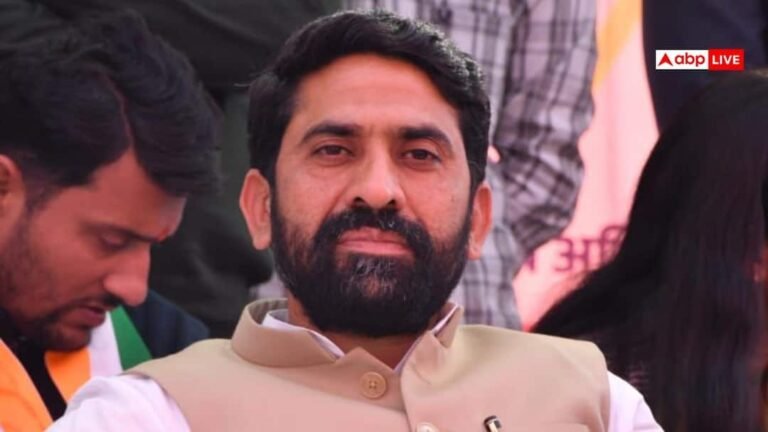
Rajasthan: Congress MLA raised the issue of collecting crores of rupees from students, uproar in the assembly.

0

The issue of collecting crores of rupees from students by the universities of the state in the name of ‘Consultation Fee’ was echoed in the Rajasthan Assembly. Congress MLA from Shahpura Manish Yadav put the government in the dock regarding this issue. It is alleged that the universities collected about Rs 223 crore from 22.50 lakh students without any consultation or counseling centre. The opposition created a ruckus in the House when the minister could not give a satisfactory answer.

What is the whole matter?

MLA Manish Yadav raised the question that in Matsya University, Mohanlal Sukhadia University and Rajasthan University, Rs 1000 each are being charged from non-collegiate students in the name of ‘discussion fee’ since 2016-17.

  • Minister Prem Chand Bairwa, on behalf of the government, revealed the figures in reply:
  • Rajrishi Bhartrihari Matsya University: Rs 22.16 crore (2018-19 to 24-25)
  • Mohanlal Sukhadia University: Rs 43.16 crore (2020-21 to 24-25)
  • Rajasthan University: Rs 156.18 crore (2017-18 to 24-25)
  • Total recovery: Around ₹223 crore from around 22.50 lakh students.

Opposition enraged at minister’s argument

The minister told the House that this amount has been used for ‘examination related works’. MLA Manish Yadav expressed strong opposition to this. He argued that when ‘examination fee’ is taken separately from the students, then how was the money of ‘examination fee’ spent on the examination? Yadav asked, “How many counseling centers were opened? How many students were counselled? If not, then it is a direct robbery on the pockets of the students.”

‘Minister, show the order, not the act’

The situation in the House became more heated when the Minister started reading out the departmental orders instead of citing the University Act. On this, Leader of Opposition Tikaram Julie cornered the government and said, “Minister, you are misleading the House. Don’t read the order, tell me the Act under which there is a provision to collect this fee from self-study students.”

Opposition demands: return the money

The opposition alleged that the government could not provide proof that even one rupee out of Rs 223 crore was spent on the actual discussion of the students. MLA Manish Yadav and Leader of Opposition have demanded that this illegal recovery should be stopped immediately. Crores of rupees collected so far from students should be returned to them. His Excellency the Governor should intervene in this matter and get a high level investigation done.

Cabinet Office investigates digital ID minister • The Register

0

Josh Simons, the Cabinet Office minister responsible for the UK government’s digital identity program, is being probed by the department for his actions running a Labour think tank that commissioned an investigation into journalists.

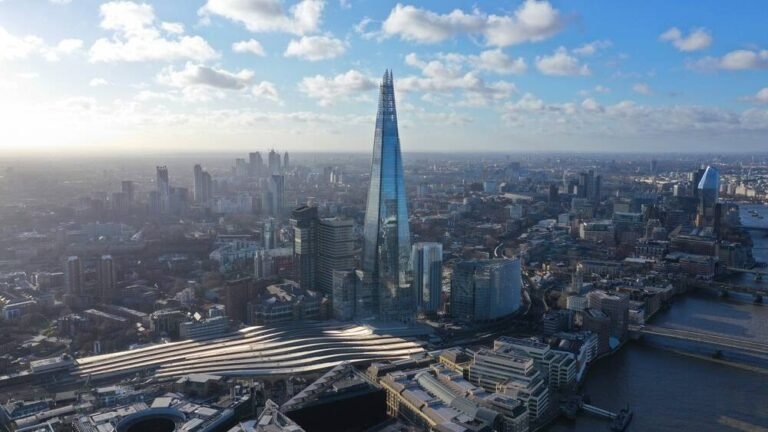
The Shard and the News Building - London nightscape. Image: maziarz/shutetrstock

The Shard and the News Building – headquarters of the Sunday times – seen in a London panorama shot. Image: maziarz/Shutterstock

UK Prime minister Sir Keir Starmer has ordered the government’s propriety and ethics team to look into his minister’s actions at the think tank, Labour Together, saying he “didn’t know anything” about the investigation.

Between 2022 and his election as a Labour MP in 2024, Simons ran Labour Together, which supported Starmer’s leadership campaign. Its founder, Morgan McSweeney, served as Starmer’s chief of staff until his resignation earlier this month for his role in appointing former US ambassador Peter Mandelson, under fire for exchanges released in the Epstein Files.

In 2023, Labour Together commissioned US public affairs outfit APCO Worldwide to investigate Sunday Times journalists who wrote about the think tank’s failure to declare £730,000 (c $990k) in donations, according to the newspaper.

The Sunday Times claimed the resulting report from the US firm suggested the journalists had used hacked emails provided by Russia. The report also discussed the fact that one of the reporters, Gabriel Pogrund, is Jewish, and the newspaper asserted that it was also “falsely suggesting its journalists might be part of a Russian conspiracy.”

The think tank passed a version of the report, without the information on Pogrund, to GCHQ’s National Cyber Security Centre, which decided against launching a full inquiry.

Simons told the paper that he was “surprised and shocked” that APCO Worldwide had included “unnecessary information” on the journalist, which he asked to be removed before he passed the report to GCHQ.

Liberal Democrat MP Lisa Smart called for Simons to stand down temporarily while the investigation takes place. “It looks like the group that credits itself with getting Labour into government has carried out an outrageous attack on our independent free press,” she said in a statement.

Simons is leading the government’s efforts to introduce digital identity, launched last September by Starmer, with digital ID initially proposed as compulsory for right-to-work checks. Following widespread opposition, he dropped it as a requirement in January, although said these right-to-work checks would be digitized.

The government is planning to launch a consultation on its revised plans for digital ID, but in the meantime Simons has been answering written parliamentary questions from MPs on the scheme.

Earlier this week, asked by Conservative MP Kevin Hollinrake how people who refuse a digital ID card will be able to complete right-to-work checks, Simons replied that checks “will be digital and they will be mandatory” with technical details to follow in the consultation. ®


Source link

Calculated hypocrisy: Why Western powers court Beijing but rely on US | Opinions

0

A parade of Western leaders to Beijing, including French President Emmanuel Macron in December,  and more recently, Canadian Prime Minister Mark Carney and the United Kingdom’s Keir Starmer, with German Chancellor Friedrich Merz planning a visit later this month, might suggest a great geopolitical realignment in the making. But to interpret these visits as a strategic defection from the United States is to mistake tactical adaptation for fundamental realignment. What we are witnessing is the pursuit of economic pragmatism alongside enduring security alliances, a balancing act that China’s charm offensive has not fundamentally disrupted.

The initial phase of President Donald Trump’s second term saw US allies pursuing a delicate balancing act, engaging in strategic hedging by maintaining economic ties with China while aligning strategically with Washington against perceived threats from Beijing and Moscow. However, Trump’s prolonged trade wars, rough treatment of European and North American partners, and coercive threats shattered illusions of a united Western front. This disorientation soon found its voice in Canadian PM Carney’s Davos speech.

He declared the end of the US-led, rules-based international order, framing the situation not as a transition but a “rupture”, where “the strong can do what they can, and the weak must suffer what they must”. This crystallised the disillusionment, creating political and diplomatic cracks that Beijing was swift to explore and, if possible, exploit.

Against this backdrop, the diplomatic pivot to Beijing reveals its true meaning: Western leaders are not embracing China but pursuing what Carney termed a “third path” for middle powers, a quest for “strategic autonomy” in energy, critical minerals, and supply chains to avoid becoming collateral in great power coercion. These visits focus on economic diversification and risk mitigation, not replacing one patron with another. The evidence from these visits reveals the severe limits of Beijing’s courtship. Joint statements emphasise practical cooperation but avoid any fundamental strategic shift, underscoring their transactional, not transformational, nature.

This pattern highlights a critical reality: economic pragmatism confronts an immovable priority, foundational security. A stark demonstration of this priority came when Australia moved to reclaim the Port of Darwin from its Chinese lessee, despite the port’s profitability and official reviews finding no security threat. That the formal assessments found no immediate security risk only reinforces the point: in moments of strategic uncertainty, perception and alliance alignment can outweigh technocratic evaluations, signalling where ultimate loyalties lie.

In alliance politics, signalling often matters as much as assessment. Even with deep and structurally significant European Union-China trade, European allies safeguard US intelligence sharing and defence commitments. Despite rhetorical tensions with Washington, European states have increased defence spending towards NATO’s 2 percent benchmark and deepened military coordination over Ukraine, reinforcing the institutional bedrock of transatlantic security. Their discontent fuels appeals for restraint, not support for China-led confrontation, revealing a gap rooted in deeper issues than trade.

Beneath the transactional politics lies a civilisational schism, a chasm that neither diplomatic niceties nor economic pragmatism can bridge. For Europe, Canada and Australia, a legacy of shared Western identity permeates elite consciousness, fostering assumptions of cultural affinity amplified by visceral fears that China’s state-driven capitalist model poses a systemic threat to the liberal-democratic order. This identity is not merely cultural but institutional, embedded in NATO interoperability, Five Eyes intelligence integration and decades of joint operational planning. This unease transcends protectionism, representing an existential struggle to preserve institutional and ideological hegemony. The double standard is revealing: the US’s predatory behaviour is framed as a regrettable aberration, while China’s trade practices are cast as an inherent systemic challenge. Consequently, trade disputes with Washington fade against this deeper dissonance.

For key Asian allies like Japan and South Korea, the US alliance is foundational to their sovereignty. Their post-war identities were forged under US security patronage, with integrated defence systems and political cultures creating deep bonds. To Tokyo and Seoul, China’s rise stirs historical anxieties about falling into a new sphere of influence. Thus, even as South Korea’s chip giants lobbied against decoupling from China, they reinforced joint research with the US, viewing the cost of ties with Washington as trivial against the risk of Chinese regional dominance.

This loyalty is most evident in intelligence sharing. For Canada, Australia, and New Zealand, the Five Eyes network, rooted in Allied World War II code-breaking, represents a strategic DNA common with Washington. Real-time intelligence sharing builds trust beyond mere profits. Australia knows China could disrupt its iron ore exports, yet it still bans Huawei from 5G networks. This reflects a civilisational kinship, a bond no Chinese trade deal can replace, as defiance would risk strategic suicide.

This deep-seated allegiance sets the non-negotiable boundaries within which economic hedging occurs. German automakers may oppose US tech bans, Australian universities may host Confucius Institutes, and Japan may route exports through Chinese factories. They may even lend rhetorical support to China’s WTO appeals against US tariffs. Yet, when asked to side with Beijing against Washington on upholding the rules-based order, these allies hesitate, consistently choosing alliance management over systemic defence. The calculus remains clear: trade with China aids prosperity, but an alliance with the US ensures survival.

Thus persists an unbroken chain of allegiance, a case of what might be called “calculated hypocrisy”. By this, I mean a pattern in which allies publicly criticise Washington’s coercive tactics while privately reinforcing the security architecture that depends upon them. Allies openly critique Washington’s coercive tactics while quietly sheltering under its security umbrella, invoking a rules-based order they expect China to obey, yet hesitate to enforce when the US bends the rules. Despite US economic uncertainty and Chinese clean-tech dominance, Washington’s alliance network remains its key advantage. Decades of military drills, academic exchanges, and shared values create resilience that Chinese chequebook diplomacy cannot crack. For all its dominance in rare earth refining and its growing strength across AI supply chains and ecosystems, China still lacks the trust to turn partners into strategic allies.

Ultimately, the visits to Beijing signal a broader ailment: the failure of coercive US policy to maintain alliance unity. Yet engagement with China is no cure. The “third path” remains an uncertain experiment, constrained by a hard truth: while allies seek autonomy, they lack a realistic alternative to US security protection. The emerging order will be defined by this tense balance, assertive hedging, not decisive realignment. They may distance themselves from US unilateralism, but they are not entering Beijing’s orbit. Their cautious, pragmatic course reveals the great illusion: this is a story of resilience, not realignment.

The success of this manoeuvring depends on resolving a core contradiction: pursuing strategic autonomy while relying on a security protectorate that often undermines it. Coercion may undermine cohesion, but structural integration preserves it. Hence, the “third path” is less a stable course than a perpetual, perilous balancing act over the abyss of great-power rivalry.

The views expressed in this article are the author’s own and do not necessarily reflect Al Jazeera’s editorial stance.



Source link

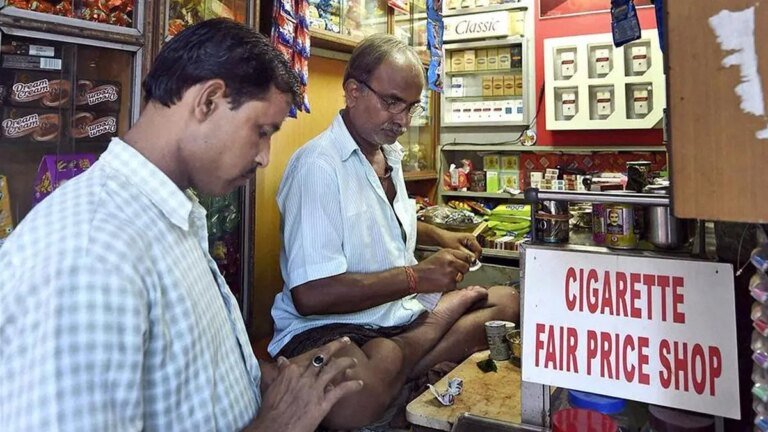
ITC, Godfrey Phillips, VST Ind shares surge upto 20% on cigarette price hikes

0

Shares of cigarette makes Godfrey Phillips, VST Industries and ITC ltd surged in Wednesday’s trading session after reports suggested price hikes across the product segment, boosting investor confidence in the sector’s revenue outlook.

The development follows the government’s notification ending the GST compensation cess and ininitiating a new tobacco tax regime from February 1moves that could reshape pricing dynamics across the sector.

Vinod Nair, Head of Research, Geojit Investments Ltd, said cigarette stocks have staged a strong rebound after companies implemented decisive price hikes to pass on the recent tax increases. The recovery comes after last month’s sharp correction, when the duty hike led to broad-based selling across the sector.

“With pricing adjustments now in place, near-term margin pressures appear more manageable. December-quarter results indicate that the earlier weakness was largely tax-driven rather than reflective of any structural slowdown in demand,” he said.

Stocks of Godfrey Phillips India led the rally, climbing 20 per cent to settle at ₹2,477.70 on the NSE after hitting the upper circuit of ₹2,478.90, compared with the previous close of ₹2,065.80.

The sharp rise reflected strong buying interest amid expectations that higher pricing could support margins despite regulatory pressures on the tobacco industry.

Meanwhile, VST Industries shares gained around 3 per cent to close at ₹246.48, reaching a high of ₹248.90 against the prior close of ₹239.65, and ITC Ltd ended 2 per cent positive at ₹332.45. Brokerage UBS has maintained a buy rating on ITC and trimmed its target price to ₹395.

While higher retail prices could temporarily weigh on volumes, cigarette companies have historically displayed strong pricing power, allowing them to protect profitability even in elevated tax regimes, said Nair. “The recent valuation correction may therefore present selective opportunities for investors, particularly in companies capable of sustaining margins and earnings through calibrated price actions,” he added.

Published on February 18, 2026

6 backcountry skiers rescued, 9 still missing after avalanche near Lake Tahoe

0

NEWYou can now listen to Fox News articles!

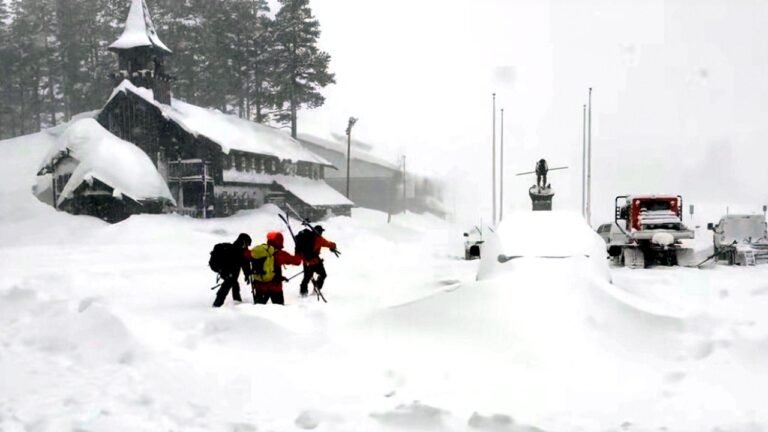
Six backcountry skiers survived an avalanche during a fierce snowstorm near Lake Tahoe in Northern California, but nine others from their group remain missing in treacherous mountain conditions.

Two of the rescued skiers were hospitalized for treatment, according to the Nevada County Sheriff’s Office. Officials clarified Tuesday night that the tour group consisted of 15 skiers, not 16 as initially reported.

The avalanche struck Tuesday near Frog Lake in the Castle Peak area, northwest of Lake Tahoe, prompting a 911 call reporting multiple people buried. Rescue teams navigated rugged terrain and treacherous conditions for several hours before reaching the survivors.

The skiers were on the final day of a three-day backcountry tour organized by Blackbird Mountain Guides, officials told The Associated Press. The expedition required traversing up to four miles of mountainous terrain while carrying food and supplies and staying overnight in remote huts.

AMERICAN SKIERS RESCUED AFTER GETTING LOST NEAR OLYMPIC VENUE IN THE ITALIAN ALPS

rescue team marching through snow

This image provided by the Nevada County Sheriff’s Office shows members of a rescue team in Soda Springs, California, on Tuesday, Feb. 17, 2026. (Nevada County Sheriff’s Office via AP)

Authorities said emergency beacons carried by the group helped pinpoint their location. Rescuers approached cautiously amid the risk of additional avalanches.

The incident comes as a powerful winter storm slams California, dumping heavy snow and bringing high winds across the Sierra Nevada. Avalanche warnings were issued across the region, with forecasters warning of large slides through Wednesday.

Pine trees covered in snow

Pine trees are covered in snow during a storm on Tuesday, Feb. 17, 2026, in Truckee, California. (AP Photos/Brooke Hess-Homeier)

Soda Springs, near the avalanche site, recorded more than 30 inches of snow in 24 hours. Rapid snowfall combined with gale-force winds created unstable snowpack conditions.

DEADLY AVALANCHE CLAIMS 2 SNOWMOBILERS IN WASHINGTON STATE BACKCOUNTRY, 2 RESCUED

The storm also caused widespread travel disruptions. Interstate 80 over Donner Summit was temporarily shut down due to spinouts and crashes, and several Tahoe ski resorts closed partially or entirely because of dangerous weather.

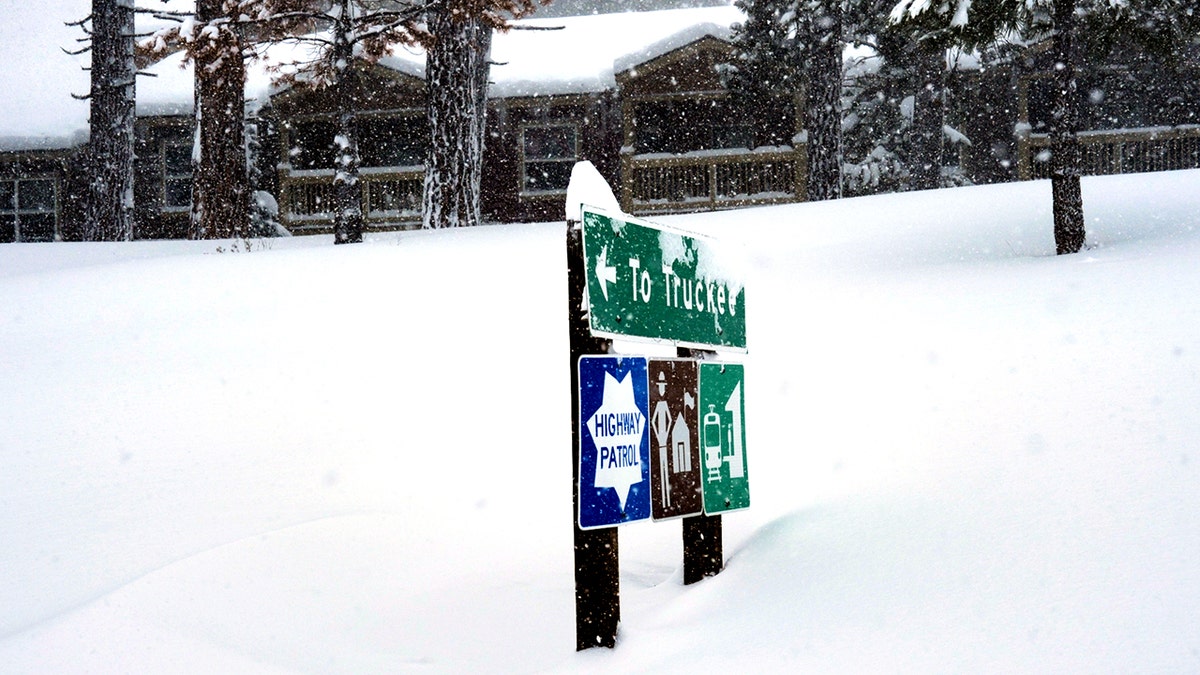
sign to Truckee covered in snow

A sign is covered in snow during a storm on Tuesday, Feb. 17, 2026, in Truckee, California. (AP Photos/Brooke Hess-Homeier)

Officials said conditions remain especially hazardous in the backcountry and urged people to avoid avalanche-prone areas.

CLICK HERE TO DOWNLOAD THE FOX NEWS APP

A news conference is expected on Wednesday morning with further updates on the search for the missing skiers.

The Associated Press contributed to this report.


Source link

Starmer says Reform’s pledge to restore two-child benefit cap in full is ‘shameful’ – UK politics live | Politics

0

Starmer denounces Reform UK pledge to restore two-child benefit cap in full as ‘shameful’

Keir Starmer has responded to the Robert Jenrick speech. Referring to Jenrick’s commitment to bringing back the two-child benefit cap in full (see 11.45am), Starmer said in a post on social media:

Shameful.

I’m incredibly proud that this government has scrapped the cruel two child limit.

Reform wants to push hundreds of thousands of children into poverty.

Share

Updated at 

Key events

Starmer defends U-turn over local elections cancellation, saying legal advice changed and it was councils wanting to delay

Speaking to the media in South Wales, Keir Starmer has defended the government’s decision to U-turn over the plan to postpone elections in 30 council areas in England.

He said it was the councils themselves that asked for elections to be postponed, and he said the government was responding to legal advice that changed. He said:

It’s important to remind ourselves that the decision to cancel was a locally led decision, in the sense that each authority could decide.

And, yes, Labour authorities came forward to say, ‘please delay’, but so did Tory authorities, so did Lib Dem authorities.

In relation to the position, we took further legal advice and, as you would expect as a government, having got further legal advice, we followed that legal advice.

At least one council leader has claimed she was encouraged by the government to ask for elections in her area to be delayed.

Keir Starmer during a visit to a railway depot in South Wales today. Photograph: Matthew Horwood/PA


Source link

404 | Fox News

0


Source link

3 Ways to Start Your Intelligent Workflow Program

0

Security, IT, and engineering teams today are under relentless pressure to accelerate outcomes, cut operational drag, and unlock the full potential of AI and automation. But simply investing in tools isn’t enough. 88% of AI proofs-of-concept never make it to production, even though 70% of workers cite freeing time for high-value work as the primary AI automation motivation. Real impact comes from intelligent workflows that combine automation, AI-driven decisioning, and human ingenuity into seamless processes that work across teams and systems. 

In this article, we’ll highlight three use cases across Security and IT that can serve as powerful starting points for your intelligent workflow program. For each use case, we’ll share a pre-built workflow to help you tackle real bottlenecks in your organization with automation while connecting directly into your existing tech stack. These use cases are great starting points to help you turn theory into practice and achieve measurable gains from day one.

Workflow #1 Automated Phishing Response 

For security teams, responding to phishing emails can be a slow, burdensome process given the number of alerts and the growing sophistication of phishing attacks. By streamlining phishing analysis with automated workflows, security teams of all sizes get time back to focus on more critical issues and alerts. 

Our first workflow, Analyze phishing email senders, URLs, and attachments, uses VirusTotal, URLScan.io, and Sublime Security to analyze key aspects of phishing emails such as file attachments, website behavior, email sender reputation, and detection rule matching. It then consolidates all of the results and displays them in a Tines page, which can be sent via email for archiving or further analysis.

Workflow #2 Agents for IT Service Request Automation

IT service desks are often overwhelmed with repetitive, time-consuming requests like password resets, software access provisioning, hardware troubleshooting, and account management. These tasks pull valuable technical resources away from strategic initiatives. When AI agents are deployed to handle these routine service requests, organizations can dramatically reduce response times from hours to seconds, be more likely to ensure 24/7 availability, and free IT teams to focus on complex problems that require human expertise. 

The Automate IT service requests using Slack and agents workflow creates AI agents to categorize and process IT service requests. From a Slack message, the workflow categorizes requests into 3 categories: password resets, application access, or another action. Each request is then handled by a specialized agent. 

The password reset agent verifies user identity and management relationships before processing. The application request agent identifies the correct application owner and facilitates access. Responses are handled over Slack, creating a self-serve flow that reduces manual IT involvement while letting teams decide when AI acts and when humans stay in the loop.

Workflow #3 Monitor and Manage Vulnerabilities

Security teams face an unrelenting stream of newly disclosed vulnerabilities. CISA’s Known Exploited Vulnerabilities catalog is updated continuously as threat actors actively weaponize critical flaws. Automating the connection between vulnerability intelligence feeds and your asset inventory transforms this reactive scramble into a proactive rather than reactive defense. By automating the vulnerability detection process, security teams can cut response windows from days to minutes, and ensure they prioritize patching efforts based on real exposure rather than theoretical risk. 

Without automation, organizations rely on manual monitoring of security bulletins, time-consuming spreadsheet comparisons between vulnerability databases and asset inventories, and delayed communications that leave critical gaps unaddressed while attackers move at machine speed. The result is increased breach risk, compliance failures, and security teams buried in manual triage work instead of strategic threat hunting and remediation.

The Check for new CISA vulnerabilities workflow monitors the CISA Vulnerability RSS feed and then uses the Tenable Vulnerability Management platform to check for any vulnerable systems. If vulnerabilities are detected, a message is sent via Microsoft Teams.

Intelligent Workflows that Keep Humans in the Loop 

Intelligent workflows aren’t about replacing people, they’re about amplifying them. The three workflows above demonstrate how you can quickly move from isolated automation to connected, intelligent systems that blend AI, integrations, and human oversight to solve real operational problems.

Whether you’re responding to security threats, streamlining IT requests, or improving visibility into risk, these pre-built workflows provide practical, production-ready foundations you can adapt and extend as your needs evolve.

Tines’ intelligent workflow platform unites automation, AI agents, and human-in-the-loop controls to reduce repetitive “muckwork,” speed execution, and free teams to focus on higher-value work — while ensuring governance, integration, and scale so pilots don’t stall before they realize true value.

Get started today with one of these pre-built workflows or another from our broader story library. Prove the value first-hand and use it as a blueprint to scale an intelligent workflow program that drives meaningful impact across your organization.

Found this article interesting? This article is a contributed piece from one of our valued partners. Follow us on Google News, Twitter and LinkedIn to read more exclusive content we post.


Source link

Video: Sara Duterte announces run for presidency of Philippines | Politics

0

NewsFeed

Philippine Vice President Sara Duterte has announced she will run for president in 2028, despite facing impeachment complaints over corruption claims and an alleged threat against the president. Here’s what we know.


Source link