Why data centers now belong on the critical infrastructure list


Missile and drone attacks that took out cloud data centers in the Middle East underscored a critical vulnerability in the modern economy: reliance on digital infrastructure that sustains competitive advantage and operational continuity for corporations, nations, and militaries. 

The outages and downstream disruption were a preview of a new form of strategic and operational risk. Data centers have long been the backbone of the digital economy. What is changing is the scale of dependence as AI workloads dramatically increase the compute power required to run businesses, supply chains, and national security systems. 

Artificial intelligence has moved beyond business applications and into the core of warfare and national security. Last month, The New York Times reported that AI is “totally integrated” into the collection of intelligence and its use in strategic decision-making and military operations. Even if AI models are not directly firing weapons, AI-enabled analysis now plays a central role in how modern militaries gain visibility, find insights, and drive action.

That matters because it changes what should be considered critical infrastructure. If AI is a competitive advantage for companies and a battlefield advantage for warfighters, then the infrastructure that trains, hosts and runs AI becomes a high-value target. Attacks on the digital infrastructure organizations rely on can do more than inflict financial damage. They can slow decision-making, degrade logistics and reduce military effectiveness without ever engaging a conventional force.

Historically, nation-state campaigns targeting data centers and service providers focused on cyber intrusions for espionage or pre-positioning. What is different now is the emergence of physical attacks on digital infrastructure during active conflict. Russian military intelligence has been linked to campaigns aimed at digital infrastructure and managed services, often as part of a supply chain attack to compromise organizations at scale. Iran-aligned groups have repeatedly demonstrated willingness to target private sector entities to advance geopolitical goals. In many cases, the objective was access: steal data, implant persistence, map networks, and maintain a foothold that could be used later for espionage or disruption. 

What’s clearer now than ever before is that data centers and the AI workloads they support have become so vital to modern society, our adversaries will seek to degrade or destroy their efficacy as a tactic of both kinetic and cyber warfare.

We have already seen how quickly a digital incident can become real-world disruption. On March 11, reports surfaced of thousands of servers and endpoints wiped inside Stryker, a U.S.-based medical device manufacturer. A hacktivist group sympathetic to Iran, known as Handala, claimed responsibility. The incident reportedly halted Stryker’s global production after attackers accessed its Microsoft environment and issued a wipe command via Intune. Even without a single missile, the outcome looked like a strategic disruption: operations stopped and downstream customers felt it.

For business leaders, the imperative is clear: treat operational resilience as a board-level priority in the AI era.

In the world of corporate IT, cybersecurity prioritizes confidentiality: preventing theft of sensitive information. Resilience is a different discipline. It is the ability to sustain operations when systems are degraded, disrupted or actively under attack. For data centers and the businesses that depend on them, resilience comes down to preventing cascading failures and reducing the consequence when something inevitably goes wrong.

These developments carry an important implication for the private sector. Digital infrastructure is increasingly a strategic target, making resilience a core business priority rather than a narrow IT issue. For business leaders, the impact of data center disruption extends into multiple, often overlooked areas of cybersecurity risk.

For example, AI’s growth is colliding with a power wall in many regions where grid capacity cannot scale fast enough. That is driving facilities toward new power dependencies, including on-site generation through distributed energy and renewables, yielding more complex power management environments. This power infrastructure becomes a pressure point as interruptions to power supply or management systems can quickly force a data center offline. Russia has on several occasions demonstrated the ability to target and disrupt power generation and distribution in Ukraine in both 2015 and 2016.

Building management and automation systems, including HVAC and physical access controls, are another. These systems are essential to creating safe and supporting operational environments, but they typically have long capital depreciation cycles and inconsistent security safeguards. Frequently exposed to the Internet, and commonly misconfigured and not properly secured, they can become a pathway to outages by an attacker.

With an increasing density of computing infrastructure, thermal management has become a core environment control in data centers. As the industry adopts liquid cooling for dense AI loads, interference with cooling is no longer a niche technical issue. It is a risk vector that can cause downtime and potential equipment damage if breached by attackers.

Remote access creates another major exposure. Data centers rely on vendors, contractors, and systems integrators for maintenance, monitoring, and support, and each remote connection can become an entry point if it isn’t tightly controlled, centrally managed, and well secured. Adversaries often target these trusted access routes because they can be easier to compromise than a well-defended perimeter, allowing attackers to bypass standard controls and safeguards.

All of this has broader economic implications because data center disruption does not stay inside the technology sector. It cascades into the industries that keep society functioning and supply chains moving: hospitals, electric utilities, chemical production, food and beverage, oil and gas, and transportation. An extended outage becomes missed shipments, halted production, delayed care, safety concerns and lost trust.

What should leaders do now?

Start by defining resilience targets that match business reality: what must stay running, what can degrade, what cannot fail. Then invest in the controls that limit the impact of an incident. Segmentation between IT and OT assets should be non-negotiable. Remote access should be treated as a critical risk pathway with least privilege, strong authentication and continuous monitoring.

Manage facilities systems such as building management systems, power, and cooling controls as critical operational technology, with asset inventories, vulnerability management, logging, and incident response plans that anticipate disruption.

Finally, train to operate under degraded conditions. Tabletop exercises should include scenarios like loss of a cloud region, partial failure of a facility, or compromise of a management plane. Use these exercises to validate that the organization can maintain essential operations and recover quickly when disruptions occur. 

Policy is moving in this direction as well. Governments are increasingly treating data centers as critical infrastructure. Policies and frameworks such as the National Cybersecurity Strategy, CISA’s Secure by Design principles, and international standards like IEC 62443 all reflect a growing recognition that digital infrastructure is a national security issue. Companies that get ahead of this shift will not only reduce risk, they will build competitive advantage in a world where downtime can become a strategic weapon.

In the AI era, data centers are essential infrastructure for modern economies and national security. Their rising importance also makes them attractive targets in cyber and physical conflict. Protecting them is no longer just about safeguarding company operations, it is about protecting the systems society depends on every day. 

Grant Geyer is the chief strategy officer at Claroty.

Grant Geyer

Written by Grant Geyer

Grant Geyer is the chief strategy officer for Claroty


Source link

Access Denied

0

Access Denied You don’t have permission to access “http://hindi.news18.com/cricket/ipl-2026-delhi-capitals-will-need-to-stop-oscillating-between-sublime-and-suicidal-to-over come-their-streak-of-three-painful-losses-at-home-when-they-take-on-an-equally-desperate-chennai-super-kings-10443998.html” on this server.

Reference #18.6e560e17.1777891230.378cb578

https://errors.edgesuite.net/18.6e560e17.1777891230.378cb578

Access Denied

0

Access Denied You don’t have permission to access “http://hindi.gadgets360.com/internet/aadhaar-address-update-without-proof-hof-method-uidai-india-step-by-step-guide-fee-details-news-11446450” on this server.

Reference #18.4d560e17.1777890762.1ad424

https://errors.edgesuite.net/18.4d560e17.1777890762.1ad424

Access Denied

0

Access Denied You don’t have permission to access “http://hindi.news18.com/news/ajab-gajab/viral-stubborn-kid-ignores-brass-band-playing-near-him-continues-sleeping-skips-school-viral-video-10444031.html” on this server.

Reference #18.6e560e17.1777891848.378ee7b3

https://errors.edgesuite.net/18.6e560e17.1777891848.378ee7b3

NATO chief says Europeans have ‘gotten the message’ from Trump on defence | European Union News

0

The US president has accused some NATO countries of not doing enough to support the US-Israel war on Iran.

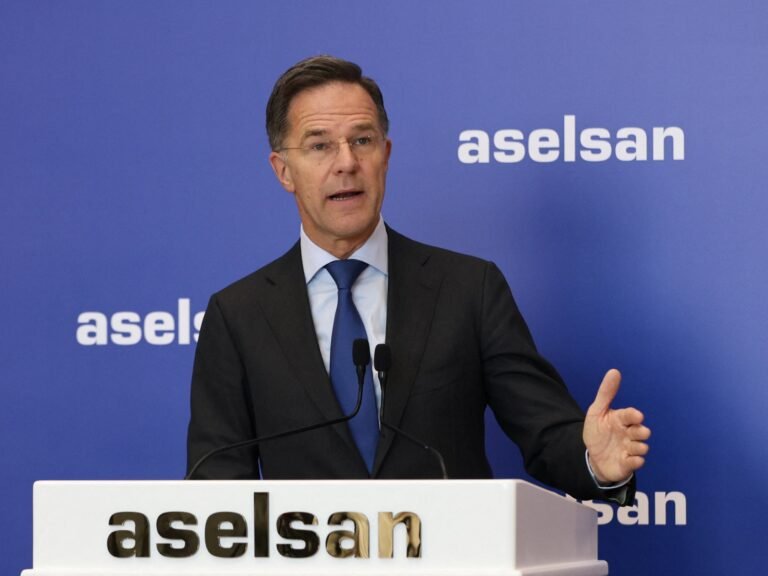
NATO Secretary-General Mark Rutte says European leaders have “gotten the message” after United States President Donald Trump announced plans to withdraw 5,000 soldiers from Germany.

Trump has grown increasingly frustrated with NATO allies, accusing them of not doing enough to support the US-Israel war on Iran. Speaking on Monday, Rutte acknowledged “disappointment from the US side”.

Recommended Stories

list of 3 itemsend of list

“European leaders have gotten the message. They heard the message loud and clear,” Rutte said before a European Political Community meeting in Armenia.

“Europeans are stepping up, a bigger role for Europe and a stronger NATO,” he added.

The Pentagon announced the troop withdrawal from Germany on Friday, days after German Chancellor Friedrich Merz said Iran was humiliating the US during the negotiations aimed at ending the war.

The European Union’s top diplomat, Kaja Kallas, called the announcement’s timing a “surprise”.

“I think it shows that we have to really strengthen the European pillar in NATO, and we have to really do more,” Kallas said while stressing that “American troops are not in Europe only for protecting European interests but also American interests.”

Over the weekend, NATO spokesperson Allison Hart said officials in the 32-nation military alliance “are working with the US to understand the details of their decision on force posture in Germany”.

‘Dangerous military intervention’

European criticism of the war on Iran has mounted in recent weeks as the conflict sends shockwaves through the global economy due to the continued disruption to shipping in the Strait of Hormuz.

Last week, Merz compared the war to previous military quagmires, such as the US invasions of Iraq and Afghanistan.

“It is, at the moment, a pretty tangled situation,” he said. “And it is costing us a great deal of money. This conflict, this war against Iran, has a direct impact on our economic output.”

Spain has refused to let the US launch attacks on Iran from its airspace or military bases. Prime Minister Pedro Sanchez has condemned the war as “unjustified” and a “dangerous military intervention” outside the realm of international law.

In response, Trump called Spain “terrible” and threatened to end all trade ties.

Despite this, Rutte said “more and more” European nations were now pre-positioning assets such as minehunters and minesweepers close to the Gulf to be ready for the “next phase” in the war.

He provided no details, and European nations have previously insisted they would not help to police the Strait of Hormuz until the war is over.

Increased defence spending

Many European countries have committed to ramping up defence spending in the face of fears over Trump’s commitment to NATO and Russia’s assault on Ukraine – a push underscored by several leaders in the Armenian capital.

“Europeans are taking their destiny into their own hands, increasing their defence and security spending, and building their own common solutions,” French President Emmanuel Macron said.

“We have to step up our military capabilities to be able to defend and protect ourselves,” European Commission President Ursula von der Leyen told reporters.


Source link

Mets rookie Carson Benge makes diving catch in win


NEWYou can now listen to Fox News articles!

Highlight reel plays have been few and far between for the slumping New York Mets this season, but rookie right fielder Carson Benge had one of the best catches of the year on Sunday night.

Los Angeles Angels second baseman Vaughn Grissom hit a line drive down the first base side in the bottom of the ninth inning with one out and a runner on first. Benge then laid out for a spectacular diving catch, likely saving a run and destroying the Angels’ chances of building momentum for a potential comeback.

ZERO BS. JUST DAKICH. TAKE THE DON’T @ ME PODCAST ON THE ROAD. DOWNLOAD NOW!

New York Mets right fielder Carson Benge greeting shortstop Bo Bichette at Angel Stadium

New York Mets right fielder Carson Benge greets shortstop Bo Bichette after defeating the Los Angeles Angels at Angel Stadium in Anaheim, Calif., on May 3, 2026. (William Liang/Imagn Images)

The Mets picked up a 5-1 victory for their 12th victory of the season.

“I dove still not knowing,” Benge told reporters after the game, via MLB.com. “But I know I was going to try to make a play for my guys.”

CLICK HERE FOR MORE SPORTS COVERAGE ON FOXNEWS.COM

Mets broadcaster Gary Cohen described the play as “pulchritudinous,” which left Todd Zeile speechless in the booth. Dictionary.com says that “pulchritudinous” is used to describe something breathtaking, heartbreaking or beautiful.

New York Mets players Austin Slater, Tyrone Taylor, and Carson Benge celebrating on the field.

New York Mets players Austin Slater, Tyrone Taylor, and Carson Benge celebrate after defeating the Los Angeles Angels in Anaheim, Calif., on May 3, 2026. (Jessie Alcheh/AP)

All of the above truly describes Benge’s grab.

At the plate, Benge was 1-for-2 with two runs scored, had an RBI and two walks.

New York took two-of-three from Los Angeles in their series. It was the Mets’ first series win since taking two games from the Minnesota Twins on April 23.

New York Mets' Mark Vientos celebrating with Tyrone Taylor and Carson Benge reacting on baseball field

New York Mets’ Mark Vientos celebrates with Tyrone Taylor as Carson Benge reacts after hitting a home run during the fourth inning against the Los Angeles Angels in Anaheim, Calif., on May 3, 2026. (Jessie Alcheh/AP)

CLICK HERE TO DOWNLOAD THE FOX NEWS APP

Mets starter Clay Holmes allowed one run on four hits and struck out six. His ERA improved to 1.69.


Source link

Access Denied

0

Access Denied You don’t have permission to access “http://hindi.news18.com/news/ajab-gajab/viral-why-fish-do-not-die-when-lightning-strikes-sea-electricity-spreads-on-surface-scientific-reason-explanation-10443784.html” on this server.

Reference #18.4a200117.1777889306.16281ce5

https://errors.edgesuite.net/18.4a200117.1777889306.16281ce5

‘I can’t feel my leg’: Israeli gunfire disables teenagers in West Bank | Israel-Palestine conflict News

0

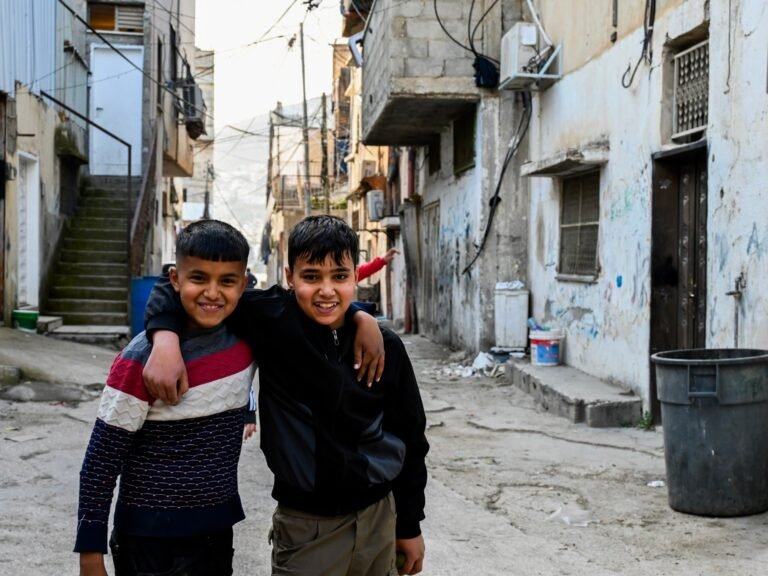
Nablus, occupied West Bank – Islam Madani says families and young people from the Askar refugee camp would once congregate beneath the olive trees on the slopes of Tel Askar, a hilly area in the north of the occupied West Bank which is home to the camp.

“But most won’t go anymore because soldiers shoot so many people there,” the 32-year-old father of two told Al Jazeera.

Recommended Stories

list of 4 itemsend of list

Amjad Refaee, director of the Askar Social Development Centre, says memories of those killed by Israeli soldiers haunt one of the only green spaces in the camp where children can play.

The military has killed three teenagers there, and maimed many more since October 7, 2023, when Hamas led an attack on Israel, and Israel began its genocidal war on Gaza.

The soldiers no longer fire rubber bullets or aim below the waist, “they shoot to kill, or cause disability”, Refaee told Al Jazeera.

“We are animals to them,” he added. “They terrorise us, kill our young people in cold blood, and keep us here in a prison.”

People from the camp say Tel Askar has become the entrance point used by invading Israeli soldiers as they infiltrate the narrow and dilapidated streets of the camp, often via the illegal settlement of Elon Moreh that looms over the east of Nablus.

It was on the hill where soldiers shot 18-year-old Amir Othman last January, leaving him with a disability. The shooting was almost at the exact spot where his childhood friend Mohammed Abu Haneen was killed by the army just over a year before. He was 18.

A track surrounded by trees at Tel Askar refugee camp
Tel Askar in the occupied West Bank [Al Jazeera]

‘I asked my uncle to shoot me’

Amir was a promising footballer and dancer until Israeli soldiers shot him in the leg last January as a convoy of jeeps drove through Tel Askar.

He had travelled extensively performing Dabke, a traditional Palestinian line dance.

Amir, now an aspiring nurse, was hauling his wounded friend – also shot by soldiers – to safety when he was hit by a bullet.

“My kneecap and my thighbone were shattered,” he told Al Jazeera.

“I couldn’t feel my leg anymore, so I thought I had lost it.

“The blood felt like boiling water spilling out of my leg.”

Soldiers blocked ambulances from reaching Amir as he lay bleeding. Healthcare officials and international organisations say that has happened hundreds of times since October 7, when Israel intensified raids on Palestinian communities in the occupied West Bank, particularly refugee camps.

Amir eventually underwent four operations to help him walk again. He spent four months bed-bound, doctors tell him his mobility will never return to normal.

“When I woke up from the first surgery, I asked my uncle to shoot me, because I thought it’d be better,” he added.

“But I’m learning to accept the situation and keep living.”

Amir said he still dreams of touring, dancing Dabke and running with his friends. “But none of that is possible now,” he said.

The children of refugees

At least 13 Palestinians have been killed in Askar since Israel’s assault on the occupied West Bank intensified after October 7, according to Palestinian monitoring groups. Many others have been shot during the military’s incessant raids.

At least 157 children have been killed by soldiers or Israeli settlers in the West Bank and occupied East Jerusalem since 2024, according to data compiled by Defense for Children International – Palestine.

Israel denies targeting children, saying its military raids are necessary for security reasons, and to clamp down on Palestinian fighters.

Askar is among the most densely populated of the 19 refugee camps in the occupied West Bank. It is home to 24,000 people, packed into an area about the size of 17 football fields.

It is plagued by unemployment, and many residents live in poverty and suffer “cramped living conditions,” according to the United Nations Relief and Works Agency (UNRWA).

Refugee camps originally were makeshift tented communities intended to provide temporary sanctuary to hundreds of thousands of refugees forcibly expelled from historic Palestine in the Nakba of 1948, when the state of Israel was established.

But as the decades passed, and hopes faded for the refugees to return to their homes faded, the camps became overcrowded, built-up areas.

Amir sat in the camp’s newly established emergency health centre with his friend Yamen Habron, aged 17, and Islam Madani, aged 32. They were also shot by the Israeli military in the last three years, leading to disabilities.

The trio were insistent that no one, no matter their age, is safe when the military storms the camps. They noted the case of 14-year-old Iyad Shalakhti, who was shot dead by soldiers on July 9, 2025, in Tel Askar.

Three young people stand up
Yamen Habron, Amir Othman, and Islam Madani, along with Islam’s four-year-old son, at the entrance to Askar refugee camp in the occupied West Bank [Al Jazeera]

‘No safety’

Islam Madani said he forbids his children – as do many other parents – to play outside in the refugee camp. His four-year-old son energetically patrolled the meeting room where Al Jazeera spoke with his father.

The young boy cries uncontrollably every time the military enters the camp because he knows what soldiers did to his father.

He was shot by a sniper at 7:30 am on January 9, 2024 as he rushed to clock in at the factory where he worked.

“I lost so much blood,” he said. “The paramedic did everything he could to keep me conscious, in case I didn’t wake up.”

He recovered from multiple major surgeries. The shot, he says, went in the back of his knee and out the front, leaving gruesome scars.

He said the army now invades at any time of day and doesn’t distinguish between those fighting against the Israeli occupation and peaceful, unarmed residents.

“Anyone can get shot,” he said. “There is no safety. I was just walking to work.”

Islam is no longer employed at the factory, and cannot stand for long before pain overwhelms him.

He’s been seeing a psychologist to help him process what he sees as the shame of not being able to provide for his family since he was shot and left jobless.

“I became more aggressive, angry and impulsive since being shot,” he said. “I pray to God that better is to come.”

Deliberate?

Yamen dropped out of school very young to support his family through hardship.

The timid teenager was shot twice in the side by soldiers who surrounded him as he reached his front door after returning from the gym. One bullet became lodged in his hip, and the other sliced through his side.

He told Al Jazeera that all he could remember was his father and brother desperately trying to keep him conscious while he waited for the ambulance, which was being blocked by army jeeps.

“All I could remember were my mother’s cries,” he said.

He spent 14 days in intensive care, and doctors spent two days removing the bullet shrapnel. He now walks with a limp.

Centre director Amjad Refaee has known Islam, Amir, and Yamen their entire lives. He says none of them has ever been active in Palestinian fighting groups, as many are in refugee camps.

As they discussed their futures, the young men questioned whether the soldiers had intended to kill them, or whether they aimed to deliberately leave them disabled – to deepen the misery of their lives in the camp.

“Kids in Askar wake up to the occupation,” Refaee said. “They don’t have playgrounds. They can only play football in the streets. Many are forced to work from a very early age.”

Refaee said that his purpose is to keep young people alive by giving them hope, because they are “the future of the country”. “Otherwise we will disappear,” he added. “Which is what Israel wants.”


Source link

Access Denied

0

Access Denied You don’t have permission to access “http://hindi.gadgets360.com/cryptocurrency/bitcoin-surpasses-usd-80000-level-strong-etf-inflow-gives-support-news-11446335” on this server.

Reference #18.4b200117.1777898721.f438c2e

https://errors.edgesuite.net/18.4b200117.1777898721.f438c2e

Access Denied


Access Denied You don’t have permission to access “http://news.sky.com/story/scottish-soldiers-prepare-for-nato-deployment-to-estonia-with-urban-combat-drills-13540012” on this server.

Reference #18.f3680117.1777887802.49a06cad

https://errors.edgesuite.net/18.f3680117.1777887802.49a06cad


Source link