Public voter records can expose personal data when linked • The Register


Your voter data could be used against you. A foreign intelligence service that wished to identify the family members of deployed military personnel could do so by cross-referencing public voter record data and social media posts.

An employer who only wanted to hire employees with a specific political affiliation could do so by analyzing the primary ballot history of job applicants.

An identity fraud ring seeking to open credit accounts in the names of other people could identify voters whose mail has been returned (via voter file suspense indicators) to take over those addresses using bogus change-of-address requests.

These scenarios are possible thanks to the ability to link publicly available voter data to other data sets, according to Noah M. Kenney, founder of consultancy Digital 520.

“I picked two different counties that kind of represented opposite ends of the spectrum,” Kenney told The Register in a phone interview. 

“In Texas, they hide a lot of information and then North Carolina makes a lot of it public in terms of the specific records. And what I was looking at specifically is if you go and merge this data set or link this data set with other data sets, how likely are you to be able to re-identify a person?”

More than 25 years ago, research by Latanya Sweeney, currently a professor at Harvard, demonstrated that most of the US population (87 percent) could be identified with just three anonymous data points – a five-digit ZIP code, gender, and date of birth.

Those results can be improved when combined with other data sets. And recent research has shown that the process of identifying people from seemingly anonymous data points becomes even easier with AI tools.

In a research paper titled “Public Voting Records: A Record, or an Attack Surface?”, Kenney describes how he analyzed public records from Travis County, Texas, and Robeson County, North Carolina to show that the adversarial scenarios cited above are practical with public data.

The Texas file provides fewer data points than the North Carolina file, but the research suggests redaction doesn’t make much of a difference in the re-identification scenarios evaluated.

Table 1 — Disclosure regime comparison

Field TX NC
Full name Yes Yes
Residential address Yes Yes
Gender 90% fill 100%
Date of birth No Year only
Race / ethnicity No Yes
Phone number No 61% fill
Party registration Inferred Declared
30+ year vote history Yes Limited
Address Confidentiality Program (ACP) records Suspense codes Pre-filtered

With the less detailed Texas info, Kenney was able to use a Python script to link the voter records to other public records like the Federal Election Commission’s individual-contribution data.

“We pulled 500 contribution records for ZIP 78704 (an Austin-core ZIP including South Congress and Travis Heights neighborhoods) from the 2024 cycle via the FEC OpenAPI on May 1, 2026,” he explains in his paper. 

“We de-duplicated to 181 unique contributors by exact match on (last name, first name, ZIP), and inner-joined to the voter file on the same key, no fuzzy matching, no nickname normalization, no suffix handling. Of the 181 contributors, 105 (58.01 percent) matched any voter record and 95 (52.49 percent) matched a uniquely-identifiable voter. Of the 105 matches, 74.3 percent had a non-trivial employer field in FEC.”

That 52 percent individual match rate for identifying individuals from voter rolls and FEC data, Kenney said, would be more like 90–95 percent using the kinds of tools commercial data brokers employ.

The North Carolina voter dataset includes a phone number for the majority of voters. According to the paper, 88.53 percent of voters who have a phone number listed have a number that is unique within the county. As a result, external datasets containing phone numbers can be joined at a similar rate using this field as a key to narrow down and identify likely individuals.

Among the report’s other findings: 

  • Name and ZIP code uniquely identify 95.81 percent of Texas voters and 87.79 percent of North Carolina voters.
  • Among Travis County voters who have voted in 20 or more elections, 98.4 percent have a turnout pattern that is unique to them, making that data point a fingerprint.
  • Texas’ redaction of date of birth as a privacy measure is undermined by the publication of the voter registration data, which allows 28 percent of voters to be uniquely identified when combined with ZIP and gender.
  • The Travis County voter file currently exposes 320 deployed military families through the publication of APO/FPO codes for military mailings.

There’s currently no comprehensive federal privacy law. While many states have privacy rules, there’s a lot of variation.

“Even within a specific state, most of the counties are individually handling these public records requests, so they all handle them differently across the country,” said Kenney. 

“Some of them, you can’t get them. Some of them, you need an ID to get them. Some of them you have to go through a request process for public records or you have to pay for them. The two counties I used are both freely available. You can go and download zip files of them without even putting in an email address or your name from anywhere in the world.”

Kenney said that he believes that access controls represent a better answer than redacting certain data fields, pointing to his findings that show redaction doesn’t necessarily protect against privacy harms. He recommends measures like rate limits on bulk file requests, identity verification, requiring state ID, maintaining audit logs of requests, and prohibiting commercial resale of these records – because they’re often used by data brokers.

Beyond specific fixes based on his findings – Texas should generalize voter registration dates to a year rather than a day and armed forces mailing codes should be excluded from voter rolls – Kenney argues that people should be allowed to opt out of inclusion in public data sets and that general data privacy protections would be helpful.

Last week, House Republicans introduced the Secure Data Act in an effort to create federal privacy rules. But Kenney says that it’s significantly weaker than a lot of state regulations and he doesn’t expect it will pass.

“The industry consensus is that the likelihood of it passing is extremely low, at least in its current form,” he said. “This represents the third attempt to pass comprehensive data privacy in recent years, most recent being the American Data Privacy and Protection Act, which failed to pass.” ®


Source link

Coalition accused of secretly giving big tobacco lobbyists private platform in parliament | Smoking

0

Anti-smoking campaigners have accused the Coalition of secretly giving tobacco giants access to a parliamentary inquiry, a move they say undermines more than 15 years of precedent to protect public health.

On Monday, representatives from tobacco company Philip Morris appeared before a Senate committee considering the illegal tobacco trade in Australia.

Chaired by South Australian Liberal senator Leah Blyth, the committee also heard from anti-smoking campaigners, health groups and Australian Border Force, but Labor, the Greens and the Australian Council on Smoking and Health raised concerns that executives from cigarette manufacturers were allowed to give evidence in a closed session in Canberra.

The committee published a full program for Monday’s hearings, but did not list evidence from Philip Morris or any other “in camera” – or private – session.

Labor senator Jana Stewart and Greens senator Jordon Steele-John objected to the in-camera evidence by representatives of Philip Morris on Monday afternoon.

The health minister, Mark Butler, wrote to Blyth on Friday last week, reminding the committee of Australia’s obligations under a World Health Organization agreement on tobacco control, which requires public officials to protect health policy from interference from the tobacco industry and associated interests.

Health Department guidance suggests Australian public officials, including members of parliament, should only interact with executives and lobbyists from tobacco manufacturers “when and to the extent strictly necessary” to effectively regulate smoking.

Sign up for the Breaking News Australia email

The department also stresses interactions should be conducted transparently.

“I would strongly advise against the committee inviting representatives that undermine this obligation,” Butler wrote to Blyth and the Senate president, Sue Lines.

Stewart told the hearing efforts by public officials to be “cautious about any kind of influence or advice” from big tobacco companies were wise.

Later, Steele-John confirmed the private hearing had taken place and promised to release a transcript of the evidence.

He said in a public session: “We have just taken evidence in camera from Philip Morris. I shared with them during our exchanges my opposition to their presence in this inquiry as witnesses.”

Australian Council on Smoking and Health chief executive, Laura Hunter, said she was “concerned that individuals or organisations with links to the tobacco industry have been invited to participate in this inquiry”.

“We recognise the committee may wish to hear from a range of stakeholders,” she said.

“But the tobacco industry is not a neutral stakeholder. It is a commercial actor whose profits depend on the continued sale of a product that kills Australians every day – and whose interests are directly affected by the outcomes of this inquiry.”

Hunter said the presence of individuals from big tobacco companies did not strengthen decision-making, “it compromises it”.

Guardian Australia has contacted the company and Blyth for comment.

Lung Foundation chief executive, Mark Brooke, told the hearing tobacco companies had used obfuscation and denial of health harm for at least 50 years.

“You only have to look at the tobacco companies giving evidence before the US Senate, denying lung cancer in the ‘60s and ‘70s to play it out,” he said.

“It’s fair to say big tobacco says things like ‘we want to un-smoke the world’ but then challenges every meaningful attempt by governments, not just here in Australia but around the world, to cease production or sales of their products.”

Cancer Council Australia chief executive, Jacinta Reddan, said it had been 16 years “since big tobacco had a platform” in federal parliament.

She pointed to the World Health Organization’s framework convention on tobacco control, article 5.3, which is designed to stop interference in public health policy from cigarette and e-cigarette manufacturers.

“We’re very concerned that they were given that opportunity behind closed doors, away from the scrutiny of the Australian public,” Reddan said.

Assistant minister for customs, Julian Hill, called on Coalition senators to explain the secret hearing.

“Australians should be shocked and outraged that today the committee chose to get secret evidence from big tobacco,” he said.

“They’re quick to give comment when it suits them, and yet they want to skulk in in secret to a parliamentary inquiry when not.”


Source link

Operation Epic Fury seizures send shockwaves through China and Russia


NEWYou can now listen to Fox News articles!

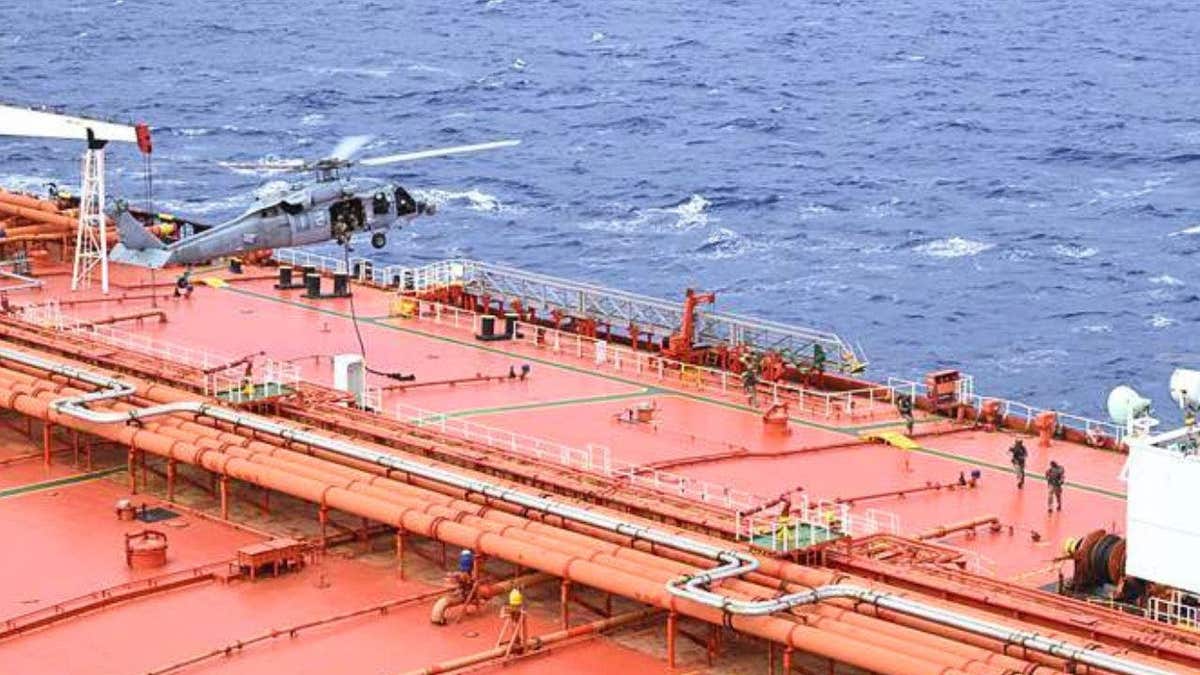
On Tuesday, U.S. Marines from the USS Tripoli once again fast-roped from their MH-60 Seahawk helicopters onto the deck of a suspicious container ship named Blue Star III heading for Iran. That makes a total of 39 vessels turned back, boarded or seized since April 13.

“The blockade has been unbelievably effective,” President Donald Trump said on Sunday. Economic pressure is the main point of the blockade, but it has military impact far beyond the Strait of Hormuz.

“We seized their sanctioned ships, and we will seize more,” U.S. Secretary of War Pete Hegseth briefed at the Pentagon on Friday, April 24.  “Our blockade is growing and going global,” Hegseth added.

“Going global” is sending shockwaves through China. China imports at least 70% of its oil. Of that, 90% moves by sea. Iran alone supplied 14% of China’s imports last year, with Russia adding another 18%.  Most of that oil was moved by shadow fleet tankers.

TRUMP CASTS MADURO’S OUSTER AS ‘SMART’ MOVE AS RUSSIA, CHINA ENTER THE FRAY

A white U.S. military helicopter hovers over the bright orange sanctioned stateless crude oil tanker M/T Tifani during an U.S. interdiction.

The blockade continues, as a U.S. military helicopter hovers over the sanctioned stateless crude oil tanker M/T Tifani during an interdiction on April 21, 2026. (Department of War)

For all the talk of China’s growing naval power, this sea power phase of Operation Epic Fury is an incredible boost to deterrence in the Pacific. The tactics and joint force coordination on display are not something China can easily match. The web of air and maritime surveillance, intelligence, financial forensics and sheer audacity is something only America can pull off.

Here’s why China and Russia should be very, very worried.

Merchant Vessel Touska

NO RETREAT AT HORMUZ — IRAN MUST NOT CONTROL THE WORLD’S ENERGY LIFELINE

The drama began in the wee hours of Sunday, April 19, when the Iranian-flagged container ship Merchant Vessel (M/V) Touska tried to enter the Strait of Hormuz and reach the Iranian port of Bandar Abbas. Touska was pedal-to-the-metal in merchant ship terms, steaming at 17 knots under cover of darkness. Lying in wait was the U.S. Navy guided-missile destroyer USS Spruance (DDG 111.)

Spruance had already caught a different Iranian ship sneaking out of the strait five days earlier and Touska was highly visible. At 9 a.m., after multiple warnings, Spruance fired nine inert 5-inch shells into the engine room, leaving Touska dead in the water. Now that’s marksmanship. At 4 p.m., U.S. Marines from the amphibious ship USS Tripoli air-assaulted onto Touska and took ship and crew into custody.

CLICK HERE FOR MORE FOX NEWS OPINION

Tifani and Majestic X

Admiral Samuel Paparo, commander, U.S. Indo-Pacific Command, is a Navy fighter pilot and TOPGUN grad, best known for an intense technology and warfighting focus. His forces hunted down and captured two Iranian oil tankers last week. Motor Tanker (MT) Tifani is a shadow fleet tanker notorious for hauling oil from Iran to a spot off the coast of Malaysia, then offloading it onto China-bound ships. U.S. forces boarded MT Tifani, took control of the bridge, and took custody of 1.9 million barrels of oil. Street value: $171 million, at $90 per barrel. Next, the Motor Tanker Majestic X was boarded and seized in the Indian Ocean. Officially, it’s called maritime interdiction and right-of boarding,” since MT Majestic X was a stateless vessel sanctioned back in 2024 for carrying Iranian oil.

Both Tifani and Majestic X are sailing west, in close proximity, on course for the U.S. Military Sealift Command base at Diego Garcia. The Motor Vessel Blue Star III was luckier; the crew promised the Marines she was not bound for Iran, and they let her go on her way. With eyes on, no doubt.

CLICK HERE TO DOWNLOAD THE FOX NEWS APP

Historically, this year has seen the biggest haul of captured enemy vessels since President Franklin D. Roosevelt requisitioned 90 foreign merchant ships idling in American harbors in 1941. Don’t forget how U.S. Southern Command seized seven Venezuelan oil tankers in the Caribbean in January.

As for Russia, President Vladimir Putin’s shadow fleet may also be at risk in global seas. Vladimir Putin and his cronies acquired a large, unflagged, ghost fleet of tankers to evade sanctions after the 2022 invasion of Ukraine. The shadow fleet may top 770 vessels, moving 3.7 million barrels of oil per day. Mainly to China, of course. By taking ships on the high seas, Operation Epic Fury is demonstrating that the Russian shadow fleet could be next.

CLICK HERE TO READ MORE FROM REBECCA GRANT


Source link

Access Denied

0

Access Denied You don’t have permission to access “http://hindi.gadgets360.com/wearable/cmf-watch-3-pro-launching-on-6-may-in-india-know-feature-to-specifications-news-11446179” on this server.

Reference #18.134adc17.1777906640.31f186

https://errors.edgesuite.net/18.134adc17.1777906640.31f186

‘Point of no return’: New Orleans relocation must start now due to sea level, study finds | New Orleans

0

The process of relocating people from New Orleans should start immediately as the city has reached a “point of no return” that will see it surrounded by the ocean within decades due to the climate crisis, a stark new study has concluded.

Ongoing sea level rise and the rampant erosion of wetlands in southern Louisiana will swallow up the New Orleans area within a few generations, with the new paper estimating the city “may well be surrounded by the Gulf of Mexico before the end of this century”.

Low-lying southern Louisiana faces multiple threats, with rising sea levels driven by global heating, compounded by strengthening hurricanes, also a feature of the climate crisis, and the gradual subsidence of a coastline that has been carved apart by the oil and gas industry.

Southern Louisiana is facing 3-7 metres of sea level rise and the loss of three-quarters of its remaining coastal wetlands, which will cause the shoreline “to migrate as much as 100km (62 miles) inland”, thereby stranding New Orleans and Baton Rouge, according to the study, which compared today’s rising global temperatures with a period of similar heat 125,000 years ago that caused a rise in sea level.

This scenario makes the region the “most physically vulnerable coastal zone in the world”, the researchers state, and requires immediate action to prepare a smooth transition for people away from New Orleans, which has a population of about 360,000 people, to safer ground.

Louisiana has already experienced population loss in recent years, and this trend will accelerate in a disordered way, the paper warns, should no action be taken to confront the perils faced by its largest city and surrounding communities.

“While climate mitigation should remain the first step to prevent the worst outcomes, coastal Louisiana has evidently already crossed the point of no return,” added the perspectives paper, published in the Nature Sustainability journal. A perspectives paper is a scholarly article that provides an assessment, rather than new data.

Billions of dollars have been spent to fortify New Orleans with a vast network of levees, floodgates and pumps erected after 2005’s catastrophic Hurricane Katrina. But the growing threats to the city mean the levees, which already require hefty upgrades to remain sufficient, will not be able to save the city in the long run, the new paper warns.

Animated map showing the land below water along the southern coast of Louisiana at both three and seven metres

“In paleo-climate terms, New Orleans is gone; the question is how long it has,” said Jesse Keenan, an expert in climate adaptation at Tulane University and one of the paper’s five co-authors.

“How long is not certain but it’s most likely decades rather than centuries. Even if you stopped climate change today, New Orleans’s days are still numbered. It will be surrounded by open water, and you can’t keep an island situated below sea level afloat. There’s no amount of money that can do that.”

City, state and federal leaders should begin work to help support people moving away from the New Orleans region in a coordinated way, starting with the most vulnerable communities, such as those in Plaquemines parish who live outside the levee system, Keenan said.

“New Orleans is in a terminal condition, and we need to be clear with the patient that it is terminal,” he said. “There is an opportunity for palliative care, we can transition people and the economy. We can get ahead of this.”

But, he added, “no politician wants to first give this terminal diagnosis. They will speak about it behind closed doors, but never in public.”

New Orleans faces obvious challenges – situated in a bowl-shaped basin below sea level, the city already has 99% of its population at major risk of severe flooding, the worst exposure of any US city according to a separate study released last week.

“Even compared to all other US cities, New Orleans really stands out, which is alarming,” said Wanyun Shao, a co-author of this study and a geographer at the University of Alabama.

“There is no specific timeline to how long New Orleans has left but we know it’s in big trouble. They are facing one of the highest sea level rises in the world and I don’t know how long human effort can fight against that tide. It’s like a timebomb.”

Shao said she concurred that relocation of people would have to take place. “I know it’s a politically and emotionally charged issue, there are people with a deep attachment to New Orleans,” she said. “But managed retreat, no matter how unappealing it may be, is the ultimate solution at some point.”

A major pressure upon this southern cultural hotspot is that its surrounding land is briskly receding. Since the 1930s, Louisiana has lost 2,000 sq miles of land to coastal erosion, equivalent to the size of Delaware, with a further 3,000 sq miles set to vanish over the next 50 years. The rate of land loss is so rapid that a football pitch-sized area is wiped out every 100 minutes.

To help counter this, Louisiana last decade settled upon a new sort of plan that eschewed building yet more flood defenses and instead sought to harness the Mississippi River’s natural ability to rebuild land. Levees and other infrastructure have, until now, straitjacketed the naturally meandering Mississippi and pushed the sediment it carries straight into the Gulf of Mexico, rather than replenish the coastal wetlands.

The so-called Mid-Barataria Sediment Diversion project, which broke ground in 2023, would help restore a more natural flow in the Mississippi Delta and allow sediment to build up in coastal areas where it has been lost. More than 20 sq miles of new land would be created over the next 50 years under the plan, the project estimated.

However, Jeff Landry, Louisiana’s Republican governor, scrapped the project last year, arguing its $3bn cost was too high and that it threatened the state’s fishing industry. “This level of spending is unsustainable,” Landry said at the time, adding that the project imperiled the livelihoods of “people who have sustained our state for generations”.

Proponents of the project, which was funded via a settlement from BP over the Deepwater Horizon disaster in 2010, decried the decision as disastrous for the state, pointing out fishing communities will need to move anyway because of worsening erosion.

Garret Graves, a Republican former Congressman who once led the state’s coastal restoration agency, said Landry was guilty of a “boneheaded decision” that will “result in one of the largest setbacks for our coast and the protection of our communities in decades”.

According to the new research paper, the loss of the sediment diversion plan “effectively means giving up on extensive portions of coastal Louisiana, including the New Orleans area”.

A legal bid to force oil and gas companies to pay for damage to Louisiana’s coastline, meanwhile, is also in doubt. This month, the US supreme court allowed the fossil fuel industry to federally contest a state jury decision that Chevron pay $740m to remedy harm caused to wetlands by dredging canals, drilling wells and dumping wastewater.

“The combination of these decisions is driving a scenario where the state has stopped trying to build land,” Keenan said. “That just accelerates the timeline. They could be buying time, but that option is foreclosed now, meaning it’s a certainty the New Orleans levees will fail again multiple times. The flood water will have nowhere else to go.”

While the US has never wholesale moved a major city before, numerous communities have relocated for economic reasons in the past, with some now being shifted due to the climate crisis, too. In Louisiana, the government could start planning and building appropriate infrastructure in safer areas on the other side of Lake Pontchartrain, the large estuary that sits to the north of New Orleans, Keenan said.

“This could be an opportunity for New Orleans to help migrate people further north, invest in long-term infrastructure and make that sustainable,” Keenan said.

“That exodus has already begun, so if nothing is done, people will just trickle out over time and it will be an uncoordinated mess. The market will speak as people won’t be able to get insurance. Louisiana has to stop the bleeding and acknowledge this is happening. But at the moment there is no plan.”

Timothy Dixon, an expert in coastal environments at the University of South Florida who was not involved in the new paper, said the study “does a nice job” of highlighting the challenge Louisiana faces with subsiding land combined with rising sea levels.

“New Orleans is not going to disappear in 10 years or anything like that, but policymakers really should’ve thought about a relocation plan a century ago,” said Dixon, whose own research has recommended a measured retreat from coastal Louisiana.

“Governments may not have the ability to just command people to leave, but people will volunteer to move and we are seeing that already. I’m not optimistic our political system is capable of dealing with this stuff, it will take leadership and unpopular decisions. Also, many people don’t want to move. They love where they are born.”

Landry’s office was contacted for comment but did not respond.


Source link

Long COVID is the next chronic crisis — and Washington must confront it now


NEWYou can now listen to Fox News articles!

Long COVID is a serious, growing public health crisis. Though estimates vary, as many as 18 million Americans may be affected. This is why it continues to capture the attention of Senator Todd Young, who asked Secretary Kennedy to prioritize Long Covid research in his confirmation hearing last year. This week, the Senator had the opportunity to follow up with the Secretary at this year’s budget hearing, who reported on the Department’s efforts to identify biomarkers and committed to continuing the effort.  

This is welcome news. For most of us, the COVID-19 pandemic is a distant, though searing memory. However, too many Americans are still experiencing the pandemic as a daily reality, suffering from what is now known as Long COVID. In 2026, three years after the end of the Public Health Emergency, Long COVID patients report a wide variety of symptoms, which include significant cognitive dysfunction, extreme fatigue, post exertional exhaustion, autonomic dysfunction, cardiovascular conditions, blood vessel pathology, air hunger, intravascular micro-coagulation, tinnitus, and other neurological symptoms.  Unfortunately, there is no molecular diagnostic test, no detailed elucidation of the pathogenesis of the disease, and no definitive therapy.  

I devoted my medical career — in the US Army, at the University of Maryland, and in public service — to fighting deadly and debilitating diseases.  Today, much of my medical practice is focused on helping patients afflicted with Long COVID.  The current Long Covid crisis reminds me of my early days as a new doctor confronting AIDS before the NIH and HHS made solving AIDS a research priority. 

GOVERNMENT SAYS ‘EAT BETTER’ BUT MAKES IT HARDER TO FEED YOUR FAMILY

More than thirty years ago, I witnessed academia, federal laboratories, and industry commit itself to solving AIDS. These efforts converted HIV/AIDS from a once fatal disease to a highly treatable and preventable infection, where individuals infected with the HIV virus can expect to live a full, natural lifetime. This occurred because of an aggressive focus on what was possible and a major investment in innovation by the U.S. Government.  Similarly, in 2020 with the emergence of the COVID-19 pandemic, President Trump had the insight to fund Operation Warp Speed and engage industry in the rapid development of a COVID vaccine.

Many mistakes were made during the Covid-19 response, but developing vaccines at record speed to protect the vulnerable was not one of them.  Given the enormity of the Long COVID problem, President Trump should now direct his team to accelerate innovative research to discover and develop an effective treatment for Long COVID.

Sadly, the NIH has failed to effectively invest the necessary resources to solve our understanding of Long COVID pathogenesis or to develop a diagnostic test necessary to move the field forward.  

In 2025, the Administration undertook a series of actions consistent with a pandemic that had run its course. The Office for Long COVID Research and Practice was shuttered and research funding was cut. The CDC and NIH both stated that they would, “no longer waste billions of taxpayer dollars responding to a non-existent pandemic that Americans moved on from years ago.”

CLICK HERE FOR MORE FOX NEWS OPINION

As much as we might wish this to be true, this is a mischaracterization of the current state of the pandemic, and it is a costly one. Productivity losses and medical costs associated with Long COVID patients continue to cost the United States hundreds of billions of dollars each year. Sadly, research programs that would have made a meaningful dent in these costs were cut just as they were on the cusp of yielding results that would have led to a wave of clinical trials. Fortunately, some of the cuts in this research have been reversed. Unfortunately, the overall investment in Long COVID is inadequate. More needs to be done. 

Now is the time to prioritize the discovery of novel treatments to ease the suffering of the 18 million patients struggling with Long COVID.  Simply put, the NIH should aggressively fund Long COVID research efforts.

CLICK HERE TO DOWNLOAD THE FOX NEWS APP

I applaud Secretary Kennedy’s emphasis on battling chronic disease. This is long overdue. And so, we call on Secretary Kennedy and the administration to aggressively address Long COVID, a new and major chronic disease.  

AIDS once was a mysterious, predominately fatal, disease of otherwise healthy individuals. Now, it is a treatable and preventable infection. The same could be true for Long COVID, if we aggressively invest in the research and the clinical system so urgently needed. Now is the time to empower HHS and industry to make this a reality and offer millions of suffering Americans the chance to live unencumbered by the effects of Long COVID.  


Source link

Access Denied

0

Access Denied You don’t have permission to access “http://hindi.news18.com/cricket/ipl-2026-gujarat-titans-all-rounder-washington-sunder-who-cant-hear-from-left-ear-making-his-image-as-top-match-winner-in-this-season-10443681.html” on this server.

Reference #18.bdf9dead.1777885984.2a3c7246

https://errors.edgesuite.net/18.bdf9dead.1777885984.2a3c7246

Iran warns US to stay out of Hormuz after Trump says US will ‘guide’ ships | US-Israel war on Iran News

0

Iran’s military has warned the United States Navy to stay out of the Strait of Hormuz after President Trump said the US will “help free up” ships stuck in the strategic waterway.

The Iranian military said US forces will be attacked if they enter the strait and told commercial ships and oil tankers to refrain from moving unless they are coordinating with Iran, Ali Abdollahi, the head of the forces’ unified command, said in a statement on Monday.

Recommended Stories

list of 3 itemsend of list

“We warn that any foreign armed forces, especially the aggressive US army, will be attacked if they intend to approach and enter the Strait of Hormuz,” the statement said.

On Sunday, Trump said he was launching the campaign – dubbed “Project Freedom” – at the request of countries whose vessels are stranded in the strait, whom he referred to as “neutral and innocent bystanders”.

“For the good of Iran, the Middle East, and the United States, we have told these Countries that we will guide their Ships safely out of these restricted Waterways, so that they can freely and ably get on with their business,” Trump said in a post on Truth Social, without specifying which countries called for Washington’s help.

“Many of these Ships are running low on food, and everything else necessary for largescale crews to stay on board in a healthy and sanitary manner,” Trump said, adding that any interference in the operation would “unfortunately, have to be dealt with forcefully”.

US Central Command said it would support the effort with 15,000 military personnel, more than 100 land- and sea-based aircraft, along with warships and drones.

“Our support for this defensive mission is essential to regional security and the global economy as we also maintain the naval blockade,” Admiral Brad Cooper, the CENTCOM commander, said in a statement.

Al Jazeera’s Resul Serdar Atas, reporting from Tehran, said any US intervention in the Strait of Hormuz will be viewed by Iran as a violation of the ceasefire that came into effect on April 7.

“The Iranians are quite clear. They are saying they’re going to respond and engage militarily. And in such a case, that will be the end of the ceasefire.

“The Iranian military establishment and political officials here say that the war has changed many things. And that there is a new regime [in the Strait of Hormuz] and Iran in one way or another is going to keep control over the waterway,” said Atas.

Dangerous escalation

Iran has been blocking nearly all shipping from the Gulf, other than its own, for more than two months, sending global energy prices soaring.

In the US, petrol has risen to an average of $4.44 per gallon, up from less than $3 before the war started, spurring inflation.

Trump had previously suggested that he is comfortable with the status quo of the competing blockades in the strait, arguing that the US siege was “more effective than bombing”.

However, a US move to ease the Iranian blocking of the strait could alter the relative calm that had persisted against growing tensions in the past weeks.

Harlan Ullman, chairman of the Killowen Group and a former US naval officer, said Trump’s latest plan could lead to a dangerous escalation.

“Iran has huge amounts of drones and small craft that could make this very, very difficult,” Ullman told Al Jazeera. “I would hate to see a confrontation where an American warship is hit, because then the Americans will have no other option except to retaliate.”


Source link

Access Denied

0

Access Denied You don’t have permission to access “http://hindi.news18.com/news/uttar-pradesh/azamgarh-unique-story-of-dead-man-who-killed-on-paper-made-bollywood-film-local18-10443724.html” on this server.

Reference #18.4a200117.1777886540.161ad987

https://errors.edgesuite.net/18.4a200117.1777886540.161ad987

Access Denied

0

Access Denied You don’t have permission to access “http://hindi.news18.com/news/ajab-gajab/viral-shocking-street-scene-lover-takes-girl-away-in-front-of-father-viral-video-leaves-internet-stunned-10443742.html” on this server.

Reference #18.94adc17.1777902843.4746263

https://errors.edgesuite.net/18.94adc17.1777902843.4746263