India A vs Bangladesh A final: The excitement of the Women’s Rising Stars Asia Cup being played in Bangkok has reached its peak. After both the semi-final matches played on 20th February, it is now clear that the title clash will be between India A and Bangladesh A. This high-voltage final match will be played on Sunday, 22 February at Terdthai Cricket Ground.
Women’s Rising Stars final will be played between India and Bangladesh.
New Delhi. The picture of the title match of Women Rising Stars has become clear. The teams of India A and Bangladesh A will face each other in the great match to be held on 22 February. In the semi-final, India defeated Sri Lanka A by 5 wickets due to the brilliant all-round performance of Radha Yadav (4 wickets and 31 runs unbeaten). Whereas in the second semi-final, Bangladesh A registered a big win by 54 runs by bowling out Pakistan A for just 56 runs on the basis of excellent bowling. Now both the teams will clash for the trophy on Sunday.
Captain Radha Yadav gave a brilliant all-round performance and took the India A team to the final of the Women’s Rising Stars T20 Asia Cup by winning by five wickets over Sri Lanka A. Sri Lanka won the toss and decided to bat first but it cost them dearly. The Indian bowlers, led by Radha, destroyed their batting line-up and dismissed them for 118 runs. Left arm spinner Radha took four wickets for 19 runs. Radha got good support from another left arm spinner Tanuja Kanwar (two wickets for 20 runs) and leg spinner Prema Rawat (two wickets for nine runs).
Women’s Rising Stars final will be played between India and Bangladesh.
Vrinda Dinesh was the top scorer by scoring 42 runs. Opener Sanjana Kavindi (31 runs) was the top scorer for Sri Lanka. Sri Lanka’s score in the 10th over was 71 runs for two wickets. But after this they could not face the Indian spinners and lost the remaining eight wickets for 47 runs in nine overs. The biggest partnership for Sri Lanka was the 36-run partnership between Kavindi and fellow opener Hansima Karunaratne (14). While chasing the target, India had lost three wickets for 21 runs at one time but after that it did not face much trouble. Vrinda Dinesh was the top scorer for the team by scoring 42 runs.
Pakistani team collapsed in 16.4 overs But Radha, while contributing with the batting, scored unbeaten 31 runs with the help of seven fours in 18 balls, due to which India achieved the target in 13.3 overs. On the other hand, Bangladesh, batting first in the second semi-final, scored 118 runs for 8 wickets. In reply, Pakistan A team collapsed for 56 runs in 16.4 overs.
Active in journalism for about 15 years. Studied from Delhi University. Interested in sports especially cricket, badminton, boxing and wrestling. Covered IPL, Commonwealth Games and Pro Wrestling League events. From February 2022…read more
Quentin Griffiths, the co-founder of the online fashion retailer Asos, has died after falling from an apartment building in the Thai resort city of Pattaya.
An unnamed police investigator told the BBC that officers were called after a man was found dead on 9 February, having fallen from an 18-floor condominium in Pattaya, which is on Thailand’s eastern Gulf coast.
Griffiths, a 58-year-old British passport holder, was by himself, the investigator said, and an autopsy did not suggest any foul play. Nor was there was no trace of any break-ins at the time of the death.
The retail entrepreneur co-founded Asos with Nick Robertson, the great-grandson of the eponymous founder of the suit retailer Austin Reed, in London in 2000. The company launched with the name As Seen on Screen, before switching to the Asos acronym in 2002. It expanded to become one of the world’s biggest fashion retailers, with its designs worn by Rihanna and Michelle Obama. Griffiths left the company in 2005.
He went on to pursue several other startups, co-founding the online furniture store Achica, the music-related fashion retailer EBTM, and Adili, an ethical clothing website. EBTM went into administration, while Adili was eventually sold for a token £1.
Thai police told the BBC that Griffiths was involved in two court cases, which may have caused him stress.
When President Donald Trump announced “TrumpRx” in early February, a weight I’ve carried my entire adult life suddenly lifted from my shoulders. The website offers life-saving medications at much lower prices than normal, based on the president’s promise to give Americans the same prescription drug costs as patients in other developed countries. I can personally attest that such equal treatment — a policy known as “most favored nation” pricing — is urgently needed for people who struggle with chronic disease.
I’ve had debilitating asthma since I was a child. I’ve been able to manage it thanks to a prescription drug which blocks lung inflammation and keeps my airways open. The few times I’ve gone off the medication, I’ve ended up in the emergency room, unable to breathe. That nearly happened four years ago in what I thought was the worst possible place — on the other side of the world, unable to contact my doctors or go to my pharmacy.
My family and I were in Italy, on a trip to honor my mother. She had recently been diagnosed with cancer and my brother and I scheduled the trip in between her chemo treatments, when she would be well enough to travel. She had always wanted to go there with us. But in our rush to get two families and three little kids packed, I accidentally grabbed a nearly empty inhaler.
I realized my mistake a few days into the trip, when I looked at the inhaler and saw that I only had two doses left. I wasn’t just worried about my health, though, of course, that was paramount. I worried how I’d afford the drug if I even found it in Italy.
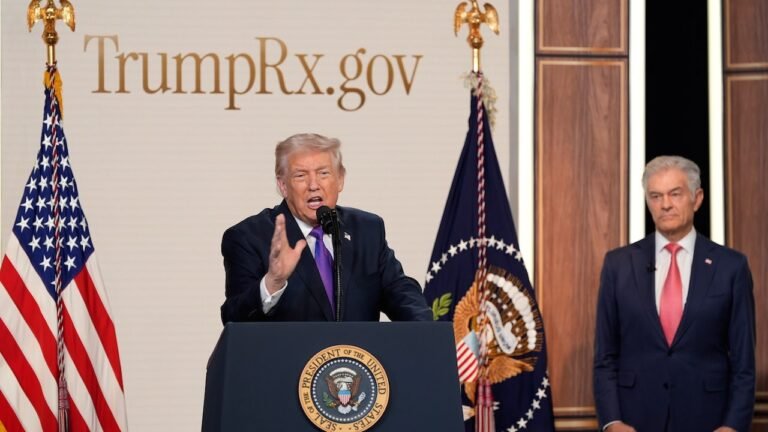
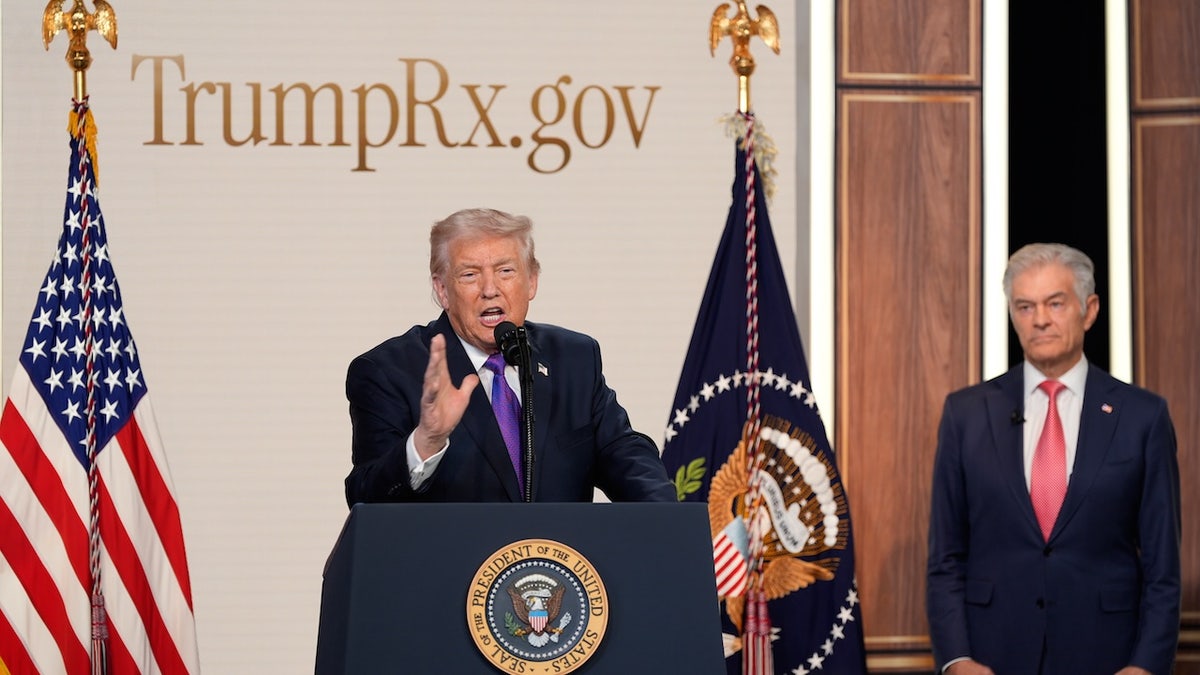
President Donald Trump speaks about TrumpRx in the South Court Auditorium in the Old Eisenhower Executive Office Building on the White House campus, Thursday, Feb. 5, 2026, in Washington, D.C., as Centers for Medicare & Medicaid Services Administrator Dr. Mehmet Oz listens. (AP Photo/Alex Brandon)
I’ve organized my professional life around access to insurance that covers my medication, given its longstanding retail price $600 for a month’s supply. For 25 years, I’ve grappled with denied coverage letters, premium tier prescription charts and the constant worry that we would have to cut back on necessities to get my medication. At the time, in Italy, I was already paying a few hundred dollars a month for the drug — a lot, but a bargain compared to its normal price.
But I had no choice. I had to get my medication. After a few minutes of searching, I found an Italian pharmacy across town. I walked there immediately, trying to control my racing thoughts of what might happen. I knew that if I couldn’t get the drug, I couldn’t get safely back to the U.S.
Fifteen minutes later, in tears I walked out, drug in hand. It cost me only 30 euros or about $35.
At first, I was both relieved and grateful. But by the end of the day, I was scratching my head. Why was it $600 in the U.S. while Italians could get it for next to nothing? In the days that followed, I discovered that the answer is beyond complicated.
It’s affected by everything from a lack of price transparency to the meddling of middlemen who jack up costs. It’s also true that foreign countries have been negotiating the prices of prescription drugs for decades, forcing Americans to cover the enormous cost of pharmaceutical development while they pay far below market prices.
Whatever the reason, the system doesn’t work for Americans. Brand name prescription prices in the U.S. are more than four times higher than prices in other wealthy countries. As many as 18 million Americans have struggled to buy the prescriptions they need in recent years.
I’m now using a generic version of the drug that costs significantly less. But that doesn’t change the fact that I, like many other Americans with chronic disease, have paid through the nose for decades on end, only to find the medication I needed in Italy for what seemed like pennies.
I wasn’t just worried about my health, though, of course, that was paramount. I worried how I’d afford the drug if I even found it in Italy.
Trump is fighting to fix this broken system. Before launching TrumpRx, he reached 16 deals with pharmaceutical companies to charge most-favored-nation prices. As a lifelong conservative, I’m typically uncomfortable with this kind of government intervention in the market. But other countries have already intervened and people like me have paid the price.
If pharmaceutical companies need the extra money, they should take it up with other countries that negotiated them down first. Then they could recoup their costs on the backs of others, not simply by charging more in the U.S. Bottom line, there’s no good reason why 340 million Americans should pay so much more than hundreds of millions of people who live in Europe and Asia.
I will always be grateful that my medication was so affordable in Italy back in 2022. It may very well have saved my life. But I’m even more grateful that President Trump is finally lowering prices for every American here at home.
Averel Meden is senior fellow for federal affairs at the Foundation for Government Accountability.
The UK’s data protection watchdog has scored a small win in a lengthy legal battle against a British retail group that lost millions of data records during a 2017 breach.
You can read Lord Justice Warby’s decision, handed down yesterday, here [PDF].
The Information Commissioner’s Office (ICO) originally fined DSG Retail £500,000 ($673,000) in 2020, the maximum financial penalty allowed under the Data Protection Act 1998 (DPA 1998) – the relevant legislation at the pre-GDPR time.
Its monetary penalty notice (MPN) was upheld by the Court of Appeal’s first-tier tribunal but later reversed by the upper tribunal [PDF], which sided with DSG Retail and, if that decision was final, would have effectively nullified the ICO’s fine.
Important to the case is the nature of the data that was stolen. Hackers installed malware on 5,390 tills across consumer electronics stores Currys PC World and Dixons Travel, both of which DSG owns.
The malware went unnoticed for nine months, hoovering up 5.6 million payment card details and the personal information belonging to around 14 million people, the ICO confirmed when issuing its MPN.
Then-commissioner Steve Eckersley said at the time that the ICO’s findings were “concerning” and related to “basic, commonplace security measures,” that ultimately showed “a complete disregard” for customers’ data.
The point of contention, central to the protracted legal case, is whether the card details the attackers scooped up could be used to identify cardholders. The trove of personal data accessed separately from the payment details is not something being debated in this case.
Crucially, the card details involved were the long 16-digit card number and expiry dates, but not the names on the cards.
DSG argues that this specific aspect of the case does not amount to a personal data breach since the hackers could not identify people from the payment card details alone. DSG acknowledges that it, as an organization, could make the link between the card data and real individuals, but says the attackers could not.
The upper tribunal ruled against the ICO, arguing that the case should be viewed from the perspective of the attackers. If they couldn’t use the card data to identify people, then that data should not be considered personal data within the context of a DPA 1998 offense.
Lord Justice Warby concluded on Thursday that this argument was incorrect, siding with the ICO, sending the case back to the first-tier tribunal which ruled correctly in the first instance.
His judgment challenged the upper tribunal’s interpretation of the law, saying that personal data must be viewed from the perspective of the controller; if it can lead to the identification of an individual, in this case, at DSG Retail, then it is personal data.
The relevant statute requires data controllers to safeguard this data, regardless of whether a third party could use it to identify individuals.
Lord Justice Warby added that the upper tribunal’s thinking could lead to confusing consequences if that was indeed the correct interpretation of the DPA 1998.
The same approach would effectively free data controllers of the burden of protecting data in the event of a ransomware attack, for example, provided the attacker could not use it to identify people.
“It is implicit in the reasoning of the UT, and in DSG’s submissions, that such interventions are essentially harmless from the perspective of data subjects, so long as the malicious actor is not able to identify the people to whom the data relate, so that a duty to guard against them would be pointlessly burdensome,” Lord Justice Warby ruled. “I do not accept that.”
He went on to discuss the possibility of jigsaw identification, whereby attackers could use the vast amounts of personal data that are accessible online, through various sources, as a means to identify the cardholders.
“Technology has vastly increased in sophistication. The ability to locate, assemble, and combine disparate items to elicit information about individuals is greatly enhanced. It will often prove impossible to rule out the risk that unauthorized access to part of a data set, which does not itself identify any individual, could lead to processing by some unknown third party with (legitimate) access to the means of identification.”
Now that the Court of Appeal has ruled that DSG had a legal duty to safeguard the payment card data as personal data, the first-tier tribunal will review the case within the context of this judgment.
DSG could appeal the tribunal’s decision, sending it back again to the upper tribunal. If disputes remain, it could become a matter for the UK Supreme Court.
Binnie Goh, general counsel at the ICO, said: “Today’s judgment is a significant victory, bringing much-needed clarity for people affected by cyber attacks as well as industry.
“We welcome the CoA’s confirmation that organisations must protect all personal data they process, regardless of how it might be used or exploited by hackers. This recognises that even if hackers can’t identify people individually from stolen datasets, cyberattacks can and do still cause real harm.
“With the rising threat of cybercrime, this decision strengthens our ability to take robust action in the future and sends a clear message to all organisations: you have a protective duty to safeguard the personal data you hold.”
Curry’s PLC, the current trading name of DSG Retail, did not respond to our requests for comment. ®
The public appearance ends rumours that Morales fled the country following the abduction of Nicolas Maduro in Venezuela.
Published On 20 Feb 202620 Feb 2026
Share
Evo Morales, Bolivia’s former long-serving socialist leader, has reappeared in his political stronghold in the country’s central Chapare region after almost seven weeks of unexplained absence.
His public appearance on Thursday in the town of Chimore ends rife speculation he had fled the country in the wake of the United States abduction of his ally, Venezuelan President Nicolas Maduro, in January.
Recommended Stories
list of 3 itemsend of list
The media outlet of Morales’ coca-growing union, Radio Kawsachun Coca, released footage of the former leader smiling in dark sunglasses as he arrived via tractor at a stadium to address his supporters.
Morales endorsed candidates for next month’s regional elections and pointedly accused the US under President Donald Trump of wanting “to eliminate every left-wing party in Latin America”.
Morales, Bolivia’s first Indigenous president, serving from 2006 until his fraught 2019 ouster and subsequent self-exile, explained that he had come down with chikungunya, a mosquito-borne ailment with no treatment that causes fever and severe joint pain, and suffered complications that “caught me by surprise”.
He dismissed rumours that he would try to flee the country, pledging to remain in Bolivia despite the threat of arrest under conservative President Rodrigo Paz, whose election last October ended nearly two decades of rule by Morales’s Movement Toward Socialism party.
The former president has spent the past year evading an arrest warrant on charges of human trafficking, which he has denied.
In December, a month after Paz was inaugurated, Bolivian authorities arrested former President Luis Arce as part of a corruption investigation.
The accusations centre on Arce’s time as economy minister under Morales, when authorities say he oversaw the diversion of approximately $700m from a state fund created to channel natural gas revenues into development projects for Indigenous peoples and peasant farmers.
Since taking office, Paz’s revival of diplomatic ties with Washington and recent efforts to bring back the US Drug Enforcement Administration – some 17 years after Morales expelled American anti-drug agents from the country – have also rattled the coca-growing region that serves as Morales’s bastion of support.
Butch Wilmore and Suni Williams, the two NASA astronauts “stranded” in space, came close to catastrophe because their spacecraft wasn’t ready to fly, according to a scathing report by the space agency.
The investigation classed the incident as a life-threatening “Type A mishap”, putting it on a par with the two fatal Space Shuttle disasters in 1986 and 2003.
It comes as NASA prepares to launch four astronauts on a mission to loop around the moon on a rocket that has flown only once before, without humans on board.
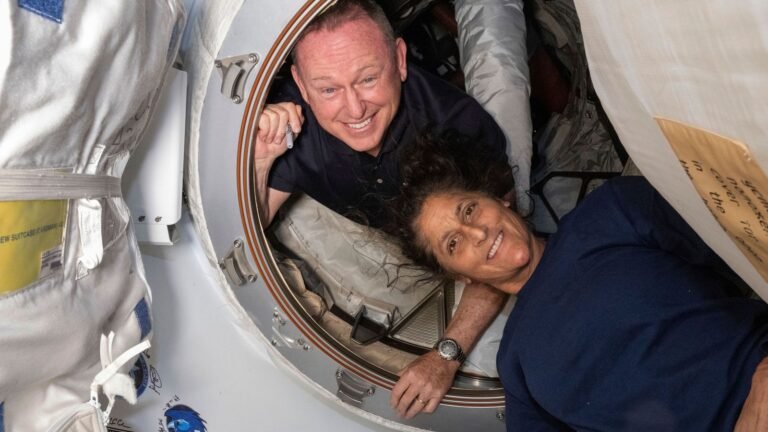
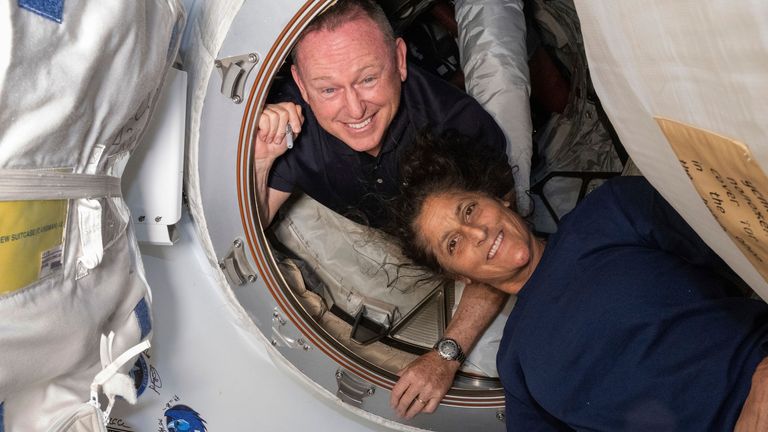
Image:Astronauts Butch Wilmore, left, and Suni Williams. Pic: NASA via AP
One senior NASA official said of the Starliner incident: “We almost did have a really terrible day.”
The Boeing-built Starliner capsule was on its first crewed test flight to the International Space Station in June 2024 when its thrusters failed, leaving it dangerously out of control.
Mr Wilmore and Ms Williams managed to restart the propulsion system and manually dock with the ISS.
But Jared Isaacman, the new NASA chief, told a news conference: “Had different decisions been made, had thrusters not been recovered, or had docking been unsuccessful, the outcome of this mission could have been very, very different.”
The two astronauts had been due to spend 10 days on the ISS, but their stay was extended to nine months while NASA assessed the problem.
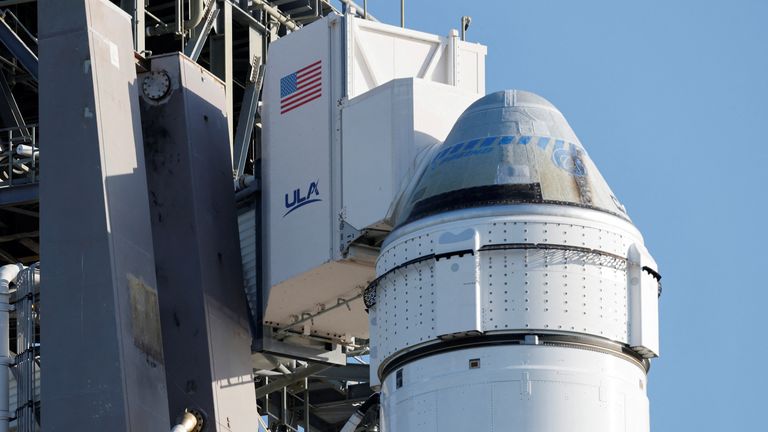
Image:Boeing’s Starliner-1 in 2024. Pic: Reuters
The capsule was eventually brought back to Earth without the two astronauts, but the new report reveals there were still issues with the thrusters during re-entry.
The Boeing Starliner had faced technical challenges throughout its development, including the use of flammable tape on electrical systems and a failure with the parachute system.
The report said the hardware failures were compounded by leadership mistakes and a cultural breakdown between Boeing and NASA.
Mr Isaacman said the capsule wasn’t ready for a crewed flight.
Boeing says it has driven “significant cultural changes” and made “substantial progress” on corrective actions for technical challenges since the incident.
Amit Kshatriya, another senior NASA official, said: “”This was a really challenging event in our recent history.
“We almost did have a really terrible day.”
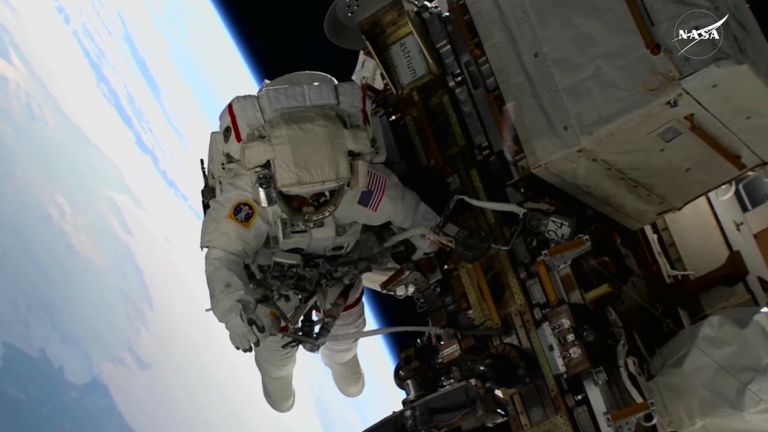
Image:Suni Williams works on a spacewalk. Pic: AP/NASA TV
NASA initially failed to classify the loss of propulsion as a type A mishap, even though it met the criteria because it was a “departure from controlled flight.”
The report said agency officials were too focused on getting an operational alternative to the Space X capsule that it relied on to shuttle crew to the ISS.
NASA said it led to a risk that was inconsistent with its human spaceflight safety standards.
“The record is now being corrected,” said Mr Isaacman.
NASA and Boeing are still trying to work out why the thrusters failed and the Starliner won’t fly again until the problem has been resolved.
Mr Wilmore and Ms Williams have since retired from the agency.
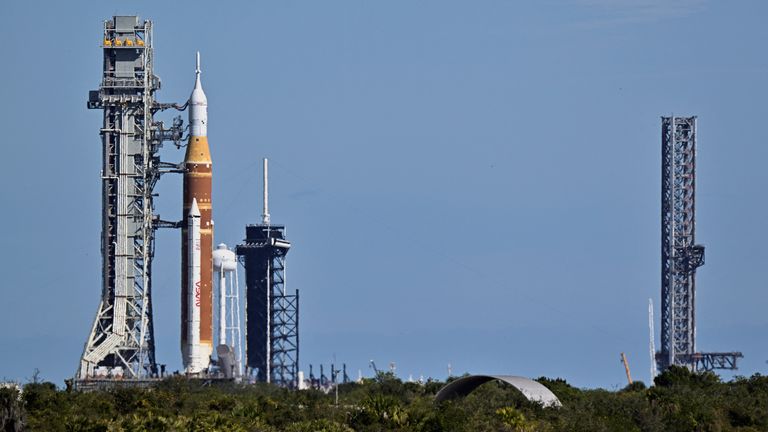
Image:The Space Launch System rocket that will be used to loop the moon. Pic: Reuters
NASA is about to launch a crew on the first mission to loop around the moon in more than 50 years.
The new SLS mega-rocket and Orion crew capsule have had a series of problems, including leaks of explosive hydrogen propellant during fuelling and issues with the spacecraft’s heatshield.
A countdown rehearsal last month was stopped early because hydrogen leaked from a seal between the filling hose and the rocket.
Engineers replaced the seal and another countdown test on Thursday night proved successful.
NASA says the heatshield has also been upgraded.
The first possible launch date for the Artemis mission is 6 March.
But NASA has said the crew will only launch when it’s confident the rocket is ready.
On February 20, 2025, I had the honor of being confirmed as the Ninth Director of the FBI.
In that time, much has happened. Under President Donald Trump’s leadership, the FBI and our partners at the state, local and federal level have helped deliver one of the safest periods America has seen in decades.
When I sat before the Senate for my confirmation, I promised to refocus the FBI on its core mission: crush violent crime and defend the homeland, strengthen transparency and rebuild public trust. One year in, my team and I have worked every day to turn those words into action. We delivered historic results.
From 2024 to 2025, the FBI saw a 197% increase in arrests, from 34,000 to 67,000. We disrupted 1,800 gangs and criminal enterprises, a 210% increase. Agents seized more than 2,100 kilos of deadly fentanyl — enough to kill 150 million Americans — up 31%. That mission also extended overseas, where my trip to Beijing resulted in a historic agreement to shut off the flow of fentanyl precursor chemicals at the source, directly targeting the supply chains poisoning American communities. Arrests tied to Nihilistic Violent Extremism, including offenders who prey on children, rose 490%. More than 6,200 child victims were located, up 22%. Espionage arrests increased 35%. We captured six of the FBI’s Ten Most Wanted fugitives in one year — two more than the entirety of the prior administration — a group collectively on the run for more than 50 years, including Ryan Wedding. Nationwide, the murder rate fell by a record 20%, a level not seen in a century.
President Trump let good cops be cops while giving us the resources needed to execute the mission. The results speak for themselves.
But the success of this administration and this FBI goes well beyond the numbers. Over the last year, quiet but consequential transformations have taken place inside the Bureau — changes many Americans may never see on cable news or social media, but which have paid significant dividends.
From day one, we reoriented the FBI to meet modern threats with four clear priorities: Crush Violent Crime, Defend the Homeland, Restore Public Trust and enforce fierce organizational accountability. Under the prior administration, violent crime barely cracked the top ten FBI priorities. Today, it is a central focus, which is why violent crime arrests doubled to more than 30,000 in 2025.
Shifting resources to defending the homeland helped us capture some of the most wanted criminals in the world: Nicholas Maduro, wanted by the Department of Justice for narcoterrorism; Mohammad Sharifullah, an alleged key ISIS operative in the Abbey Gate suicide bombing in Kabul; and Zubayr Al-Bakoush, a key coconspirator in the 2012 Benghazi attack that killed four Americans: Chris Stevens, Sean Smith, Tyrone Woods, and Glen Doherty. We also disrupted and stopped three separate terror plots during the holiday season, preventing potential mass-casualty attacks and ensuring Americans could celebrate safely.
To restore transparency and oversight, we produced more than 40,000 pages of documents to Congress in our first year alone, a level of disclosure that represents more than double the combined document production of my predecessors.
We reduced the Bureau’s dependence on bloated Washington, D.C. bureaucracy and put safety and security resources back into Main Street America. We moved 1,000 agents out of the National Capital Region into field offices across the country, with 1,000 more intelligence and support personnel to follow this year. We also ignited the advanced training facility at Redstone Arsenal in Huntsville, Alabama, including the first-ever law enforcement counter-UAS training program.
We restructured operations so that field offices no longer report through a single bottleneck at headquarters. Dividing offices into regional structures increased accountability and responsiveness to the public. We eliminated units that failed the mission, including the politicized CR-15 squad, removed personnel who acted unethically, and rebuilt leadership around results.
The FBI is now faster and more responsive, with a heavier focus on technology. We established the Director’s Strategic Information Center (DSIC), a fully overhauled information hub focused on proactive threat identification and 24/7 monitoring of critical incidents to dramatically improve response times. We also launched a Technology Working Group, led by Dan Bongino, to help strengthen national security infrastructure through artificial intelligence and enhanced biometric coordination with interagency partners. Rather than continuing a patchwork approach, we engaged private-sector partners to rebuild core systems and expanded the FBI’s leadership role in the National Counterintelligence Task Force to better coordinate efforts against hostile intelligence actors targeting the United States.
After decades of delay and excess, President Trump facilitated the deal to shut down the Hoover Building project. We canceled a minimum $5 billion taxpayer-funded plan that would not have opened for at least a decade and instead moved toward utilizing the existing Ronald Reagan Building, providing a safe and modern headquarters at a fraction of the cost to the American people.
Perhaps most importantly, we made it a top priority for field leaders to work hand in hand with state and local law enforcement. Last year, we created a series of Homeland Security Task Forces — historic partnerships with state officials focused on removing violent criminals from American streets. In Virginia, that effort resulted in nearly 600 arrests in just one month. We replicated this model in Memphis and Washington, D.C. under the President’s Task Force. In those two cities alone, violent crime is down 30%, while homicides are down nearly 70% in D.C. and 50% in Memphis. We also established the first-ever Law Enforcement Partner Engagement Council (LEPEC), giving local law enforcement a permanent seat at the table inside the FBI.
By the numbers, President Trump’s FBI delivered a record year. But the institutional changes implemented over the last year go far beyond statistics, arrests, or headlines. We have rebuilt and remade the FBI into an organization designed to better serve the American people and keep the country safer for decades to come, alongside our partners at the Department of Justice who continue to prosecute bad actors and hold them accountable.
As for us, we will continue to put the Mission First.
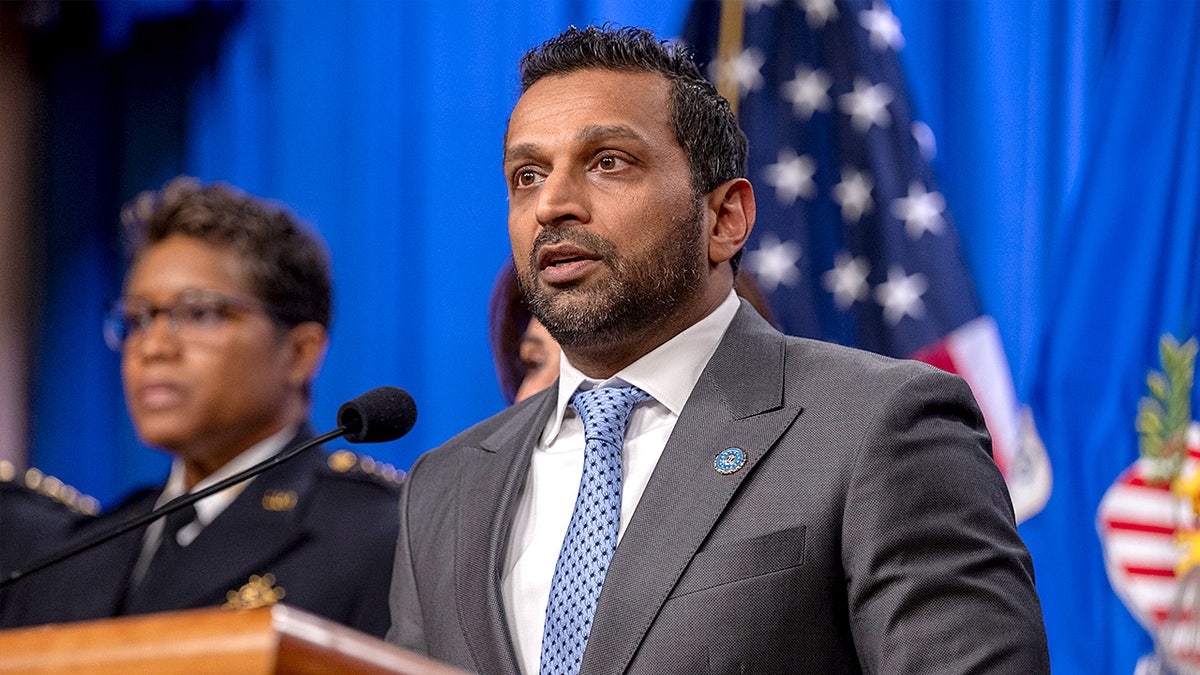
Kash Patel serves as director of the FBI, bringing a distinguished record of leadership across national security, law enforcement, and congressional oversight. He began his career as a public defender before joining the Department of Justice, where he prosecuted high-level terrorism cases and worked alongside U.S. special forces to disrupt threats around the globe. As senior counsel to the House Intelligence Committee, Patel led a landmark investigation into foreign interference and exposed serious failures within the FBI’s Crossfire Hurricane probe.
The United States administration is intensifying its build-up of a vast array of military assets in the Middle East, as President Donald Trump says Iran has “10 to 15 days at most” to agree a deal over its nuclear programme and stock of ballistic missiles.
As well as the world’s largest aircraft carrier, the USS Gerald R Ford, which is reportedly joining the Abraham Lincoln carrier strike group in the Arabian Sea, key force multipliers such as E-3 Sentry Airborne Warning and Control System (AWACS) aircraft have been deployed.
Recommended Stories
list of 1 itemend of list
In a letter to the United Nations Security Council, Iran said that while the country does not seek “tension or war and will not initiate a war”, any US aggression will be responded to “decisively and proportionately”.
“The United States would bear full and direct responsibility for any unpredictable and uncontrolled consequences,” it said.
Here is what we know about the recent US deployment of military assets in the Middle East – which has also led to a dispute with the United Kingdom over the use of its joint military base in Diego Garcia.
What air power assets has the US deployed to the Middle East?
According to open-source intelligence analysts and military flight-tracking data, the US appears to have deployed more than 120 aircraft to the region within the past few days – the largest surge in US airpower in the Middle East since the 2003 Iraq war.
The reported deployments include E-3 Sentry Airborne Warning and Control System (AWACS) aircraft, F-35 stealth strike fighters and F-22 air superiority jets, alongside F-15s and F-16s. Flight-tracking data shows many departing bases in the US and Europe, supported by cargo aircraft and aerial refuelling tankers, a sign of sustained operational planning rather than routine rotations.
“Watch any movement by B-2s. That would indicate a possible replay of ‘Midnight Hammer’,” Mark Cancian, a retired Marine Corps colonel and senior adviser with the Washington-based Center for Strategic and International Studies think tank, told Al Jazeera.
This latest wave was preceded several weeks ago by the arrival of Air Force F-15E Strike Eagles. US Central Command said on social media at the time that the fighter jet “enhances combat readiness and promotes regional security and stability”.
What role could Diego Garcia and the UK play?
Attention has also focused on Diego Garcia, the joint UK-US military base in the Indian Ocean’s Chagos Islands, which is capable of hosting long-range US strategic bombers, including B-2 aircraft.
The remote base has historically served as a launch point for major US air campaigns in the region.
However, Diego Garcia is a British sovereign territory leased to Washington, meaning London must approve its use for offensive operations. According to reports in UK media, Prime Minister Keir Starmer has indicated to Trump that the US cannot use British airbases – including Diego Garcia and RAF Fairford in the UK, which is home to the US’s heavy bomber fleet in Europe – for strikes on Iran, as this would be in breach of international law.
Trump retaliated by withdrawing US support for the UK’s decision to transfer the Chagos Islands to Mauritius, announced last year.
On Wednesday, the US president said Starmer was “making a big mistake” in the agreement to transfer sovereignty of the archipelago.
“DO NOT GIVE AWAY DIEGO GARCIA!” Trump wrote in a post on Truth Social, saying the base could be called upon in any future military operation to counter a potential attack from Iran.
This image released by the US Navy shows an aerial view of Diego Garcia [File: US Navy/AP]
What do we know about US warships in the Arabian Sea?
The USS Gerald R Ford, the world’s largest aircraft carrier, is currently being redeployed from the Caribbean to the Middle East.
The carrier and its accompanying strike group are expected to arrive in the region in the coming weeks.
On Wednesday, it briefly transmitted its location off the coast of Morocco, suggesting it is transiting the Atlantic towards the Strait of Gibraltar and will then go into the Mediterranean.
This is the same vessel that previously supported US military operations in Venezuela, including missions conducted under Operation Southern Spear.
The USS Gerald R Ford will join the USS Abraham Lincoln carrier strike group, which recent satellite imagery shows is operating in the Arabian Sea off the coast of Oman, positioning US naval power within striking distance of Iran.
The US Navy also has multiple guided-missile destroyers in the region equipped with advanced air defence and ballistic missile interception systems. These multi-role vessels can carry and launch Tomahawk cruise missiles capable of striking land targets deep inside Iran, alongside their anti-submarine and fleet defence missions.
(Al Jazeera)
How is Iran responding?
Iran has publicly warned that it will view any military strike by the US as a serious provocation.
Tehran has also moved ahead with its own planned military activities. It announced and began joint naval exercises with Russia in the Sea of Oman and northern Indian Ocean on Thursday. These are intended to enhance maritime cooperation and signal deterrence amid rising US pressure.
As part of these manoeuvres, Iranian authorities issued a Notice to Airmen (NOTAM) for rocket launches over southern Iran on Thursday from 03:30 to 13:30 GMT and temporarily closed parts of the Strait of Hormuz, a strategically vital shipping route, during live-fire drills.
Meanwhile, Russian Foreign Minister Sergey Lavrov also warned that a US strike on Iran would have serious repercussions, underscoring the risk of escalation if hostilities spread.
Satellite images published by the Reuters news agency on Thursday showed that Iran has recently built a concrete shield over a new facility at a sensitive military site and covered it in soil, experts say, advancing work at a location reportedly bombed by Israel in 2024.
Images also show that Iran has buried tunnel entrances at a nuclear site bombed by the US during Israel’s 12-day war with Iran last year, fortified tunnel entrances near another, and has repaired missile bases struck in the conflict.
A combination picture of satellite images show the Parchin military complex before the Israeli strikes of October, 2024, in Parchin, Iran, in this handout image dated October 20, 2024 (left), and concrete over the site at the Parchin military complex, in Parchin, Iran in this handout image dated January, 24, 2026 [Reuters]
Analytical reports also suggest that Iran has built a multilayered defence centred on mines, missiles, submarines and drones with the intent of slowing down the US forces.
Some analysts say Iran may seek to avoid an immediate full-scale confrontation, but this may be difficult.
“The Iranians have, over the past six months, quietly taken additional steps to move critical assets further underground,” Vali Nasr, a professor of international affairs and Middle East Studies at Johns Hopkins University, said during a roundtable discussion hosted by the CSIS Middle East Program this week
“They are going to be unpredictable,” he said. “But I think they could go big at the beginning, or they might want to drag the United States into a protracted situation.
“You hit a tanker, or you hit an oil facility, or you hit an American ship, and then it’s up to President Trump to decide whether to escalate further. And it can go beyond that.
“We are in a scenario where this might get out of control very quickly,” Nasr added.
Is the US likely to attack Iran?
According to experts, it is a very real possibility.
“The United States is doing all the things that it would do if it were going to conduct some sort of attack,” Cancian told Al Jazeera. “It has moved aircraft into the area, two aircraft carriers, plus enablers like AWACS.”
Barbara Slavi, distinguished fellow at Stimson Center, agreed with this assessment. “It seems that the Trump administration has decided that it is going to attack Iran again, and I presume in conjunction with the Israelis,” she said.
“What the objectives are, we have yet to see. Can it be contained? Will others be drawn in? These are all really important questions, and we don’t have answers.”
Is this a similar situation to what we saw earlier this year in Venezuela?
A build-up of US military assets in the Caribbean, close to Venezuela, which began in September 2025, led to multiple strikes on Venezuelan boats that the US claimed – without proof – were carrying drugs. It culminated in the dramatic January 3 raid on Caracas by US forces and the abduction of then-President Nicolas Maduro, who now faces trial on guns and drugs charges in New York.
“The build-up [in the Arabian Sea] has similarities, but one key difference is the strategic context,” Cancian said.
“Unlike the Venezuela raid, there hasn’t been a large deployment of Special Operations Forces, and Iran’s geography, far inland and heavily defended, makes a quick ground raid unlikely.
“If there are strikes, I would expect long-range missile attacks against security forces such as the Islamic Revolutionary Guard Corps. Strikes against nuclear facilities are also possible, but missiles like Tomahawk can only damage above-ground facilities,” he added.
Secretary of State Marco Rubio is reportedly planning to travel to Israel on February 28 to meet with Israeli Prime Minister Benjamin Netanyahu, a State Department official said.
Last summer, the US carried out air strikes on Iran’s nuclear facilities even as senior American diplomats were scheduled to meet with their Iranian counterparts in ongoing talks.
Ex-Victoria’s Secret mogul Les Wexner’s lawyer was caught on a hot mic jokingly threatening to “kill” him if he continued giving long answers to questions during his deposition on Jeffrey Epstein by the House Oversight Committee.
The moment was caught after the committee released its full, nearly five-hour deposition of 88-year-old Wexner as part of its ongoing probe into Jeffrey Epstein’s network.
Several hours into the deposition, while Wexner was giving a particularly long-winded answer, Wexner’s attorney leaned over to him and whispered in his ear, “I’m going to f—ing kill you if you answer another question with more than five words, okay?”
Both Wexner and his attorney laughed after this statement, indicating Wexner understood it as a joke. The lawyer proceeded to instruct Wexner to “answer the question,” laughing more.
Shortly before this exchange, the attorney had urged Wexner to “answer the question,” saying, “I’m sure we all appreciate the stories, we’re just trying to answer questions that they actually want answered,” referring to the House committee.
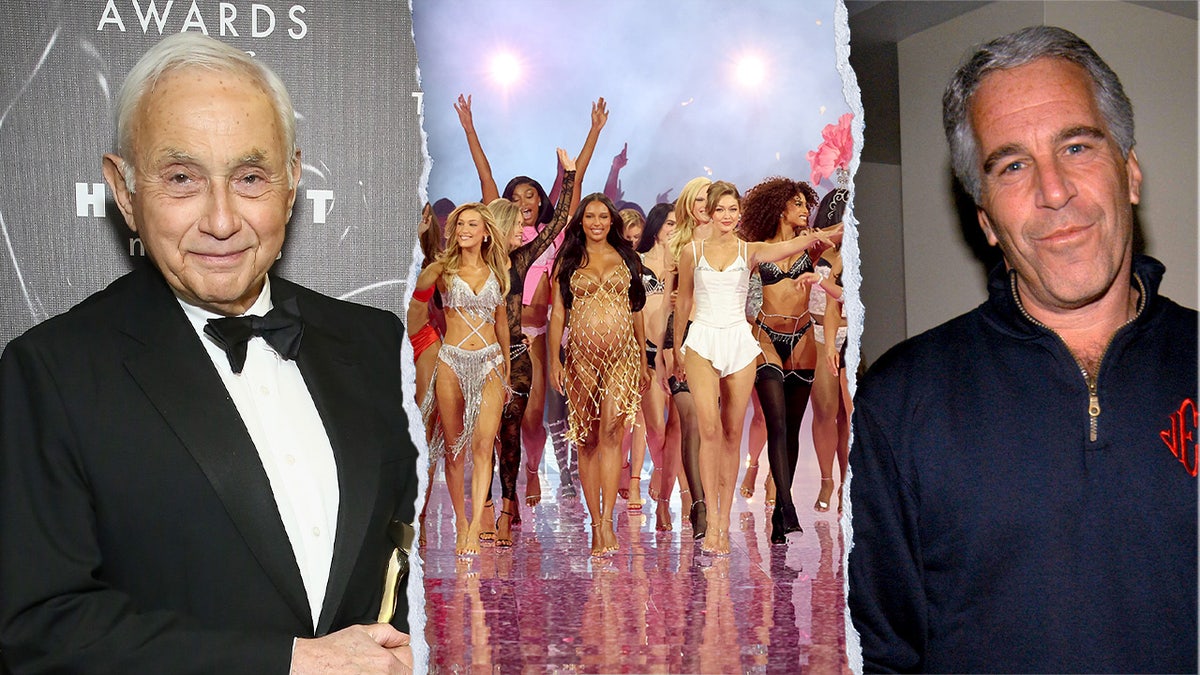
Leslie Wexner, founder of Victoria’s Secret and other fashion brands, is named numerous times in the DOJ’s files on Jeffrey Epstein.(Astrid Stawiarz/Getty Images for Fragrance Foundation; Kevin Mazur/Getty Images for Victoria’s Secret; Neil Rasmus/Patrick McMullan via Getty Images)
The Oversight Committee heard from Wexner, a billionaire fashion mogul best known for his work in revolutionizing the Victoria’s Secret store chain, about his involvement with Epstein, whom Wexner characterized as strictly a business associate rather than a close friend.
Despite being named a co-conspirator in a recently uncovered FBI document from 2019, Wexner said that he has never been directly contacted by either the FBI or the Department of Justice. He maintained his total innocence during the deposition, saying, “I was naïve, foolish, and gullible to put any trust in Jeffrey Epstein. He was a con man. And while I was conned, I have done nothing wrong and have nothing to hide. I completely and irrevocably cut ties with Epstein nearly twenty years ago when I learned that he was an abuser, a crook, and a liar.”
The committee stated it was releasing the full deposition with “no spin,” saying, “The American people deserve to see the testimony for themselves—transparency matters.”
Wexner is the founder of L Brands, formerly called The Limited, through which he acquired well-known companies Victoria’s Secret, Bath & Body Works, Express, and Abercrombie & Fitch, among others. He is no longer associated with Victoria’s Secret. He was one of Epstein’s first major clients as a financial advisor, with Epstein being granted power of attorney over Wexner’s vast wealth. Wexner also sold his Manhattan townhouse to Epstein, which was later discovered to be one of the locations where federal authorities accused Epstein of abusing young women and girls under 18.
Despite this, Wexner stated that he always kept his relationship with Epstein as strictly professional, saying, “I don’t think I ever went to lunch, or dinner, a movie or had a cup of coffee with Jeffrey,” adding, “My focus was on my business and on community.”
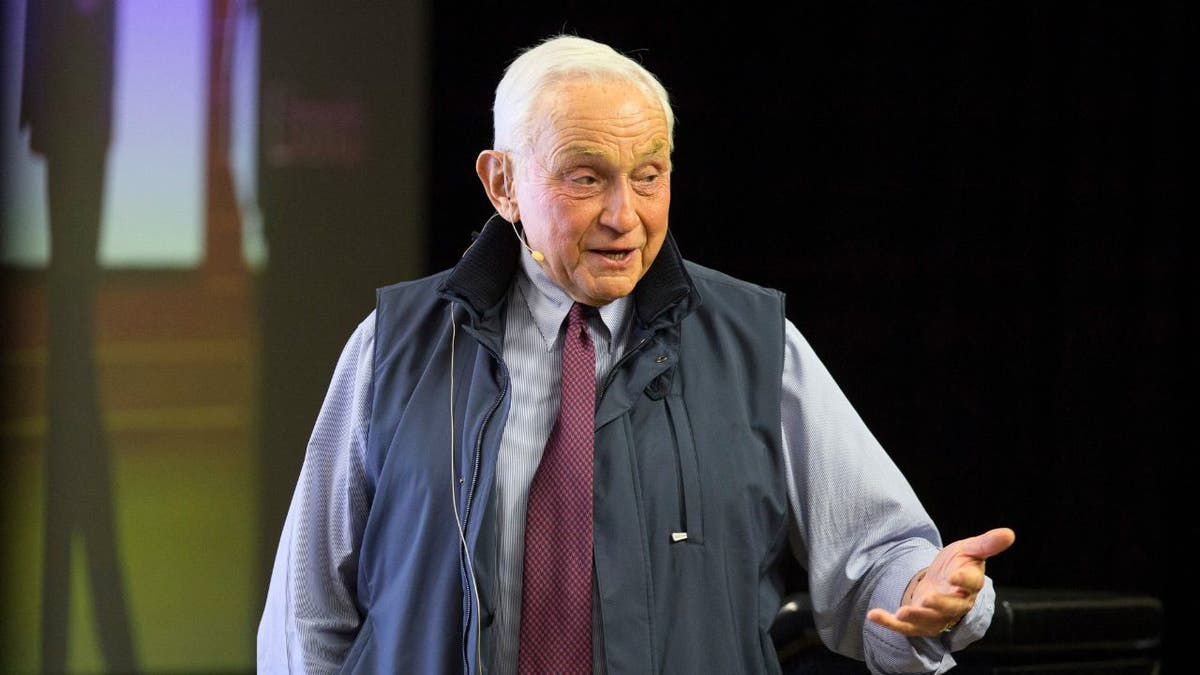
L Brands founder and former CEO Les Wexner speaks during the company’s investor day at the retailer’s headquarters in New Albany, Ohio, on Nov. 2, 2017.(Adam Cairns/Columbus Dispatch / USA TODAY NETWORK via Imagn Images)
Wexner said he severed ties with Epstein in 2007 after learning of an investigation and discovering that Epstein had misappropriated funds from him and his family. He said a substantial amount of the money was returned.
Wexner also testified that he was not aware of Epstein ever staying at a guesthouse on his New Albany, Ohio, estate, where Maria Farmer is said to have been abused by Epstein and associate Ghislaine Maxwell. He maintained that he only had knowledge of Epstein staying at a nearby neighbor’s residence. Pressed on whether he denies Farmer’s testimony that she was abused on his property, he stated, “I never met her, didn’t know she was here, didn’t know she was abused.”
He categorically denied any knowledge of either Epstein or Maxwell arranging women for prominent individuals. He also categorically denied ever having a sexual encounter with anyone introduced by Maxwell and Epstein or having any sexual relationship with Epstein himself.
He further denied any sexual contact or knowledge of another prominent Epstein victim, Virginia Giuffre.
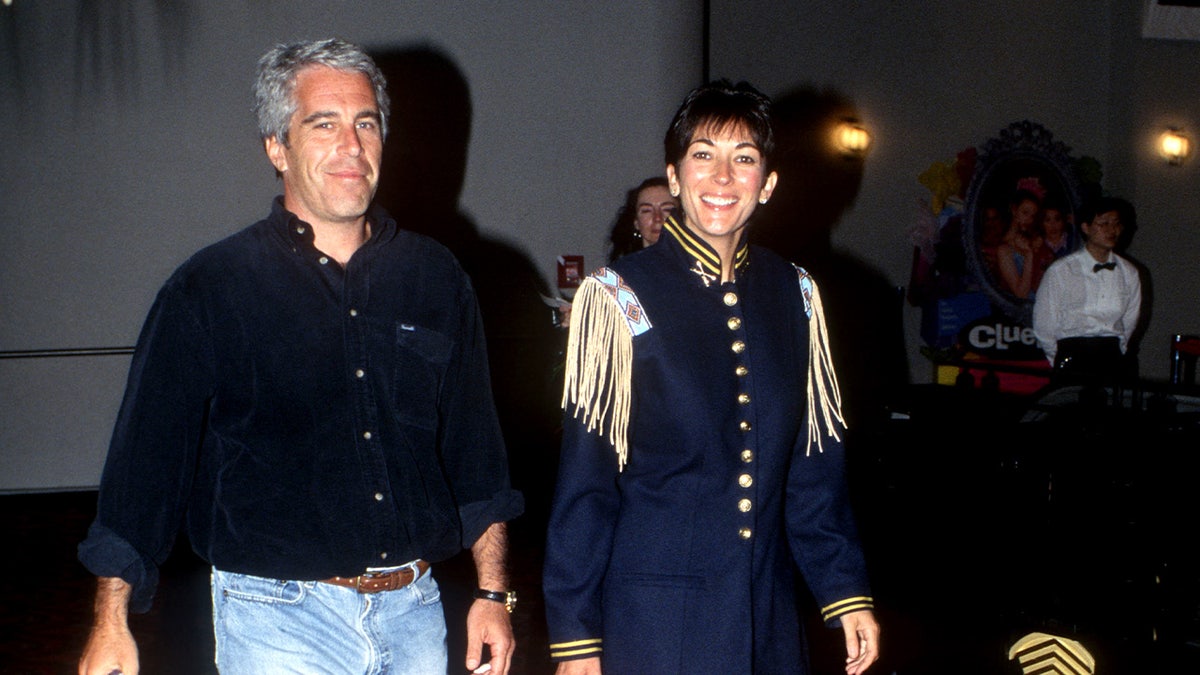
Jeffrey Epstein beside Ghislaine Maxwell.(Patrick McMullan via Getty Images)
Wexner was also asked about his knowledge of Epstein and President Donald Trump’s relationship. He said that he does not think they were friends, but said Epstein “held him out as a friend.”
Committee members also questioned Wexner on a note he wrote in a birthday book to Epstein in which he drew breasts with the caption, “Dear Jeffrey, I wanted to get you what you want, so here it is … Your friend, Leslie.”
Wexner confirmed that he wrote the note but dismissed it, saying, “He was a bachelor, so I drew a pair of boobs as kind of a joke, offhandedly, I would say.”
Wexner is the fourth person appearing before the House Oversight Committee in its Epstein probe.
Fox News Digital’s Liz Elkind contributed to this report.
Peter Pinedo is a politics writer for Fox News Digital.
The FBI warned that Americans lost more than $20 million last year amid a massive surge in ATM “jackpotting” attacks, in which criminals use malware to force cash machines to dispense money.
According to a Thursday FBI flash alert, more than 700 ATM jackpotting incidents were reported last year alone in a significant spike compared to the roughly 1,900 total incidents reported across the United States since 2020.
These attacks can be carried out in minutes and target the software layer controlling an ATM’s physical hardware, using malicious tools such as the Ploutus malware. Most often, they go undetected by financial institutions and ATM operators until the cash is already gone.
As the FBI explained, cash machines are designed to verify transactions through their bank before dispensing cash. However, Ploutus bypasses this process entirely, allowing the criminals to issue commands directly to the ATM and trigger withdrawals on demand without a bank card, a customer account, or the bank’s approval.
“Ploutus malware exploits the eXtensions for Financial Services (XFS), the layer of software that instructs an ATM what to physically do. When a legitimate transaction occurs, the ATM application sends instructions through XFS for bank authorization,” the FBI said. “If a threat actor can issue their own commands to XFS, they can bypass bank authorization entirely and instruct the ATM to dispense cash on demand.”
To install the malware, the attackers usually gain physical access to the targeted ATM using widely available generic keys. Once inside, they remove the machine’s hard drive, copy malware onto it and reinstall it, or even swap the original drive out entirely for another one preloaded with the malicious software.
To defend against these attacks, the FBI encouraged financial institutions to audit their ATM systems for signs of unauthorized removable storage use and unauthorized processes.
“When combined with gold image integrity validation, this approach enables early identification of physical intrusion and malware staging events that would otherwise evade network-based monitoring,” the law enforcement agency added.
FBI’s warning comes after a wave of arrests targeting members of the Tren de Aragua (TdA) gang, all linked to a massive ATM jackpotting scheme that used Ploutus malware to steal millions in cash from bank ATMs across the United States.
In total, the U.S. Department of Justice has charged 87 Tren de Aragua members over the past six months, who are now facing maximum prison terms ranging from 20 to 335 years each.
Modern IT infrastructure moves faster than manual workflows can handle.
In this new Tines guide, learn how your team can reduce hidden manual delays, improve reliability through automated response, and build and scale intelligent workflows on top of tools you already use.