Reference #18.2d4adc17.1777816703.9c1c25d
https://errors.edgesuite.net/18.2d4adc17.1777816703.9c1c25d
Reference #18.2d4adc17.1777816703.9c1c25d
https://errors.edgesuite.net/18.2d4adc17.1777816703.9c1c25d

NEWYou can now listen to Fox News articles!
The idea that aging is a steady, predictable process is being challenged by a new book, which describes a so-called “flicker stage” where some aspects of aging may briefly reverse.
Stuart Kaplan and Marcus Riley, authors of the book “Your Aging Advantage,” say aging may be more fluid than chronological age alone would suggest. They call this phenomenon the “flicker stage,” just one of seven stages of aging.
The “flicker stage” suggests functional age isn’t fixed, with people shifting between levels of youth and vitality based on lifestyle and mindset, the authors state.
FAITH DRIVES MAN TO HELP ANOTHER THROUGH MENTAL HEALTH CRISIS IN DRAMATIC LIFE-OR-DEATH SCENE
Periods of feeling significantly younger, followed by times of feeling one’s age, may reflect what the authors describe as the “flicker stage.”
Riley said healthier aging involves “flickering back” to a younger state, noting that while stress or setbacks can make people feel older, those shifts aren’t permanent.

The secret to aging healthier is learning how to “flicker back” to a younger state when life pushes you forward, the authors said. (Milan Markovic/iStock)
“Through positive interventions, we have the ability to flicker back to the stage of age we want to be in … these setbacks or unforeseen circumstances might propel us to a different stage of aging, but we have this ability to flip it back through positive intervention.”
“Aging or growing older is [not] a problem to fix … it’s an opportunity to be seized.”
Riley said this requires identifying personal “flicker triggers” — physical, psychological, social or environmental shifts that help reset one’s pace, such as exercise or renewed social connection.
AGING ‘HOTSPOT’ FOUND IN BRAIN, RESEARCHERS SAY: ‘MAJOR CHANGES’
Most people already live with a “feels-like” age that doesn’t match their chronological age, said Kaplan, comparing it to a weather report.
“In the summertime, the weatherperson might say it’s 85 degrees outside, but with the humidity, it feels like 95 … The feels-like age is the lived age, as compared to the chronological age or the age on your birth certificate.”

The authors suggest that engaging in your community is one way to activate the flicker stage. (iStock)
Focusing on the “lived age” may allow people to intentionally shift into a younger stage, according to the authors.
Instead of “aging in place,” which focuses on where one lives, they suggest focusing on “aging on pace.”
PSYCHIATRIST REVEALS HOW SIMPLE MINDSET SHIFTS CAN SIGNIFICANTLY REDUCE CHRONIC PAIN
“It’s more about what’s important to us on a personal level … do we want to stay in employment and work for as long as we can? Do we want to be shifting gears … and pursuing other interests and pastimes that are important to us?” Riley asked.
Kaplan said the common focus on age 65 as a point of decline reflects a socially imposed retirement benchmark, not a biological marker.
CLICK HERE TO SIGN UP FOR OUR HEALTH NEWSLETTER
“It comes from the Social Security Act that was created in 1935 in the United States. And here we are 90 years later, and we’re still thinking that 65 is an important age. … We didn’t use the word retirement back then. I mean, have you ever seen a farmer back in the 1800s … that says, ‘Oh, we’re going to retire because Grandpa is now going to be 62 or 65 years old?'”

The flicker effect works best when you stop viewing aging as a “downhill” perspective, the experts said. (iStock)
The flicker effect works best when you stop viewing aging as a “downhill” perspective, Riley and Kaplan said.
TEST YOURSELF WITH OUR LATEST LIFESTYLE QUIZ
Even after a health setback shifts someone into a later stage, maintaining a positive and active approach may help move them back toward an earlier stage of aging, according to the authors.
CLICK HERE TO DOWNLOAD THE FOX NEWS APP
Ultimately, the goal is to stop seeing the passage of time as a problem to be solved, Riley said.
CLICK HERE FOR MORE HEALTH STORIES
“Aging or growing older is [not] a problem to fix. … We want the mindset [that] it’s an opportunity to be seized.”
Reference #18.4a200117.1777814972.125d839b
https://errors.edgesuite.net/18.4a200117.1777814972.125d839b

AI adoption is reaching an inflection point as the focus shifts from training new models to serving them. For the AI startups vying for a slice of Nvidia’s pie, it’s now or never.
Compared to training, inference is a much more diverse workload, which presents an opportunity for chip startups to carve out a niche for themselves. Large batch inference requires a different mix of compute, memory, and bandwidth than an AI assistant or code agent.
Because of this, inference has become increasingly heterogeneous, certain aspects of which may be better suited to GPUs and other more specialized hardware.
Nvidia’s $20 billion acquihire of Groq back in December is a prime example. The startup’s SRAM-heavy chip architecture meant that, with enough of them, Groq’s LPUs could churn out tokens faster than any GPU. However, their limited compute capacity and aging chip tech meant they couldn’t scale all that efficiently.
Nvidia side stepped this problem by moving the compute heavy prefill bit of the inference pipeline to its GPUs while it kept the bandwidth-constrained decode operations on its shiny new LPUs.
This combination isn’t unique to Nvidia. The week after GTC, AWS announced a disaggregated compute platform of its own that used its custom Trainium accelerators for prefill and Cerebras Systems’ dinner-plate sized wafer-scale accelerators for decode.
Even Intel has gotten in on the fun, announcing a reference design that’ll use GPUs — presumably the one they teased last northern hemisphere fall — for prefill and AI chip startup SambaNova’s new RDUs for decode.
So far, most of the AI chip startups’ wins have been on the decode side of the equation. SRAM, while not particularly capacious, is stupendously fast. So with enough chips, or at least a big enough chip in the case of Cerebras, they’re well suited to accelerating decode operations, but chip startups aren’t limited to this regime.
This week, Lumai detailed its optical inference accelerator, which uses light, rather than electrons, to perform the matrix multiplication operations at the heart of most machine learning workloads using a fraction of the power of a purely digital architecture.
Lumai expects its next-gen Iris Tetra systems will achieve an exaOPS of AI performance in a 10kW power budget by 2029.
Technically, the chips use hybrid electro-optical architecture, but the bulk of the compute done during inference is handled by the chip’s optical tensor core.
Initially, the company is positioning the chip as a standalone alternative to GPUs for compute-bound inference workloads, such as batch processing. Longer-term, the company also plans to use its optical accelerators as prefill processors.
The architecture is still in its infancy, capable of running billion parameter models like Llama 3.1 8B or 70B today, but it’s far enough along that the UK-based startup has opened its chips up to neoclouds and hyperscalers for evaluation.
Having said that, not every AI chip startup is keen on using different chips for prefill and decode. Earlier this week Tenstorrent unveiled its RISC-V-based Galaxy Blackhole compute platforms, and suffice to say the company’s CEO Jim Keller isn’t a fan of the disaggregated inference formula.
“Every company in the industry is pairing up to build the accelerator accelerator accelerator. CPUs run code. GPUs accelerate CPUs. TPUs accelerate GPUs. LPUs accelerate TPUs. And so on. This leads to complex solutions which are unlikely to be compatible with changes in AI models and uses. At Tenstorrent, we thought something more general and simpler would work,” he said in a statement. ®
Christo once wrapped up the Reichstag, suspended a curtain across a Colorado valley and covered up the Pont Neuf in Paris. Now, six years after the artist’s death, a London gallery is to create a monumental installation he designed in 1968, using a detailed scale model and drawings that had been presumed lost until their chance discovery.
Christo had imagined a vast, internally illuminated suspended form, like a cloud, but technical constraints meant the plan was never brought to fruition.
Package on a Ceiling was conceived for the Institute of Contemporary Art in Philadelphia. Now its first realisation will fill a huge exhibition space at Gagosian London in a collaboration with the Christo and Jeanne-Claude Foundation.
The piece will fill the full volume of the space – 16 metres long, 10 metres wide – descending to just above head height.
Serena Cattaneo Adorno, a senior director at Gagosian, said: “Both architectural and atmospheric, it compels visitors to move beneath and around it.”
She added: “This exhibition brings a work into being that has existed for decades only as an idea. The gesture of wrapping is one of the most radical aspects of Christo and Jeanne-Claude’s practice; here, it is applied to air and architectural surface – a distillation of their thinking to its purest form.”
The original plans were discovered by Lorenza Giovanelli, who joined Christo’s team in 2017 as his studio manager. While creating more space within the busy studio, she moved a large plinth and suddenly noticed a box within its hollow. To her astonishment, it contained a detailed scale model of Package on a Ceiling, mocked up in a gallery maquette complete with electrical wiring to convey the work’s lighting elements.
Its discovery in 2018 was never revealed, and Christo died in 2020. She recalled his excitement as he had long ago forgotten placing it in that plinth and had moved on to other works. She said: “It’s in such great condition because it’s never seen the sunlight. It was not even dusty … It’s been hidden for 50 years.”
She said: “It will look like a beautiful cloud, lit from within, hanging from the ceiling of the gallery space … It will be very magical … I’ve imagined this many times. So I am really impatient to see it.
“I believe people will really find it extremely beautiful.”
Christo and his wife, Jeanne-Claude, are best known for monumental, temporary public artworks that transformed landscapes using everyday materials. Such was the complexity of their projects that they involved years of planning yet existed only briefly before being dismantled and recycled.
It was in the 1960s that Christo explored the concept of wrapping air, sealed within transparent polyethylene packages bound with rope. It foreshadowed later works at an environmental scale.
The Gagosian exhibition will include various works on the theme of air – “invisible, intangible and essential”. Giovanelli said of the artist: “He was full of ideas, full of energy, full of life … He was never too much concerned about people not understanding the work. He was happy that people would get curious to see the work one way or the other. He always said that the most important thing in life is to be curious.”
Vladimir Yavachev, Christo’s nephew, who worked closely with the artist in his lifetime, said of the Package on a Ceiling plans: “They’re very precise drawings … and the scale model has all the information in it … You can look at every detail. It’s there.”
He added that, in making it look just like those drawings, they would have recreated Christo’s vision.
The exhibition will run from 21 May to 21 August at Gagosian London, 20 Grosvenor Hill, W1
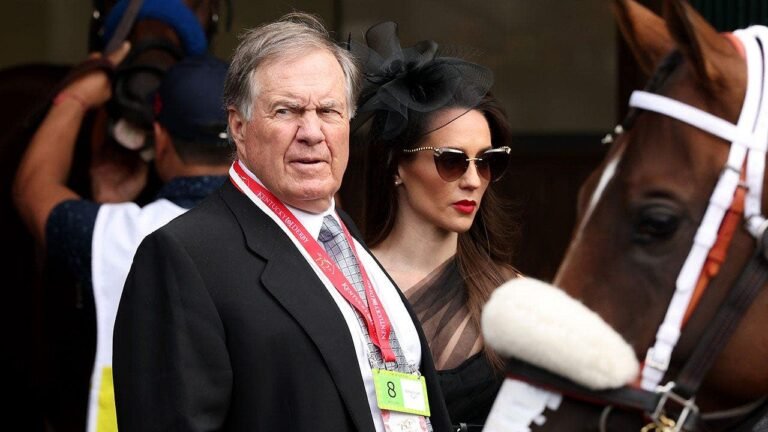
Jordon Hudson and Bill Belichick spent their weekend together in Kentucky ahead of the first leg of horse racing’s prestigious triple crown.
Hudson posted a photo of the two walking on the track at Churchill Downs on Instagram and appeared to joke about the tough times the two have gone through since they began dating.
ZERO BS. JUST DAKICH. TAKE THE DON’T @ ME PODCAST ON THE ROAD. DOWNLOAD NOW!
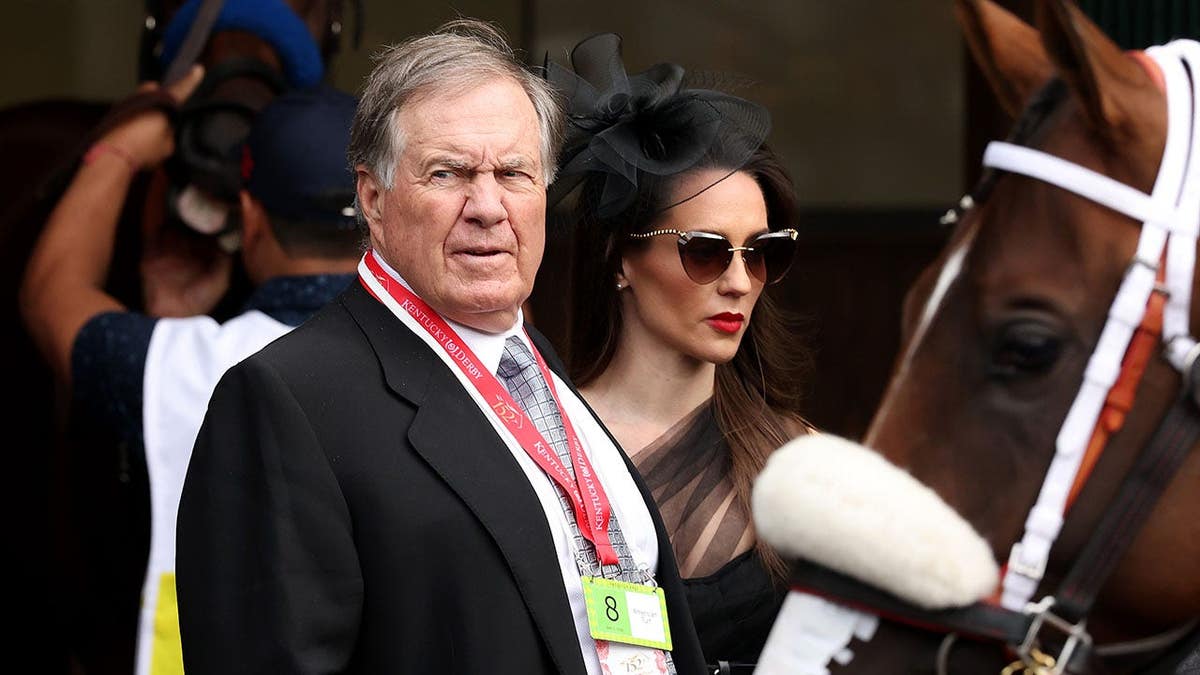
Bill Belichick and Jordon Hudson stand in the paddock before the 152nd Kentucky Derby at Churchill Downs in Louisville, Ky., on May 2, 2026. (Andy Lyons/Getty Images)
“Not the first time we’ve trudged through the mud together,” she captioned the collage.
Hudson was wearing a pink fascinator with a floral skirt, while Belichick was in a light blue suit and a pink shirt. Both of them were all smiles in the picture. The two appeared to be at Kentucky Oaks on Friday, before appearing in black outfits on Saturday for the Kentucky Derby.
CLICK HERE FOR MORE SPORTS COVERAGE ON FOXNEWS.COM
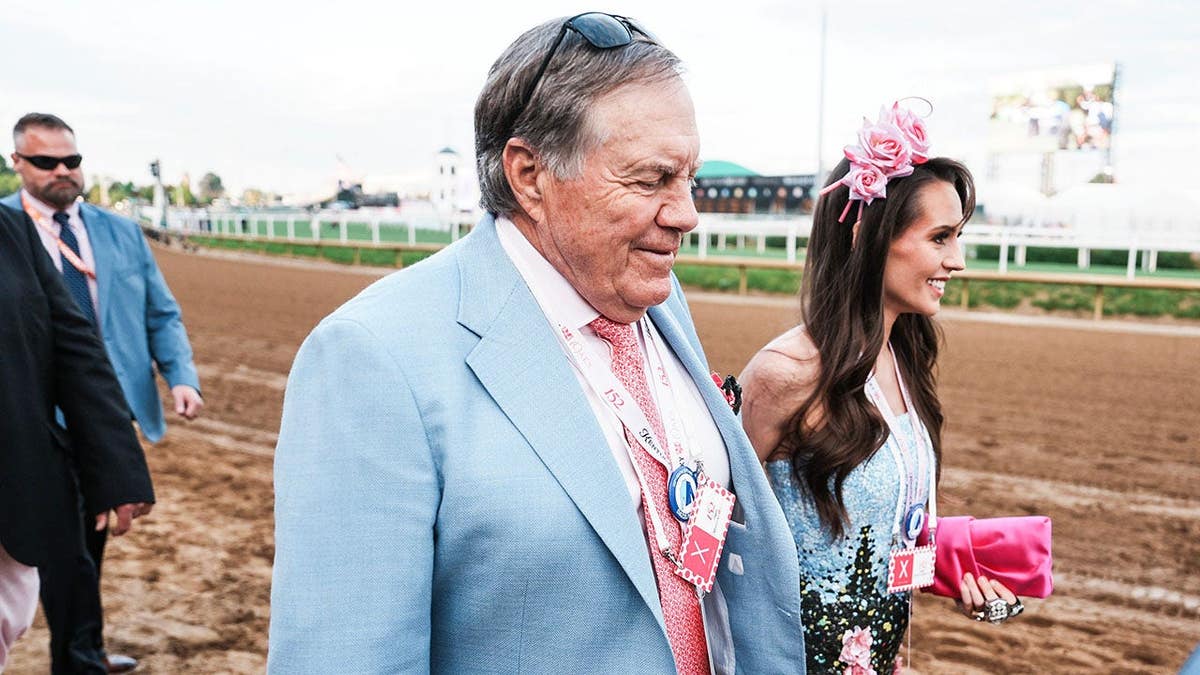
Bill Belichick and his girlfriend Jordon Hudson stand on the dirt track before the 2026 Kentucky Oaks race at Churchill Downs on May 1, 2026. (IMAGN / The Courier-Journal)
It was more than a year ago when Hudson and Belichick made unwanted headlines during a “CBS Mornings” interview, in which she interrupted questioning about how the two began dating. Belichick turned 74 last month, while Hudson turned 25.
Since then, the two have been in the spotlight.
Belichick is gearing up for his second season as the North Carolina Tar Heels’ football coach. He was 4-8 and failed to see any of his players from his first year get drafted into the NFL.
However, ESPN ranked the Tar Heels as having the 14th best recruiting class in 2026.
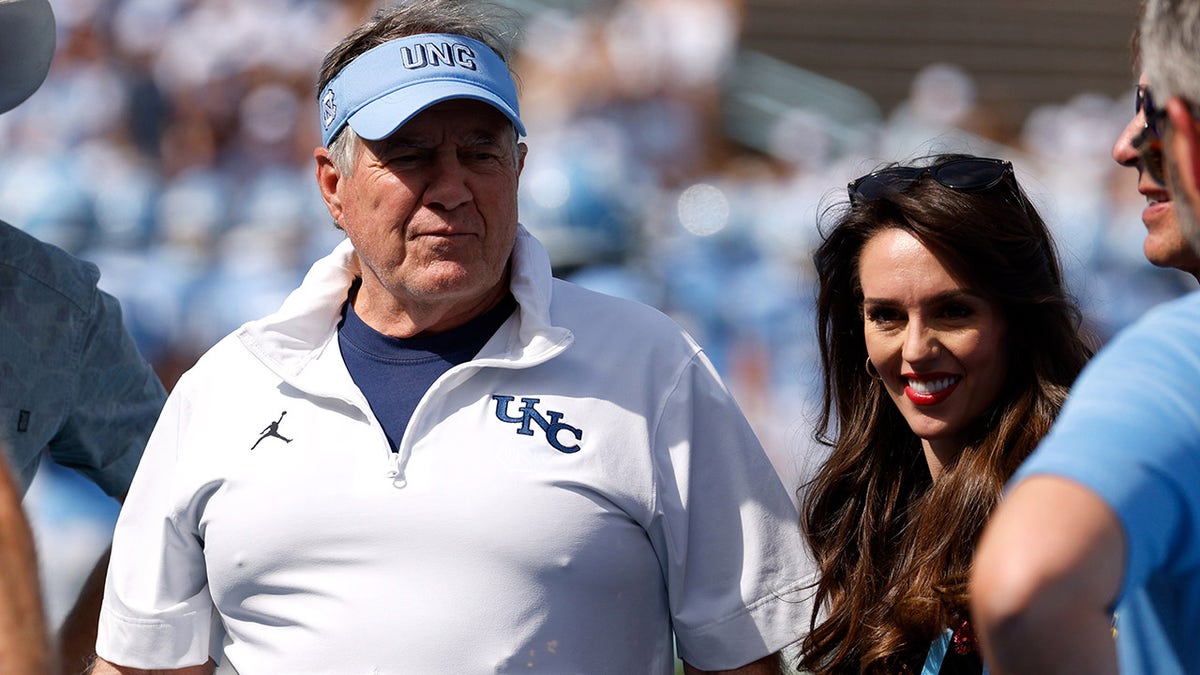
Head coach Bill Belichick of the North Carolina Tar Heels and Jordon Hudson watch before the game against the Richmond Spiders at Kenan Memorial Stadium in Chapel Hill, N.C., on Sept. 13, 2025. (Lance King/Getty Images)
CLICK HERE TO DOWNLOAD THE FOX NEWS APP
The team is set to start the year in Ireland against the TCU Horned Frogs on Aug. 29.
An influential government adviser close to Keir Starmer and Rachel Reeves held 16 undisclosed meetings with top US tech executives, the Guardian can reveal.
The No 10 business aide Varun Chandra discussed regulatory changes, AI and Donald Trump’s second administration with tech corporations during confidential meetings between October 2024 and October 2025. In one meeting he offered to help a top executive meet the prime minister directly.
Chandra’s dealings with six major technology companies – Google, Microsoft, Amazon, Oracle, Apple and Meta – took place as the government developed policies to secure investment from Silicon Valley, including multimillion-pound energy subsidies and preferential planning approval for datacentres in what ministers have called AI growth zones.
While largely unknown outside Westminster, Chandra, who ran a corporate intelligence firm founded by former British spies before joining government, is a central figure in Downing Street and is a key champion of the government’s push for economic growth.
Chandra’s role as chief business adviser to the prime minister was expanded this year to include the remit of US trade envoy, in which he offers advice on trade negotiations, including AI investment.
Unlike senior civil servants and ministers, political advisers do not have to declare their interactions with private firms and lobbyists although meetings are recorded by civil servants. It took 12 months to get confirmation of Chandra’s engagements under freedom of information rules.
The meeting logs obtained by the Guardian are the first glimpse into the working schedule of a powerful political operative who can link business executives to the prime minister and the chancellor. They raise questions about what a democracy campaigner described as “lobbying behind closed doors”.
A Downing Street spokesperson said Chandra had helped secure a UK-US trade deal as well as “record” inward investment from American companies. The spokesperson added: “Meeting businesses is a core and entirely expected part of the prime minister’s business adviser’s role.”
Chandra, who was appointed by Starmer shortly after Labour won the 2024 election, met 13 senior executives, including Siobhan Wilson, the top UK executive for Oracle, which was founded by the Trump ally Larry Ellison, and David Zapolsky, Amazon’s chief global affairs officer.
Redacted minutes of those meetings suggest Chandra agreed to help Wilson meet Starmer and prepared the ground for Starmer to meet the Amazon chief executive, Andy Jassy, who replaced the company’s founder, Jeff Bezos, in 2021.
Labour’s push for AI-driven growth was a frequent talking point. Executives from Meta, Microsoft and Oracle raised AI, datacentres and AI growth zones with Chandra.
The government believes promises by US tech firms to invest £150bn will turbocharge the UK economy. The Guardian found last month that many of the deals were “phantom investments”, with existing datacentres presented as new builds and a site earmarked for a supercomputer left undeveloped. OpenAI paused a multibillion-pound plan for a North Tyneside datacentre last month, blaming energy costs and regulation.
Regulatory reform was covered in at least four meetings. Meta’s vice-president, Joel Kaplan, a former Republican official who replaced the former Liberal Democrat leader Nick Clegg in the role, provided feedback to Chandra on the “UK regulatory landscape”.
At the beginning of 2025, Chandra discussed the government’s “commitment to removing barriers for businesses” with three Apple executives including Matt Browne, who oversees the company’s relations with governments in Europe.
On the same day that Chandra met the Apple executives, the chancellor, Rachel Reeves, ordered business watchdogs to reduce anti-growth regulations as part of an overhaul reportedly inspired by the No 10 business aide. The shake-up led to the removal of the Competition and Markets Authority (CMA) chair, Marcus Bokkerink, who was preparing to use new powers to break up tech duopolies and monopolies.
Afterwards, Reeves said she had received positive feedback since “she got rid” of Bokkerink, adding: “Previously businesses, all the time – especially in tech – had been raising concerns about the CMA. That has changed a lot.”
Trump’s presidency came up in two meetings with the Microsoft vice-chair, Brad Smith. The pair discussed Trump’s priorities during a meeting at the exclusive gathering of political and business elites in Davos at the start of last year. Chandra then briefed Smith about Trump’s unprecedented second state visit to the UK.
Rose Zussman, a senior advocacy manager at the anti-corruption watchdog Transparency International, said the meetings should be treated as lobbying and raised serious questions about accountability: “Lobbying behind closed doors enables outside interests to influence our politics without public scrutiny.”
Chandra is one of Labour’s best-connected business advisers, with a contact book few can match. His former firm Hakluyt does not disclose its client list but boasts that it advises some of the world’s largest corporations. He left the London-based company, which has been jokingly referred to as a retirement home for secret service agents, to join the government two years ago, but he still owns more than 300,000 shares in the company, according to accounts published on Companies House in April.
Starmer hired Chandra soon after his general election victory to deepen the party’s ties with corporate executives and international investors.
Chandra is highly regarded by Starmer, and his stock has risen further since he helped negotiate a trade deal with the Trump administration. He is one of the few survivors of the relentless internal upheavals in No 10 – and was even interviewed by the prime minister for the US ambassador vacancy. The job went to a career diplomat in the end but Starmer did reward Chandra with the additional role of trade envoy to the US.
Chandra’s links to the corporate world have sometimes led to controversy. He was criticised after it came to light he was involved in trying to find a private sector buyer for Thames Water even though Hakluyt was advising the company.
The Guardian submitted four freedom of information requests over 12 months asking for details of Chandra’s external meetings with the six top US tech companies.
The Cabinet Office refused to reveal if Chandra had held meetings with other companies, claiming the Guardian’s request for all his external meetings was “vexatious” requiring a “burdensome amount of resources” to answer.
Transparency International’s Zussman said it should not take multiple FoI requests to uncover who is trying to influence government decision-making. She said: “We need a comprehensive lobbying register that is fit for purpose, and for outside meetings with special advisers and other senior officials to be brought into the definition of lobbying activity.”
Chandra declined to comment, as did Google and Amazon. The other tech companies did not respond to the Guardian’s requests for comment.
NEWYou can now listen to Fox News articles!
Eve Plumb has a piece of advice for young Hollywood.
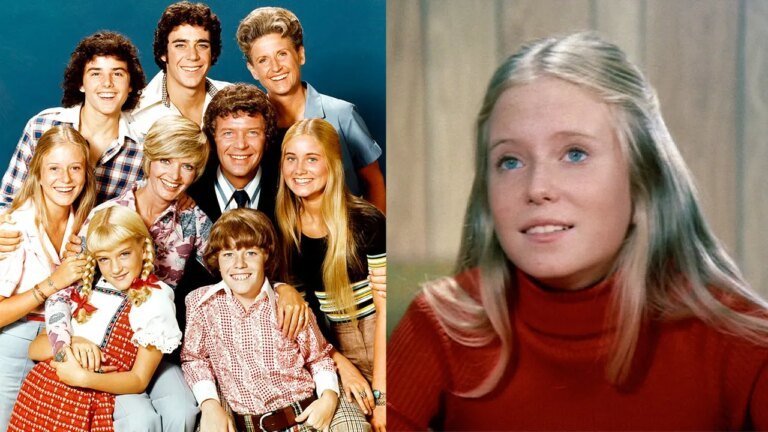
The “Brady Bunch” star, best known as America’s most memorable middle child Jan Brady, said a single rule helped her avoid the traps that have derailed countless child actors — and it started with refusing to go along with everything.
“I think that the power to say no is very valuable as an actor,” Plumb exclusively told Fox News Digital. “And as a person, we always talk about setting boundaries. And my parents always made sure that I had time off and that I did the right things. You don’t have to say yes to everything. And I am still that way today.”
‘THE BRADY BUNCH’ STAR SUSAN OLSEN ADMITS SHE DISLIKED HER ‘STUPID’ CINDY BRADY CHARACTER

“The Brady Bunch” Season Five (1973) shows the full cast, including Christopher Knight, Barry Williams, Ann B. Davis, Eve Plumb, Florence Henderson, Robert Reed, Maureen McCormick, Susan Olsen, and Mike Lookinland. (ABC Photo Archives/Disney General Entertainment Content via Getty Images; CBS via Getty Images)
The “Happiness, Included: Jan Brady and Beyond” author was just 10 when she was cast on “The Brady Bunch,” a role that locked her into one of television’s most recognizable families and turned her into a pop culture fixture for generations.
But while the show projected wholesome family life, Plumb said her real-life foundation behind the scenes was what kept her grounded.
Her parents’ support was critical in an industry where pressure, exploitation and burnout are constant risks.
“I would hope for every child actor that they have good protective parents, like mine, who saved their money and kept them away from anything that seemed suspicious,” she said. “And also, to just know that once you’re famous you can’t go back. So be careful if you really want to choose it.”
WATCH: ‘BRADY BUNCH’ STAR EVE PLUMB SHARES HOLLYWOOD RULE THAT KEPT HER GROUNDED
Despite a steady upbringing, Plumb said the transition out of child stardom wasn’t instant.
“It took me a long time to realize I wasn’t a cute kid anymore,” she said. “It probably happened in my late 20s, when I finally stopped getting everything I auditioned for. I had such confidence going along and moving through all of my roles, that it took a while for me to experience the disappointment of being an actor in Hollywood.”
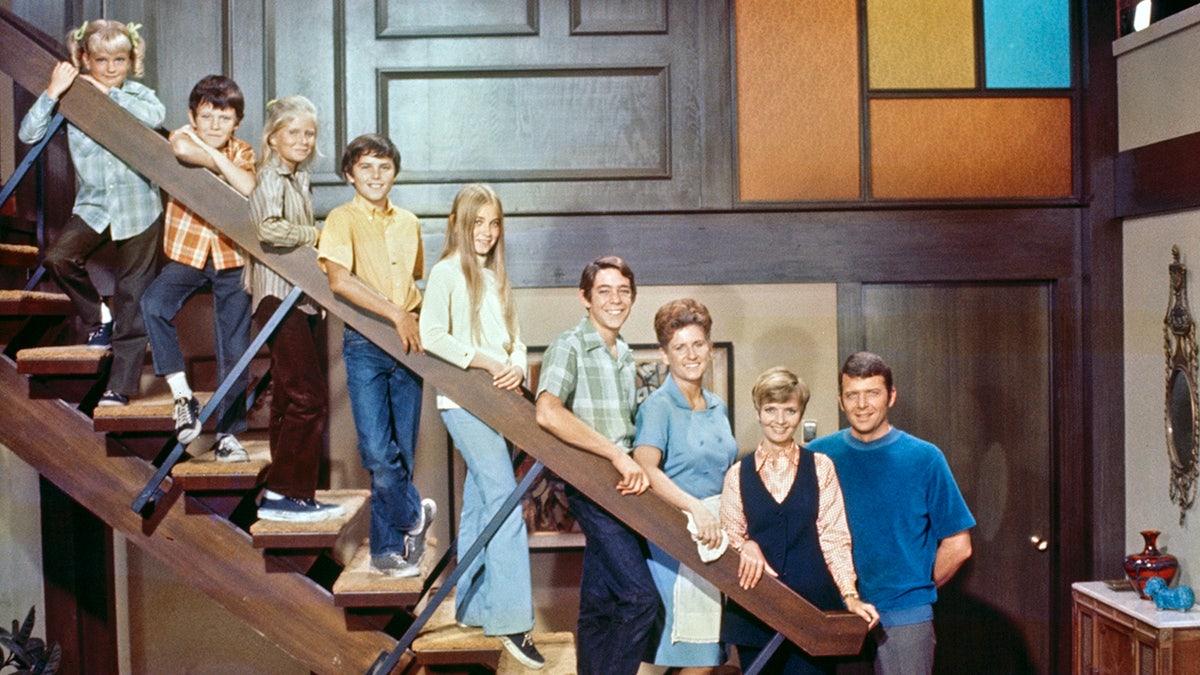
“The Brady Bunch” cast members Susan Olsen, Mike Lookinland, Eve Plumb, Christopher Knight, Maureen McCormick, Barry Williams, Ann B. Davis, Florence Henderson and Robert Reed pose on the stairs in Los Angeles in 1969. (CBS via Getty Images)
‘BRADY BUNCH’ STAR MAUREEN MCCORMICK SHARES KEY TO SUCCESSFUL 40-YEAR HOLLYWOOD MARRIAGE
In her new memoir, Plumb offers a rare, unfiltered look at both her professional longevity in Hollywood and personal struggles.
When Fox News Digital asked her why she decided to share her story now, she said the timing finally felt right.
CLICK HERE TO SIGN UP FOR THE ENTERTAINMENT NEWSLETTER
“I decided to do this now because over the years so many people have asked me to tell my stories in their book and I just decided to keep it to myself until all of a sudden one day I was like, ‘You know what, I’m ready,’” Plumb said.
But revisiting her past wasn’t all nostalgia.

“Happiness Included: Jan Brady and Beyond” by Eve Plumb and Marcia Wilkie, features different stages of Plumb’s life and career. (Kensington / Citadel Press)
“And the things that were the most difficult to write about were the deaths. The death of my dogs, spoiler alert, dogs die. And, of course, all my family members,” she said. “It’s not like it was a Shakespeare play and all my family members died, but we lose family members, we lose dear friends. And you are never over grief; it just keeps changing. And it’ll hit you when you don’t even expect it.”
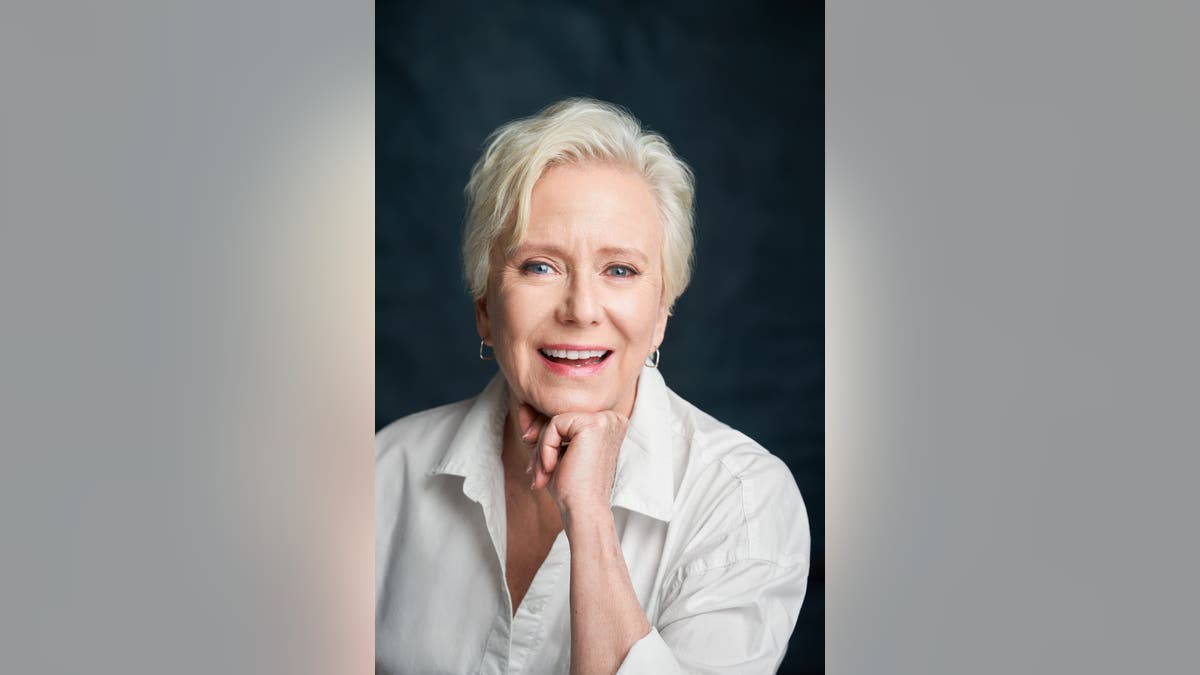
Eve Plumb, best known as Jan Brady, says learning to say no helped her avoid the pitfalls that have derailed many child actors in Hollywood. (Chia Messina)
From her start as a 6-year-old booking national commercials — including Barbie — Plumb quickly became a familiar face on television, landing roles on hit series like “Gunsmoke,” “Lassie” and “Here’s Lucy” before her breakout as Jan Brady on “The Brady Bunch.” After five seasons on the iconic sitcom, she pivoted to more dramatic work, starring in “Dawn: Portrait of a Teenage Runaway” and its sequel.
CLICK HERE TO DOWNLOAD THE FOX NEWS APP
She went on to build a steady career with appearances on fan favorites like “The Love Boat,” “Fantasy Island,” “Wonder Woman” and “The Facts of Life,” later adding credits on “Law & Order: SVU,” “Blue Bloods” and “The Path.” She also took the stage in New York and worked as a visual artist, with her work shown in galleries across the U.S. and Europe.
“Happiness Included: Jan Brady and Beyond” is available now.
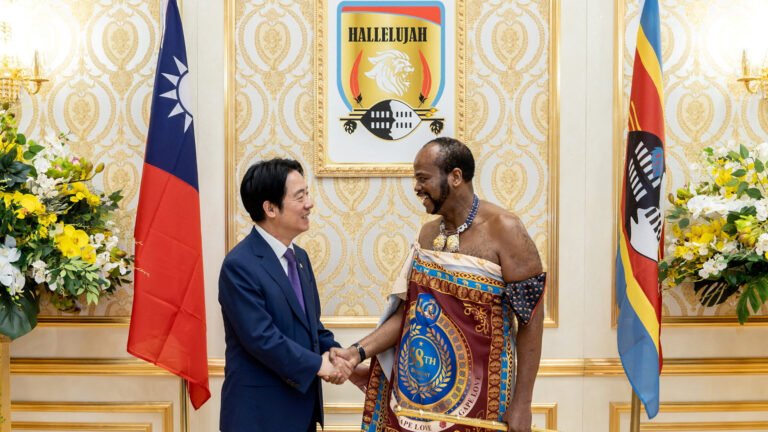
Taiwan’s leader William Lai Ching-te is visiting Eswatini, the only country in Africa that recognises Taiwan, despite China’s efforts to block the trip. Trade agreements were signed between Taipei and Eswatini, formerly Swaziland, which is the only African nation still under tariffs from Beijing.
Published On 3 May 2026
Reference #18.49200117.1777813394.11fb4d88
https://errors.edgesuite.net/18.49200117.1777813394.11fb4d88