A Republican mayor in Ohio is facing criminal allegations after authorities say he was recorded on a concealed camera smelling an underage girl’s underwear.
An incident report from the Richland county sheriff’s Office details the accusations against Wesley Dingus, 48, who serves as mayor of Butler. The claims came from a juvenile who had been staying at his residence.
According to investigators, the teen had hidden a small camera in a bedroom in the home. On 13 January, she reportedly received multiple motion alerts indicating recordings had been captured. Deputies say the footage showed Dingus smelling at least four pairs of her underwear “for several seconds” and also “touching his groin area over his clothes”.
Richland county children’s services passed the report along to law enforcement the same day the alleged incident occurred, and a deputy later interviewed the girl at her school.
A deputy later contacted Dingus and arranged a meeting, but the conversation did not happen after his attorney advised canceling it, local news outlet WKYC reported. Authorities arrested Dingus nearly a month later, an action that took place on 13 February.
Dingus appeared in court on Thursday and pleaded not guilty. He was released after posting 10% of a $10,000 bond. Judge Michael Kemerer required him to wear a GPS monitor and barred him from contacting the accuser.
Deputies forwarded the case to a local prosecutor’s office on 26 January. After consulting with a member of that office, deputies prepared two court summonses charging Dingus with voyeurism, according to Cleveland19. Those summonses were then delivered to Dingus.
Dingus, who is a registered Republican according to public voter records, became mayor of Butler in 2022. Then mayor Joseph Stallard resigned, and Dingus was elevated to the vacant post from his role as council president.
Dingus was soon after elected to a full term after receiving 199 votes from the village’s fewer than 1,000 residents.
In August, Dingus was indicted on four counts related to an incident in which he allegedly struck a fleeing criminal suspect with his car, the Richland Source reported. Officials say that on 11 July, he saw a man attempting to escape from police and struck the man with his vehicle to prevent him from getting away. Dingus entered a plea of not guilty in that case, and the injured man was expected to recover.
The Mayors for a Guaranteed Income coalition decried the dismantling of federal aid programs in a news release published on Tuesday.
“At a time when key federal aid programs are being dismantled, state leaders are picking up the slack and bolstering economic stability for residents,” founder of Mayors for a Guaranteed Income Michael D. Tubbs said.
President Donald Trump has cut federal programs and seeks to dismantle the Department of Education. The Trump administration froze more than $10 billion in federal childcare and social services funding to five Democratic-led states amid concerns taxpayer dollars were improperly diverted to noncitizens, according to a report released in January.
Guaranteed basic income programs have become a trend across the U.S. in recent years with more than 100 pilots launched since 2018.(Ozan Kose/AFP via Getty Images)
The organization said that state leaders are helping Americans struggling to “make ends meet” as the “affordability crisis” continues. The mayors claimed that state leaders are “bolstering economic stability for residents” through guaranteed income programs.
“With data from nearly 30 city-led and county-led pilots, we have proof that guaranteed income policies help struggling families meet their basic needs, build savings for emergencies, seek better employment, and experience reduced stress,” Tubbs said in the statement. He went on to say, “As the affordability crisis continues to put pressure on household finances, this is a solution that lifts families up.”
Guaranteed basic income programs have become a trend across the U.S. in recent years, with more than 100 pilots launched since 2018. Mayors for Guaranteed Income grew into a coalition of 150 mayors pushing pilot programs, offering low-income participants up to $1,000 a month with no strings attached. The group has pushed pilot programs that have been adopted by municipalities across the country.
Most notably, Cook County, Illinois, the second-largest county in the U.S., established a permanent guaranteed basic income program after the success of a previous pilot version. The program launched in 2022 with the aid of federal COVID-19 relief funds.
Cook County in Illinois just approved a universal basic income for residents.(Fox News)
“Guaranteed income policies, which provide recurring, unconditional cash payments to people in need, have been tested at the local level in hundreds of cities and counties across the nation,” Mayors for Guaranteed Income stated in the new release.
The group explained further that based on the evidence, its counterpart organization Legislators for a Guaranteed Income reported more than 20 bills in 11 states being proposed to establish some form of statewide guaranteed income program.
More than 60 bills that would implement cash-based policies similar to guaranteed income have been floated in another 15 states.
“At a time when key federal aid programs are being dismantled, state leaders are picking up the slack and bolstering economic stability for residents,” founder of Mayors for a Guaranteed Income Michael D. Tubbs said.(Fox News Digital)
Tubbs also founded the Counties for a Guaranteed Income and Legislators for a Guaranteed Income. He was the former mayor of Stockton, California from 2017 to 2021.
“With data from nearly 30 city-led and county-led pilots, we have proof that guaranteed income policies help struggling families meet their basic needs, build savings for emergencies, seek better employment, and experience reduced stress,” Tubbs said in the statement. He went on to say, “As the affordability crisis continues to put pressure on household finances, this is a solution that lifts families up.”
Joshua Q. Nelson is a reporter for Fox News Digital.
Joshua focuses on politics, education policy ranging from the local to the federal level, and the parental uprising in education.
Joining Fox News Digital in 2019, he previously graduated from Syracuse University with a degree in Political Science and is an alum of the National Journalism Center and the Heritage Foundation’s Young Leaders Program.
Story tips can be sent to joshua.nelson@fox.com and Joshua can be followed on Twitter and LinkedIn.
Anthropic is rolling out a new security feature for Claude Code that can scan a user’s software codebases for vulnerabilities and suggest patching solutions.
The company announced Friday that Claude Code Security will initially be available to a limited number of enterprise and team customers for testing. That follows more than a year of stress-testing by the internal red teamers, competing in cybersecurity Capture the Flag contests and working with Pacific Northwest National Laboratory to refine the accuracy of the tool’s scanning features.
Large language models have shown increasing promise at both code generation and cybersecurity tasks over the past two years, speeding up the software development process but also lowering the technical bar required to create new websites, apps and other digital tools.
“We expect that a significant share of the world’s code will be scanned by AI in the near future, given how effective models have become at finding long-hidden bugs and security issues,” the company wrote in a blog post.
Those same capabilities also let bad actors scan a victim’s IT environment faster to find weaknesses they can exploit. Anthropic is betting that as “vibe coding” becomes more widespread, the demand for automated vulnerability scanning will pass the need for manual security reviews.
As more people use AI to generate their software and applications, an embedded vulnerability scanner could potentially reduce the number of vulnerabilities that come with it. The goal is to reduce large chunks of the software security review process to a few clicks, with the user approving any patching or changes prior to deployment.
Anthropic claims that Claude Code Security “reads and reasons about your code the way a human researcher would,” showing an understanding of how different software components interact, tracing the flow of data and catching major bugs that can be missed with traditional forms of static analysis.
“Every finding goes through a multi-stage verification process before it reaches an analyst. Claude re-examines each result, attempting to prove or disprove its own findings and filter out false positives,” the company claimed. “Findings are also assigned severity ratings so teams can focus on the most important fixes first.”
Threat researchers have told CyberScoop that while the cybersecurity capabilities have clearly improved in recent years, they tend to be most effective at finding lower impact bugs, while experienced human operators are still needed in many organizations to manage the model and deal with higher-level threats and vulnerabilities.
But tools like Claude Opus and XBOW have shown the ability to unearth hundreds of software vulnerabilities, in some cases making the discovery and patching process exponentially faster than it was under a team of humans.
Anthropic said Claude Opus 4.6 is “notably better” at finding high-severity vulnerabilities than past models, in some cases identifying flaws that “had gone undetected for decades.”
Interested users can apply for access to the program. Anthropic clarifies on its sign up page that testers must agree to only use Claude Code Security on code their company owns and “holds all necessary rights to scan,” not third-party owned or licensed code or open source projects.
At least 10 people were killed and 50 wounded in Israeli strikes in Lebanon’s Bekaa Valley, two security sources told Reuters.
The strikes are among the deadliest reported in eastern Lebanon in recent weeks and risk rupturing a US-brokered ceasefire between Hezbollah and Israel, strained by frequent accusations of violations.
In a post on X on Friday evening, the Israel Defense Forces (IDF) said: “STRUCK: Hezbollah command centers used to advance terror attacks against IDF troops and Israel, in the Baalbek area in Lebanon.
“Within the command centers, weapons and funds utilized by Hezbollah were being stored, constituting a violation of the understandings between Israel”.
Sources said a senior Hezbollah official was among the dead.
There was no immediate comment from Hezbollah.
Separately, the IDF posted hours earlier: “In response to repeated ceasefire violations, the IDF struck a Hamas command center, from which terrorists operated, in the Ain al-Hilweh area in southern Lebanon.”
Ain al-Hilweh is a densely populated Palestinian refugee camp near Sidon.
Israeli airstrikes in several areas of southern Lebanon early on Thursday morning targeted Hezbollah weapon depots, missile launchers, and other military sites, the IDF said, as reported by The Times of Israel.
“Among the targets struck were weapons storage facilities, missile launchers, and military sites utilized by the Hezbollah terror organization to advance terror attacks against the IDF and the State of Israel,” the IDF said in a statement.
The strikes were the latest in the Israeli military’s campaign against Hezbollah.
There have been frequent airstrikes as the military says the terror group continues to try to rebuild its capabilities, contravening the US-brokered ceasefire in November 2024.
The truce came after more than a year of war along the border.
This included two months of open conflict in which a ground operation in Lebanon’s south was carried out by the IDF as it sought to enable the safe return of some 60,000 displaced residents of northern Israel.
Hezbollah started attacking Israel on 8 October 2023 – a day after Hamas’s invasion of southern Israel, which triggered the war in Gaza.
The ground invasion of southern Lebanon, launched in September 2024, significantly damaged the terror group’s leadership and stripped back its military capabilities.
Israel and Hezbollah were required to withdraw from southern Lebanon, to be replaced by the Lebanese armed forces.
Israel has left all but five strategic posts along the border, The Times of Israel reports.
The IDF said more than 400 Hezbollah operatives and members of allied terror groups have been killed in strikes since the ceasefire.
The Israeli military says it has struck hundreds of Hezbollah sites, and has carried out over 1,200 raids and other small operations in southern Lebanon.
Fox News correspondent Matt Finn reports on updates in the search for Nancy Guthrie, now entering week three. Former FBI supervisory agent James Gagliano also joins ‘America’s Newsroom’ to weigh in on the investigation.
NEWYou can now listen to Fox News articles!
NPR public editor Kelly McBride addressed Thursday what she described was an “inappropriate remark” an NPR host made comparing the appearance of the potential suspect in the disappearance of Nancy Guthrie to an ICE agent.
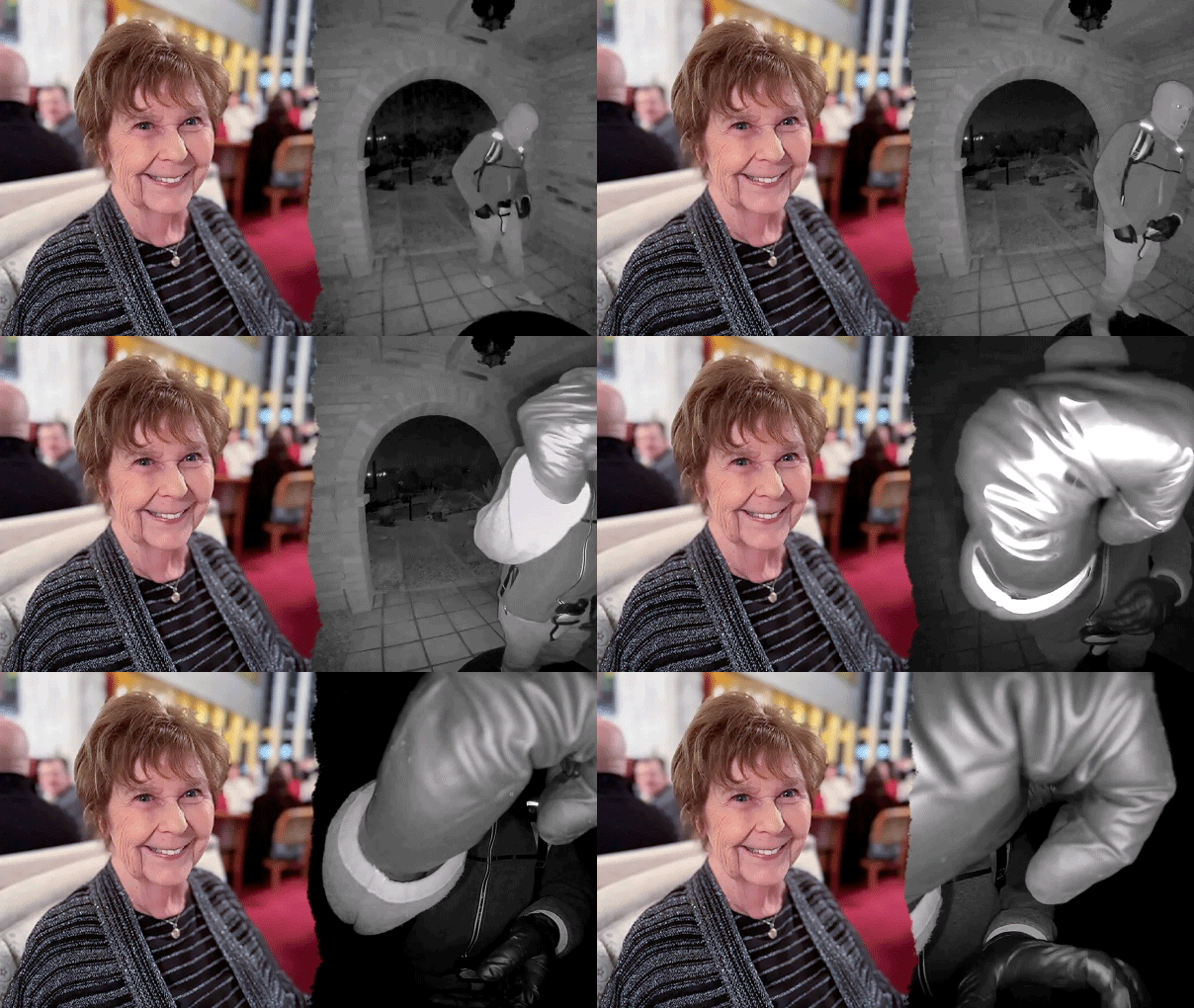
Last week, NPR’s “Morning Edition” co-host Steve Inskeep conducted an interview with a former FBI profiler to discuss the released doorbell camera footage of a masked individual who authorities suspect was involved in Guthrie’s disappearance from her Tuscon, Ariz., home Feb. 1.
“So, let me think about this: we have this man. He walks up to the porch, he’s armed, and his face is covered, a little like a federal immigration agent — although it’s more covered even than that,” Inskeep said in the exchange. “He’s wearing gloves, his head’s down, other times head up, something in the mouth, looks like a flashlight in the mouth, walks up to the security camera. That’s what I see.”
Photos released on Feb. 10, 2025, show a “subject” on Nancy Guthrie’s property. (Provided by FBI)
McBride said that “many people” wrote to NPR about the comparison who called it “irresponsible.”
“NPR news executives would not discuss this on the record. But no one defended it either,” McBride wrote Thursday. “Comparing the intruder on Guthrie’s porch to a federal immigration agent was both irrelevant and inflammatory. The short phrase was interpreted by listeners to be a commentary on the controversial tactics of federal law enforcement. Some news consumers who care deeply about the dramatic story of Guthrie’s kidnapping felt like the comment was a sign of disrespect.”
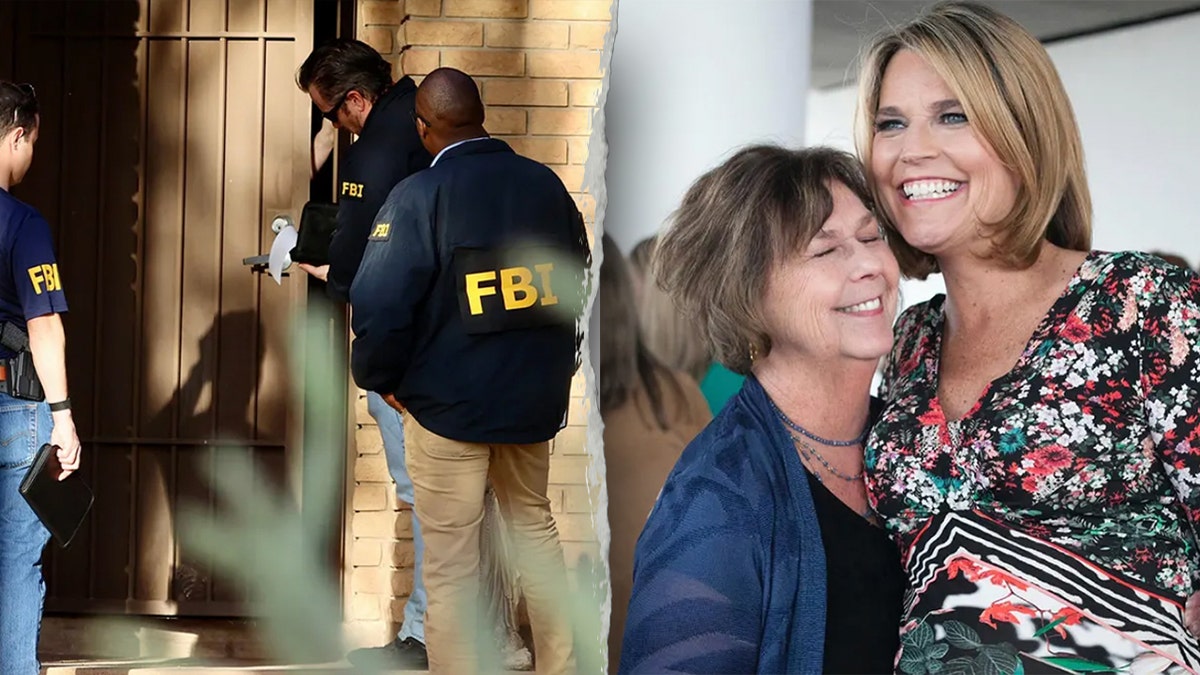
Left, FBI agents canvass homes near Nancy Guthrie’s home in Tucson, Friday, Feb. 6, 2026. Right, a portrait of Nancy Guthrie and Savannah Guthrie shown in a photo provided by NBC. (Kat Ramirez for Fox News Digital; Courtesy of NBC)
McBride revealed Inskeep’s comment was not in the script and that an unnamed NPR executive told her that he did not intend the remark to be political commentary but rather it was an “off-the-cuff description” of the potential suspect.
She went on to express disappointment in NPR’s handling of the comment.
“I wish they would have chosen to explain what happened to the audience. They could have done that here, or Inskeep could have done it on one of his social media accounts. NPR chose to let the interview stand, which means that unfortunate moment will be fuel for those who accuse NPR of anti-Trump bias,” McBride said.
NPR did not immediately respond to Fox News Digital‘s request for comment.
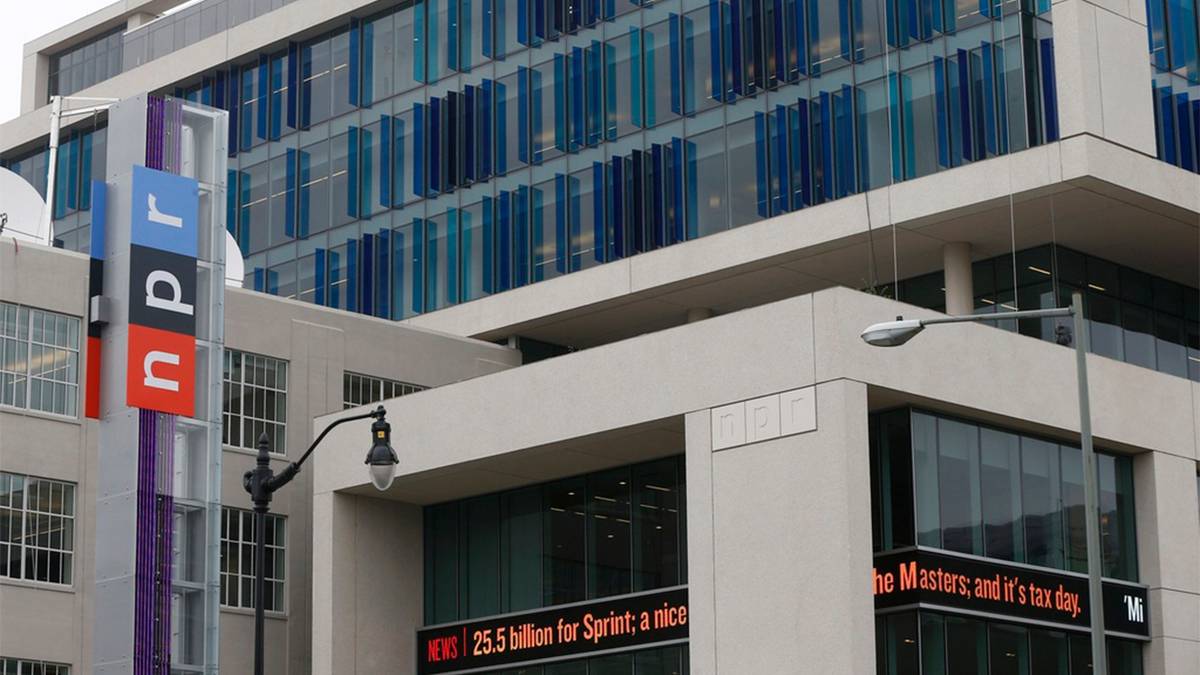
NPR’s public editor addressed the “inappropriate” comment from “Morning Edition” co-host Steve Inskeep comparing the masked Guthrie suspect to a “federal immigration agent.”(AP Photo/Charles Dharapak)
The search for 84-year-old Guthrie, mother of “Today” co-host Savannah Guthrie, continues nearly three weeks after she was reported missing.
The FBI has described the suspect seen in surveillance images and video outside Nancy Guthrie’s front door around the time she vanished as a male between 5 feet, 9 inches to 5 feet, 10 inches tall, with an average build.
The United States Supreme Court has ruled that President Donald Trump’s global tariffs are illegal.
In a 6–3 decision written by conservative Chief Justice John Roberts, the court agreed that Trump exceeded his authority by invoking a 1977 law to impose the tariffs.
Recommended Stories
list of 2 itemsend of list
The case is the first major challenge to Trump’s policy agenda before a court he reshaped by appointing three conservative justices during his first term.
Trump called the ruling “a disgrace”. The court remanded the case to the US Court of International Trade (CIT) to oversee a refund process.
Here is what we know:
What has the Supreme Court decided?
The court ruled that the International Emergency Economic Powers Act (IEEPA) does not give the president the power to unilaterally impose sweeping tariffs.
“Our task today is to decide only whether the power to ‘regulate … importation,’ as granted to the president in IEEPA, embraces the power to impose tariffs. It does not,” Roberts wrote in the ruling.
In its decision, the justices said the 1977 law was designed to allow presidents to respond to specific national emergencies, such as freezing assets or blocking transactions, but not to overhaul US trade policy through broad, across-the-board tariffs.
The majority concluded that using IEEPA in this way went beyond the authority Congress intended to grant.
“What it means first and foremost is that Donald Trump acted illegally. He was breaking the law,” Chris Edelson, a lecturer at the University of Massachusetts Amherst, told Al Jazeera.
“Donald Trump said the emergency law allowed him to use tariffs and the Supreme Court said, ‘Actually, Congress didn’t say that,’” he added.
What was Trump’s legal reason for imposing tariffs in 2025?
Trump argued that the tariffs were justified under the IEEPA, saying the US faced six national emergencies.
He described the long-running US trade deficit, which the country has recorded every year since 1975, as one national emergency that threatened economic security.
He also cited the surge in overdoses linked to the powerful opioid fentanyl, arguing that the flow of the drug into the US constituted a separate national emergency requiring executive action.
In the end, the case he presented centred on two tariff groups.
One set was imposed on nearly every country, with Trump arguing they were necessary to address persistent US trade deficits.
The other targeted Mexico, Canada and China, which he said were responsible for the flow of illegal fentanyl into the US.
How much money is at stake?
The Trump administration has not released tariff collection data since December 14.
However, Michael Pearce, chief US economist at Oxford Economics, estimates that more than $130bn in tariffs have already been collected under the emergency declarations.
He said the ruling is likely to trigger a prolonged legal battle over whether that money must be refunded.
“What happens? Do they get this money back? The companies are going to want it back. I don’t know how that’s going to work,” Edelson said.
Which judges dissented against the ruling?
Three conservative justices, Clarence Thomas, Samuel Alito and Brett Kavanaugh, opposed the decision.
They wrote that the ruling did not necessarily foreclose Trump “from imposing most if not all of these same sorts of tariffs under other statutory authorities”.
“In essence, the court today concludes that the president checked the wrong statutory box by relying on IEEPA rather than another statute to impose these tariffs,” Kavanaugh wrote.
Justices Neil Gorsuch and Amy Coney Barrett, both appointed by Trump during his first term, joined Chief Justice Roberts’s majority opinion in full.
Members of the Supreme Court sit for a new group portrait at the Supreme Court building in Washington [File: J Scott Applewhite/AP Photo]
Can Trump still impose tariffs after the Supreme Court ruling?
The president still has other legal avenues to pursue trade restrictions.
One option is Section 232 of the Trade Expansion Act of 1962, which allows tariffs on national security grounds. This authority was used during Trump’s first term to impose tariffs on steel and aluminium imports.
Another is Section 301 of the Trade Act of 1974, which permits the US to impose tariffs in response to unfair trade practices by other countries.
This was the legal basis for many of the tariffs placed on China during Trump’s earlier trade disputes.
He could also pursue more targeted trade actions through existing anti-dumping and countervailing duty laws.
What was Trump’s reaction?
Trump criticised the ruling, arguing that presidents should have sweeping trade authority.
“I can destroy the trade, can destroy the country. I can do anything I want,” he said.
He complained that while he could impose an embargo, the court’s interpretation meant he could not even “charge $1″.
“How ridiculous is that?” he said.
Trump also praised Justice Brett Kavanaugh’s dissent, saying it suggested he could rely on other legal authorities in the future.
“He’s right,” Trump said. “In fact, I can charge much more than I was charging.”
Why does this ruling matter?
Beyond Trump’s specific tariffs, the ruling could influence how future presidents deploy emergency powers, potentially narrowing the scope for unilateral action.
“The Supreme Court will follow the law, and that doesn’t mean that Donald Trump will get a blank cheque to do whatever he wants,” Al Jazeera’s Alan Fisher said, reporting from Washington, DC.
Bruce Fein, a former US associate deputy attorney general and constitutional lawyer, described the ruling as a “clear signal” that the president does not have unlimited unilateral authority.
A clinical trial into puberty blockers for children has been paused after the medicines regulator warned it should have a minimum age limit of 14 because of the “unquantified risk” of “long-term biological harms”.
Discussions between the Medicines and Healthcare products Regulatory Agency (MHRA) and the trial sponsor, King’s College London, will begin next week to discuss the wellbeing concerns, the Department of Health and Social Care (DHSC) said on Friday evening.
The Pathways clinical trial will not begin to recruit until the issues have been resolved, it added.
Hilary Cass, who led that review, has previously said her report “uncovered a very weak evidence base” for the benefits of puberty blockers for children and young people with gender dysphoria, but “given that there are clinicians, children and families who believe passionately in the beneficial effects, a trial was the only way forward to make sense of this”.
A DHSC spokesperson said on Friday: “We have always been clear about the red lines regarding this trial – ensuring the safety and wellbeing of the children and young people involved and always being led by the clinical evidence.
“The MHRA has now raised new concerns – directly related to the wellbeing of children and young people – and scientific dialogue will now follow with the trial sponsor.
“As the evidence is now being interrogated by clinicians, preparations for the trial have been paused while the MHRA and clinical leaders work through these concerns.
“This trial will only be allowed to go ahead if the expert scientific and clinical evidence and advice conclude it is both safe and necessary.
“The safety and wellbeing of children and young people have always been the driving consideration in every decision we have made regarding this trial and always will be.”
A spokesperson for King’s College London said: “The wellbeing and health of young people with gender incongruence and their families has been, and will remain, our priority, and we will continue to work with the MHRA to support their further review of the trial, which has been designed by world-leading academics with scientific rigour at its core.
“That rigour and ongoing scientific discussion is important for any clinical trial, particularly one as complex as Pathways, which aims to build an evidence base that can help young people and clinicians to make better-informed decisions in the future.”
In November, the Guardian reported that the clinical study planned to recruit an estimated 226 young people over the next three years. The youngest participants were expected to be 10 to 11 for biological females and 11 to 12 for biological males, although the team said at the time the rigorous selection process meant participants would probably be older.
The MHRA has now expressed concern in a letter about the current age limit of the trial, asking for it to be raised to 14 from 10.
The letter said: “Since potentially significant and, as yet, unquantified risk of long-term biological harms is present to participants and biological safety has not been definitively demonstrated in this proposed cohort, at the very least, there should be a graded/stepwise approach starting with those aged 14 as the lower limit of eligibility.
“Future trials may consider lowering the threshold depending on the findings of the initial trial.”
The paused trial was one of two studies that were announced to investigate the impact of puberty blockers.
The Cass review in 2024 had recommended a ban on the medications. NHS England subsequently announced children with gender dysphoria would no longer receive puberty blockers as routine practice, with their use confined to research settings.
The Parole Board has confirmed Charles Bronson’s latest bid for release will progress to an oral hearing in the coming months, where Bronson could be invited to make his plea for freedom.
The decision is a hopeful development for one of Britain’s longest-serving and most notorious prisoners, and means a fuller examination of his eligibility for release will now take place.
Bronson, 73, has spent more than five decades in custody. First jailed in 1974 for armed robbery, repeated violence and hostage-taking resulted in his sentence being increased to life.
But after 12 years without a violent conviction, this is now his ninth attempt to seek parole.
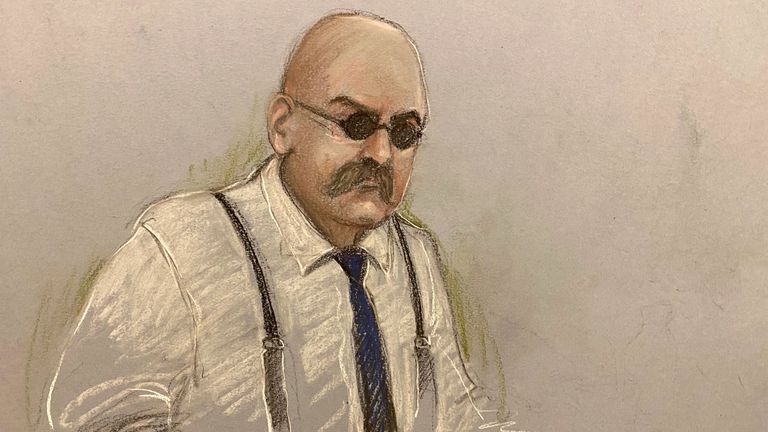
Image:A court sketch by Elizabeth Cook of Bronson during a previous parole hearing. Pic: PA
In a letter to Sky News, Bronson wrote: “I am 23 years over my tariff. I am forever denied progress. I am forever kept in solitary. They won’t even take me off Cat A.”
He went on: “I have to expose this unlawful sentence and treatment. It’s now gone on for far to long [sic] its become a total joke.”
His most recent review had been under consideration “on the papers”, where written evidence is assessed by the parole board, including reports from prison officials, psychologists and probation staff.
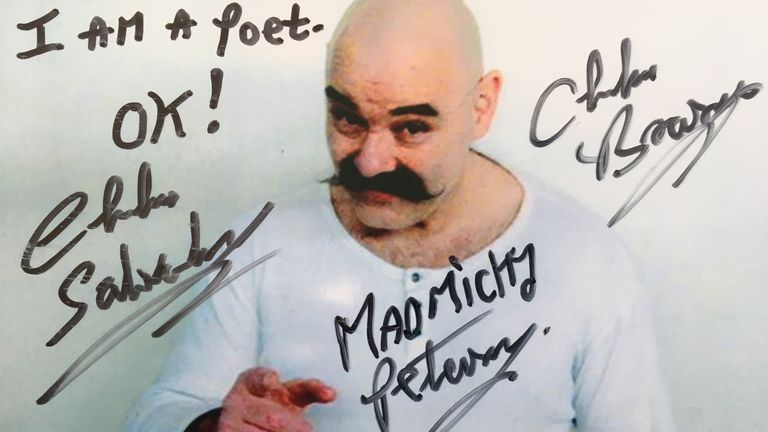
Image:A signed picture of Bronson shared with Sky News
However, the board has this week concluded that the case should progress to an oral hearing, where evidence can be tested in person and witnesses questioned directly. The hearing will allow the parole board to assess Bronson’s current level of risk in greater depth, before deciding whether they can be safely released into the community.
Gurdeep Singh, a solicitor acting for Bronson – also known as Charles Salvador – said the move was an important step.
“My hopes for the hearing are that Mr Salvador can finally have some progression,” he said.
“He has been languishing in solitary confinement for years now without any future plans for him. With the right support in place, there is no reason why he should not be released into the community, allowing Mr Salvador to continue focusing on his charity work with the Born Art Foundation.”
Charles Bronson: Could he be released?
Bronson is expected to be invited to attend the hearing in person, giving him the opportunity to address the panel directly and respond to concerns about his behaviour and future plans if he were to be released.
The parole board granted Bronson a public oral hearing in 2023, where he said: “It’s no secret I have had more porridge than Goldilocks and the Three Bears, and I’m sick of it. I’ve had enough of it. I want to go home.”
He had applied for this year’s parole proceedings to be heard in public, a request we understand was rejected. But with the case now moving to an oral stage, he could seek to renew that request.