As the US-Israel war on Iran continues to escalate, questions have been raised about how much it is costing Washington.
Late last week, two congressional sources told US broadcaster MS NOW that the war is costing the United States an estimated $1bn a day. A day later, Politico reported that US Republicans on Capitol Hill privately fear the Pentagon is spending close to $2bn a day on the war.
Recommended Stories
list of 3 itemsend of list
Congress’s House Minority Leader Hakeem Jeffries told reporters at a Capitol Hill news conference last week that President Donald Trump is “plunging America into another endless conflict in the Middle East” and “spending billions of dollars to bomb Iran”.
“But they can’t find a dime to make it more affordable for the American people to go see a doctor when they need one,” he said. “Can’t find a dime to make it easier for Americans who are working hard to purchase their first home. And they can’t find a dime to lower the grocery bills of the American people.”
Trump, who won the 2024 presidential election largely on promises to reduce the cost of living, has seen his popularity plummet. A Reuters/Ipsos poll, conducted hours after the US and Israel launched strikes on Iran on February 28, sparking region-wide retaliation, now shows dismal approval for the war from the US public as well.
The Pentagon, the headquarters of the US Department of Defense, has not released an official estimate of the cost of the war yet, but the soaring costs are unlikely to go down well with voters, analysts say, months before the midterm elections.
To seek clarity on the actual cost of the war, Representative Brendan Boyle of Pennsylvania, the top Democrat on the House Budget Committee, has asked the Congressional Budget Office (CBO) to analyse the exact cost of the war.
As the Trump administration prepares to ask Congress for more money to fund the war this week, here’s what we know about how much the war is costing the US each day.
What has Boyle asked the CBO to do?
In a formal letter sent on March 5, Boyle asked the CBO to analyse “the operational, logistical, and sustainment costs of the war in Iran, including any additional direct or indirect costs associated with the use of military forces for this purpose”.
He also asked the CBO to estimate “other types of additional costs” that might be involved in the war with Iran, like “diplomatic operations and foreign aid costs”. Additionally, he wants the CBO to analyse “opportunity costs” such as how the cost of a US response to potential Chinese aggression would be affected by “moving an aircraft carrier from near Taiwan to off the coast of Iran”.
In his letter, Boyle said “the effect on prices from the economic disruption caused by the war in Iran” should be analysed.
“Please conduct this analysis under several scenarios, including scenarios of the war lasting longer than 4 to 5 weeks and deploying US troops on the ground in Iran,” he wrote.
How much is the war costing the US each day?
While the CBO has yet to release an analysis of the cost of the war, the US media have begun reporting estimates of how much Washington’s military campaign against Iran has cost the country so far. There have been varying estimates.
On Saturday, according to The New York Times, Pentagon officials told Congress that the first week of the war cost the US $6bn.
Earlier, on Thursday, two US congressional sources told MS NOW that the war with Iran is costing the US nearly $1bn a day. The next day, Politico reported that US Republicans privately feared the Pentagon was spending close to $2bn a day on the war.
Some of the equipment the US is using is extremely expensive, reports suggest. In particular, the US interceptor missiles being used to bring down Iranian missiles can cost millions of dollars for each one fired, analysts say.
Kent Smetters, director of the Penn Wharton Budget Model (PWBM), told Al Jazeera the war could cost the US $2bn per day in the early stages, but is unlikely to remain that high over the longer term.
“After the first few days, we think it is closer to $800m per day. But $2bn per day on a sustained basis seems very hard to believe, even with modern equipment that generally costs a bit more. Of course, these numbers could change if we get significant personnel build-up; right now, at most, that’s at least a few months away,” he said.
John Phillips, a British safety, security and risk adviser and a former military chief instructor, agreed. “Bottom line, the war likely costs about $1bn per day, not $2bn, though spikes may reach that,” he said.
Why is the war costing the US so much?
A former British military official, who requested anonymity, told Al Jazeera that for the US, “having assets in the Middle East region besides permanent bases” has increased costs significantly.
Since early February, the US has amassed a vast array of military assets in the Middle East amid escalating tensions with Iran.
According to open-source intelligence analysts and military flight-tracking data, since early February, the US appears to have deployed more than 120 aircraft to the region – the largest surge in US airpower in the Middle East since the 2003 Iraq War.
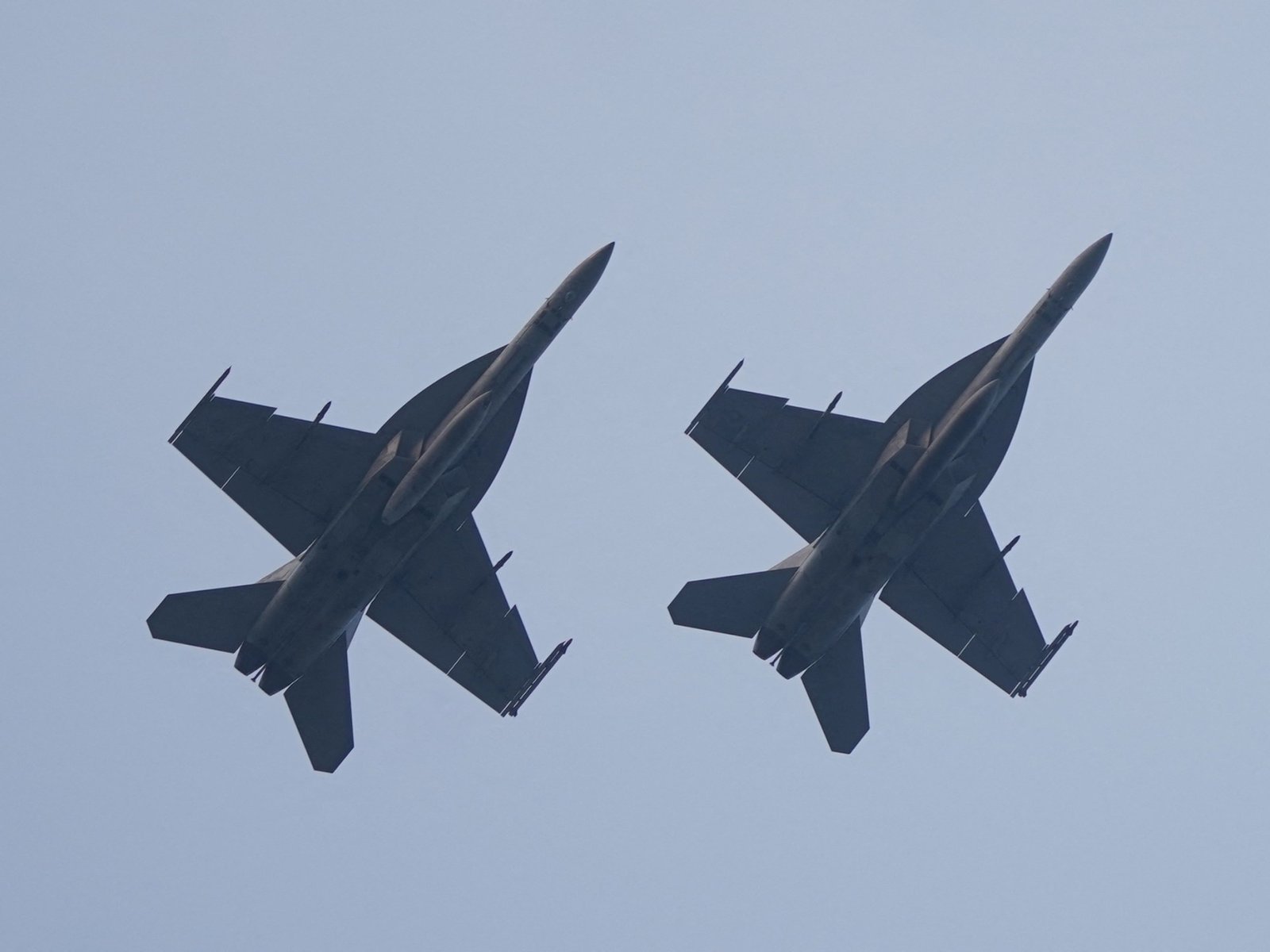
The reported deployments include E-3 Sentry Airborne Warning and Control System (AWACS) aircraft, F-35 stealth strike fighters and F-22 air superiority jets, alongside F-15s and F-16s. Flight-tracking data shows many departing bases in the US and Europe, supported by cargo aircraft and aerial refuelling tankers, a sign of sustained operational planning rather than routine rotations.
“Two carrier groups with information have said they [the US] will be sending more,” the military official said, adding that he is not certain if these additional military assets are being sent as a source of relief for the US or because Washington is increasing its presence for an overlapping time before the swap due to maintenance and resupply taking place.
What is the money being spent on?
In a report published on Thursday, an analysis by Washington-based think tank the Center for Strategic and International Studies (CSIS) said Washington had spent $3.7bn in its first 100 hours of the war alone, or nearly $900m a day, driven largely by the huge expenditure of munitions.
The CSIS researchers said their analysis drew on CBO estimates of the operations and support costs for each unit, adjusting for inflation and unit size, and adding 10 percent for costs of “a higher operational tempo”.
Their analysis found the US had expended more than 2,000 munitions of various types in the first 100 hours of the war, and estimated it would cost $3.1bn to replenish the munitions inventory on a like-for-like basis, with the costs increasing by $758.1m a day.
The former UK military official told Al Jazeera that the cost of one missile, including production, transport and manpower, is at least $2m.
CSIS researchers Mark Cancian and Chris Park said only a small amount of the estimated overall $3.7bn cost of the war in the first 100 hours was already budgeted for, while most of the costs – $3.5bn – were not.
The budgeted costs include “operational costs [approximately $196m, with $178m budgeted],” they said.
They noted that “munitions replacement [approximately $3.1bn]” has not yet been budgeted, and “replacing combat losses and repairing infrastructure damage [approximately $350m] is also unbudgeted”.
That meant the Pentagon will most probably have to request more funding in the near future to cover the unbudgeted costs, they said. This could prove a major political challenge for the Trump administration and provide “a focal point for opposition to the war”, they added.
Phillips said, “The big constraint isn’t money, it’s interceptor stockpiles.”
“The US can sustain the financial cost for years, but munition depletion could become a serious constraint within months of high-intensity operations.”
How much will the war cost the US overall?
Even if the daily costs of the war level out, the overall cost of the war is likely to mount.
Smetters told Fortune magazine on March 2 that, ultimately, US taxpayers will bear the brunt of this war and estimated the overall cost at $65bn.
“PWBM assumes more upside risk in the Epic Fury scenario. So a $65bn direct hit to taxpayers is the likely cost for direct military operations as well as the replacement of equipment, munitions, and other supplies,” he said.
“If the war lasts more than two months, then this number goes up,” he added.
On March 6, Defense Secretary Pete Hegseth warned that the US bombardment on Iran is “about to surge dramatically”, entailing “more fighter squadrons … more defensive capabilities” and “more bomber pulses more frequently”.
The former UK military official told Al Jazeera, “The US has ramped up production of a range of missiles, but the number is low compared to the weapons needed.”
He noted that NATO countries also have their own missile orders, but right now, priority is being given to the US for its own resupply.
“The Middle East countries have limited amounts [of missiles] because of the cost and storage and management of the systems, including training for a threat they didn’t think would happen,” he said.
“In short, they [the US] have to select which incoming attack will be met with which countermeasures to keep hold of the real-time interception missiles which will have to be used against the high-speed missiles,” he added.
There is a way to reduce costs, analysts say, by limiting the use of extremely expensive interceptors. One option being considered is sourcing cheaper, mass-produced missile interceptor systems from Ukraine.
Last Thursday, a congressional source told MS NOW that the “costs [of the war] will likely decrease as the US deploys fewer costly interceptor missiles”.
Phillips told Al Jazeera that US officials already acknowledge they cannot shoot down every drone with interceptors and are focusing on destroying launchers instead.
“The world is working at pace to find more cost-effective ways of mitigating the drone threat. Direct energy weapons are a feasible way, but they can only be used either on ships or bases. They require significant power supplies in order to operate, so [they] aren’t really feasible,” he said.
Meanwhile, the CSIS report’s authors said, while air campaigns typically settle to a less frenetic pace after an intense early period of a conflict, “nevertheless, the unbudgeted costs” will be “substantial”.
“That means that [the Department of Defense] will need additional funds at some point because the level of budget cuts needed to fund this conflict internally would likely be politically and operationally difficult,” said the report.
Will the Trump administration get the money it needs to fund this war?
The Trump administration will have to go cap in hand to Congress in the near future to fund the unbudgeted costs of the war, analysts say.
Reporting from Washington, DC, following the publication of the CSIS analysis last week, Al Jazeera’s Rosiland Jordan said the Pentagon had put together a $50bn supplemental budget request in order to replace Tomahawk and Patriot missiles and THAAD interceptors already used in the first week of the war, along with other equipment that had been damaged or worn out so far.
She said the high cost of the war was “probably coming as a shock to members of Congress and the general public”.
“The military burn rate has been rather high.”
Congress is already concerned about the budget deficit and the interest on the federal debt, she added.
“Another $50bn request might give some legislators pause.”
According to a March 6 Politico report, when journalists asked House Speaker Mike Johnson whether Congress would approve $50bn, he said he was not certain of the specific amount the Trump administration would ask for but said Congress would pass the bill “when it’s appropriate and get it right”.
Ian Lesser from the German Marshall Fund of the US in Brussels said: “There have been many cases like this in the past, and administrations find ways to pay for the cost, with or without congressional approval. Of course, the outcome of the US midterm elections could complicate the outlook.”