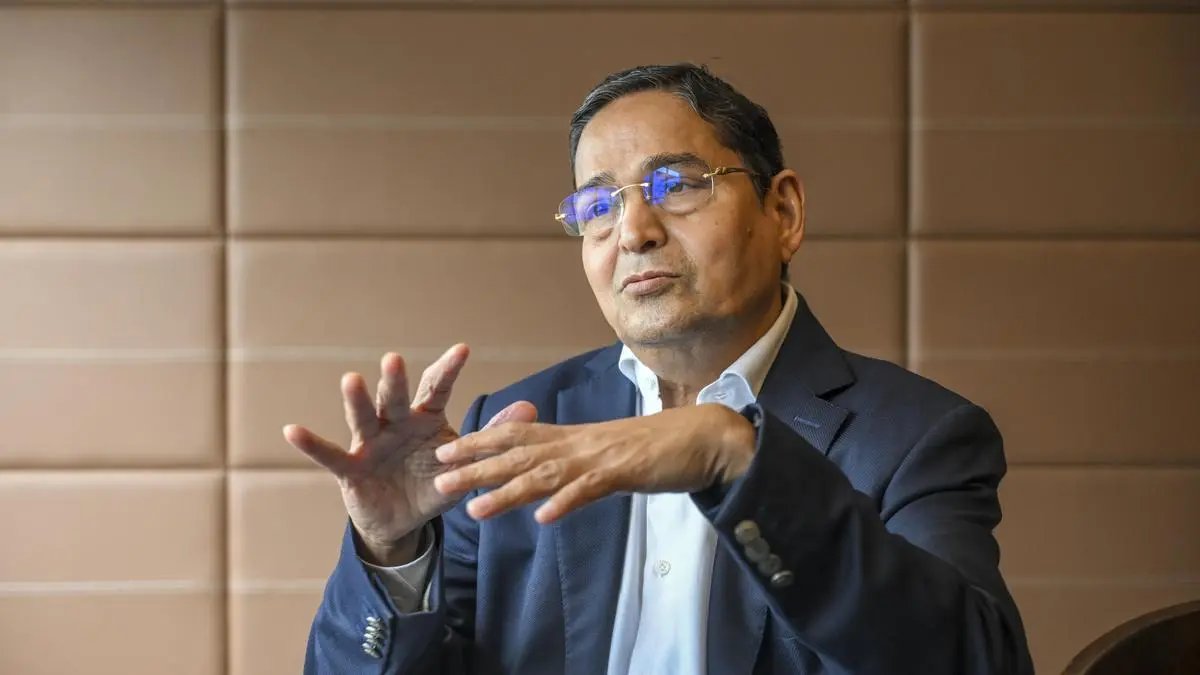

Kirit Bhansali, Chairman, GJEPC | Photo Credit: EMMANUAL YOGINI
With India’s gem and jewelery exports to the US down 44 per cent this year, the India–European Union Free Trade Agreement (FTA) is being seen as a crucial growth lever for the sector, even as stringent EU sustainability and regulatory norms emerge as the key challenge. Industry experts said the ability of Indian exporters to meet ESG compliance, responsible sourcing, and traceability requirements will determine how effectively the industry capitalises on improved market access under the trade deal, particularly across major export hubs in Gujarat, Rajasthan, Maharashtra and West Bengal.
Describing it as “mother of all trade deals”, Kirit Bhansali, Chairman of the Gem and Jewelery Export Promotion Council (GJEPC) stated, “The India-EU FTA will supercharge market diversification for the gem and jewelery industry. This transformative pact aims to double bilateral trade to ₹91,000 crore within three years. Zero-duty access to the world’s largest consumer market empowers export hubs in Gujarat, Rajasthan, Maharashtra and West Bengal to ramp up shipments. of precious jewelery (plain and studded), silver and imitation jewelery — capitalizing on India’s renowned design prowess, especially with exports to the US down by 44 per cent, this timely pact will help Indian exporters salvage lost ground.”
“Amid soaring metal prices and evolving trade dynamics, the deal enhances margins, sharpens our competitive edge in design and craftsmanship, accelerates manufacturing and generates jobs. For Indian jewelery retailers, it opens doors to expand brands across Europe, building on their rising global footprint,” Bhansali added.
India’s gem and jewelery exports to the US saw a sharp decline during April–December 2025, falling 44.42 per cent year-on-year to $3.86 billion, compared with $6.95 billion in the same period last year, according to data from the Gem and Jewelery Export Promotion Council (GJEPC). The slowdown deepened in December 2025, with exports to the US plunging 50.44 per cent year-on-year, reflecting the impact of tariff-related pressures and weak discretionary spending in the key market. However, the contraction in the US was offset by stable performance in other markets, keeping overall gem and jewelery exports largely flat during the nine-month period. Provisional exports for April–December 2025 stood at $20.75 billion, marking a marginal 0.41 per cent decline in dollar terms, while registering a 3.69 per cent growth in rupee terms, aided by currency movements and steady trade flows.
Key challenge
While the India–EU trade deal offers a strong growth opportunity for the gems and jewelery sector, meeting Europe’s stringent sustainability and regulatory norms will be the key challenge, industry executives said.
“The India–EU trade deal comes at a critical time, amid geopolitical uncertainties and rising global tariff pressures and metal price volatility. For the gems and jewelery sector, the agreement is a strong positive, as tariff rationalization will significantly improve India’s competitiveness in the European market. Currently, India’s gems and jewelery exports are around $28 billion. With improved market access, supply-chain integration, and growing demand for responsibly sourced jewellery, the sector has the high potential to scale up exports to the EU over the next 4–5 years. While compliance with EU sustainability and regulatory standards will be a key challenge, the long-term impact of the trade deal is expected to be structurally positive, supporting diversification, value addition, and sustained export growth,” said Rajeev Toshniwal, Chief Financial Officer, Kisna Diamond & Gold Jewellery, the flagship natural diamond and jewelery brand of the diamond exporter Hari Krishna Group.
Surat-based Gautam Kanani who heads Pure Light Diamond, an online diamond selling platform, said the FTA with EU will help provide a boost to the MSMEs operating in the diamond sector. “Once the FTA is in place, Indian diamond traders will not only get a bigger market, but it will also reduce our dependence on the US. Such FTAs fuel demand which in turn will provide a boost to MSMEs units operating in this sector,” Kanani said.
Published on January 27, 2026