Gaza City, Gaza Strip – As soon as the first US-Israeli attacks hit Iran on February 28, concerns began to surge in the Gaza Strip over how the latest conflict might affect a population already suffering from a genocidal war that has lasted for more than two years.
With tensions expanding across the region, the situation in Gaza has been growing increasingly complex. Israel has tightened its grip on the territory’s crossings, further restricting the entry of vital humanitarian aid. Meanwhile, violations of a “ceasefire” agreement reached with the Palestinian group Hamas in October continue unabated.
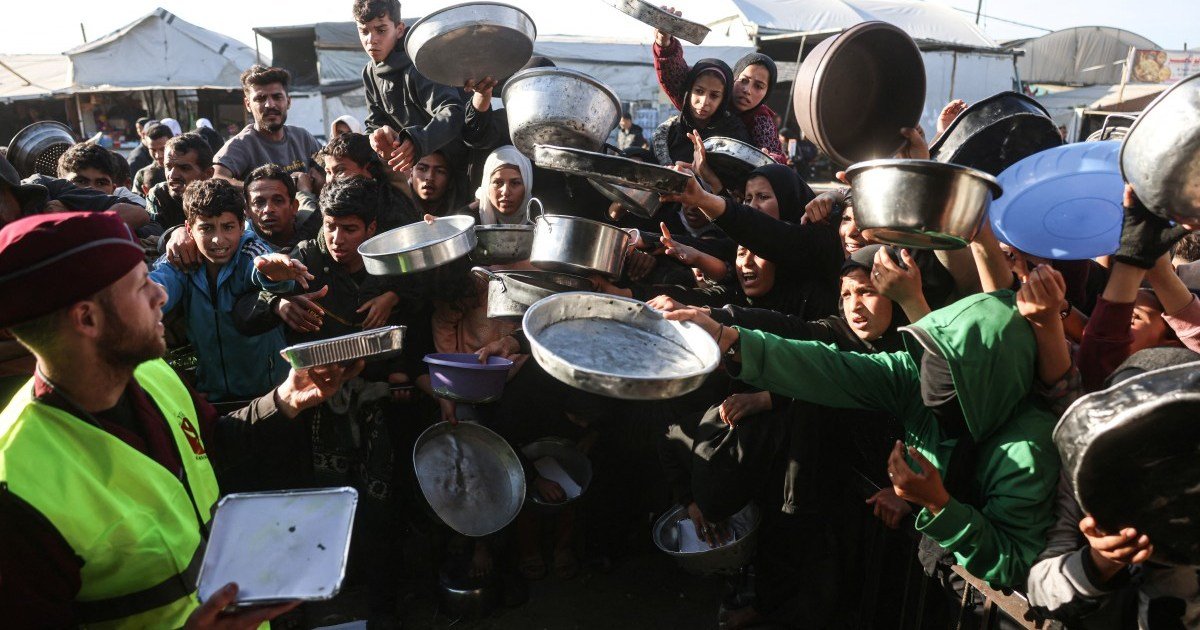
But as global focus turns to the unfolding regional war, many fear that Gaza will be relegated to a secondary issue – even as more than two million Palestinians in the besieged territory remain trapped in an extremely fragile humanitarian and political situation.
“The war with Iran has given Israel broader space to intensify its crimes in Gaza, while the humanitarian situation has deteriorated rapidly due to severe restrictions on the crossings,” Ramy Abdu, head of the Euro-Med Human Rights Monitor, told Al Jazeera.
Israel closed the crossings into the Strip on the first day of the war with Iran, disrupting the entry of trucks carrying humanitarian aid and essential supplies.
The move also halted the travel of patients and wounded people, prompting widespread concern as thousands of patients had been waiting to travel abroad for treatment after Israel’s war decimated Gaza’s healthcare system.
After several days of closure, Israel partially reopened the Kerem Abu Salem (Kerem Shalom) crossing, allowing a limited number of trucks carrying aid and basic commodities to enter. The limited reopening, however, has had little impact, as the volume of aid entering Gaza remains far below the 600 trucks per day needed to cover the population’s needs.
Significant restrictions also remain in place on the entry of fuel and heavy machinery needed to remove rubble and restore vital infrastructure, making recovery efforts in the bombarded territory slow and complex.
Economic affairs specialist Mohammad Abu Jiyab said the US-Israel war on Iran has had a direct impact on Gaza’s economic and humanitarian conditions. He cited the decline of crossing operations and the reduction in imports of aid and commercial goods as a result of Israeli security decisions linked to the regional conflict.
“This has led to a sharp rise in prices and shortages of goods in the markets, along with a decline in the ability of international organisations to distribute humanitarian aid adequately to the population,” he added.
Abu Jiyab warned that the continuation of this situation would deepen the living and economic crises in the territory as supplies decline and residents struggle to secure their daily needs.
A spokesperson for the United Nations Children’s Fund said the prices of some basic commodities, including food and cleaning products, have risen dramatically, in some cases by 200 to 300 percent.
‘Ceasefire’ violations
Meanwhile, Israeli air attacks and artillery shelling on various parts of Gaza continue in violation of the October “ceasefire”.
Medical sources said six Palestinians, including two children, were killed and some 10 were wounded in Israeli attacks on Gaza City and the Nuseirat refugee camp late on Sunday and early on Monday.
According to the Ministry of Health in Gaza, Israeli attacks since the start of the “ceasefire” have killed at least 648 people and wounded nearly 18,000.
Analysts say the shift in international attention has given Israel greater space to carry out limited military operations in Gaza without triggering major reactions.
Euro-Med Monitor’s Abdu warned that Israel continues to carry out what he described as “systematic acts of genocide” in Gaza, exploiting every opportunity to deepen conditions that make life increasingly impossible for an exhausted population faced with extremely harsh living conditions.
He also cautioned about growing fears of renewed famine and malnutrition, particularly among children. Abdu pointed to the rapid deterioration of health services amid shortages of medicines and medical equipment.
“Hospitals are shutting down or operating at minimal capacity due to shortages of fuel and medical supplies. Patients are increasingly unable to travel for treatment, and many are deprived of essential medicines,” he said.
Delaying the next phase of the ‘ceasefire’
Separately, Abdu highlighted Gaza’s political vacuum, noting that Israel continues to obstruct the work of a committee tasked with administering the territory and prevents its members from entering it.
The Palestinian National Committee for the Administration of Gaza was formed in January as a transitional civilian body comprising 15 technocrats as part of arrangements linked to the next phase of the “ceasefire” agreement.
Its mandate includes managing civil affairs and essential services in Gaza, coordinating the entry of humanitarian aid, restarting government institutions and overseeing recovery and reconstruction efforts.
The Rafah land crossing is a central issue linked to the committee’s work, but it has remained closed for the 10th consecutive day, further complicating the committee’s ability to carry out its tasks.
“It is clear that Israel is exploiting the world’s focus on the war with Iran to expand its repressive policies in Gaza at a time when international pressure and accountability are declining,” Abdu added, stressing that many of these measures are taking place even without active combat, as civilians are killed, homes destroyed and crossings restricted in ways that appear aimed at collective punishment and starvation.
The “ceasefire” agreement outlines a three-phase plan intended to gradually halt military operations, release prisoners and create conditions for the withdrawal of Israeli forces from Gaza and the start of the territory’s reconstruction.
In the first phase, the agreement envisioned a halt to military operations, a partial Israeli withdrawal from populated areas, and the entry of hundreds of aid and fuel trucks daily alongside prisoner exchanges.
However, implementation remained partial and limited from October through early 2026, as Israeli forces continued to maintain control over large parts of the territory and key crossings.
The second phase, scheduled to begin in January 2026, was supposed to include a broader Israeli withdrawal from Gaza, the launch of reconstruction and the establishment of a transitional civilian administration.
Yet the phase quickly stalled due to political and security disagreements, as Israel introduced additional conditions related to the future governance of Gaza and the disarmament of armed factions.
Abu Jiyab, the economist, believes Israel is using the regional war to maintain instability in Gaza and keep the situation unchanged without any political progress.
“The clearest indication of this is the political neglect by the United States, the so-called Peace Council, and the mediating states regarding the rapid transfer of governance and enabling the administrative committee to manage the Gaza Strip,” he added.
This deadlock has directly affected the reconstruction process, which remains largely frozen since the entry of building materials, fuel and heavy equipment depends on Israeli approvals and complex crossing procedures.
As regional tensions intensified following the outbreak of the US-Israel war on Iran, observers say international momentum to push forward the second phase of the agreement has significantly weakened.
Political analyst Ahed Farwana believes Israeli Prime Minister Benjamin Netanyahu is exploiting the shift of global attention to “prolong the first phase of the agreement without moving to the second phase”.
He said, “The Israeli army continues to carry out strikes and assassinations, while restricting certain goods and allowing others under a policy of rationing, including fuel and cooking gas.”
With Israeli forces controlling about 60 percent of the Gaza Strip, Farwana believes Israel aims to keep the territory in a permanent state of instability.
“Israel does not want stability in Gaza. Instead, it seeks to keep the front under its control through military restrictions, economic pressure and various forms of punishment.”