FOSDEM 2026 CentOS Connect 2026 took place in Brussels last week, over the two days preceding the sprawling FOSDEM festival of FOSS – the nerd world’s Glastonbury, complete with the queues and the questionable hygiene.
CentOS Connect is part of the growing FOSDEM Fringe. The Reg FOSS desk was only able to attend for the first day as the second conflicted with the Open Source Policy Summit, which we covered yesterday. Last year, we were at both days of CentOS Connect and the big revelations were on the first day, so we hoped that this would hold true.
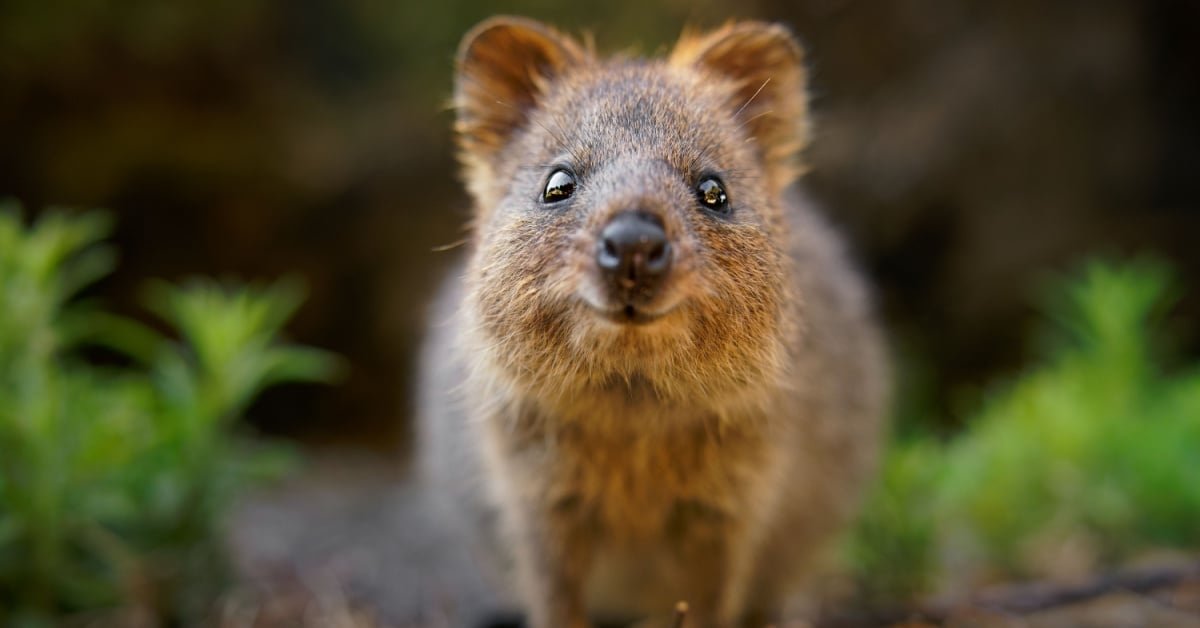
One cute change was visible as soon as we got to the registration desk. CentOS Stream now has an official mascot: the quokka. The timing amused us – it’s apparently been in discussion since 2022, but became official just in time to coincide with Ubuntu’s Questing Quokka becoming the current release, as the Plucky Puffin release reached its end of life in the middle of January.
When we talked to FOSDEM attendees about CentOS Connect last year, the general reaction was of surprise that CentOS still existed. Most people thought the project had effectively ended when Red Hat killed off CentOS Linux back in 2020. While that was the end of CentOS Linux, its rather different successor distro CentOS Stream is alive and well with an active community around it. (The word “community” is very much more important in the lands of the crimson-capped than it is in other parts of the Linux universe; we plan to return and explain this in greater depth very soon.)
CentOS Stream may not have so many individual users as CentOS Linux did, but the few organizations using it are among the biggest around, as Linux news site Phoronix hinted in 2021. Meta runs CentOS Stream, and users don’t come much bigger than that. (Of course, it probably uses other distros too, but it’s not saying.)
CentOS Stream is a free upstream version of Red Hat Enterprise Linux, and as we have explained before, RHEL – and SUSE’s SLE – are absolutely tiny compared to a general-purpose free distro such as Ubuntu, which has something like 20 times as many packages in its repositories. However, Stream is still a capable general-purpose distro, as Troy Dawson’s talk demonstrated: he installed it on a Steam Deck live on stage, without so much as an external keyboard to help. It wasn’t easy, but it worked. At the end of his talk he announced perhaps the biggest news of the day:
It’s been a while coming – the IBM subsidiary announced a developer preview in May 2025, and so did the CentOS Project. At the time of writing, though, it’s still missing from the Downloads page.
We hope that there is some new RISC-V hardware available to buy soon as the recently superseded Ubuntu 25.10 “Plucky” only supports QEMU RISC-V emulation. That’s less than ideal.
After the Steam Deck demo came a presentation from the Hyperscale Special Interest Group, which specializes in ultra-large-scale deployments and their management. Meta’s Davide Cavalca was one of the speakers, demonstrating how his employer is one of the main contributors to this CentOS Stream use case.
After that, there was a talk by Peter Georg of the Kmods SIG. This sounds very niche but it demonstrated that CentOS Stream is more versatile than it seems from its description. As the project page says, this team focuses on:
What the first point mainly means is non-FOSS kernel drivers – in other words, Nvidia support. Georg took care to note that versions of the Kmods drivers are also available for CentOS Stream’s relatives – including RHEL itself, Rocky Linux, and a special version built for AlmaLinux.
The second point means that you’re not restricted to the kernel 6.12 that CentOS 10 shipped with – the Kmods team makes newer kernels available too, which means that for example you can get an automatically updated package containing the newest LTS kernel version 6.18 for CentOS and the RHELatives. As the project repository page describes:
Since the release of RHEL 10 in May 2025, it’s required x86-64-v3. (Even though Linus hated the nomenclature, these shorthand terms for the different generations of 64-bit x86 seem to be here to stay.) That means it won’t run on older kit anyway. If you want a new RHELative on 15-plus-year-old kit, AlmaLinux can help. So the Kmods SIG focuses on drivers for the latest and greatest kit, things for which the kernel itself doesn’t yet ship with support.
The final talk of the day covered the EPEL SIG, which provides an optional-extras repository for CentOS Stream and RHEL. This expands the selection of software to something close to that of Fedora itself – indeed, that is what the original Fedora Project was: “Fedora is a collection of 3rd party add-ons for Red Hat.”
There is a web search tool along with a singularly unhelpful index, but broadly, a very large selection of the FOSS apps, accessories, and entire desktops that you might find in any ordinary Linux distro are in there. Add the EPEL repositories to CentOS (or RHEL itself) and you can install anything you want, directly and without Flatpak or anything like it. (Flatpak itself is in there, for example.)
CentOS isn’t as dead as you might think. Its role as a freebie distro that’s identical to RHEL has gone, but Rocky fills that role – and Alma sticks quite close, while loosening the restrictions on supported hardware. But it has its uses, and thanks to the efforts of its SIGs and the EPEL project, it can do more or less anything that any other distro can do. ®