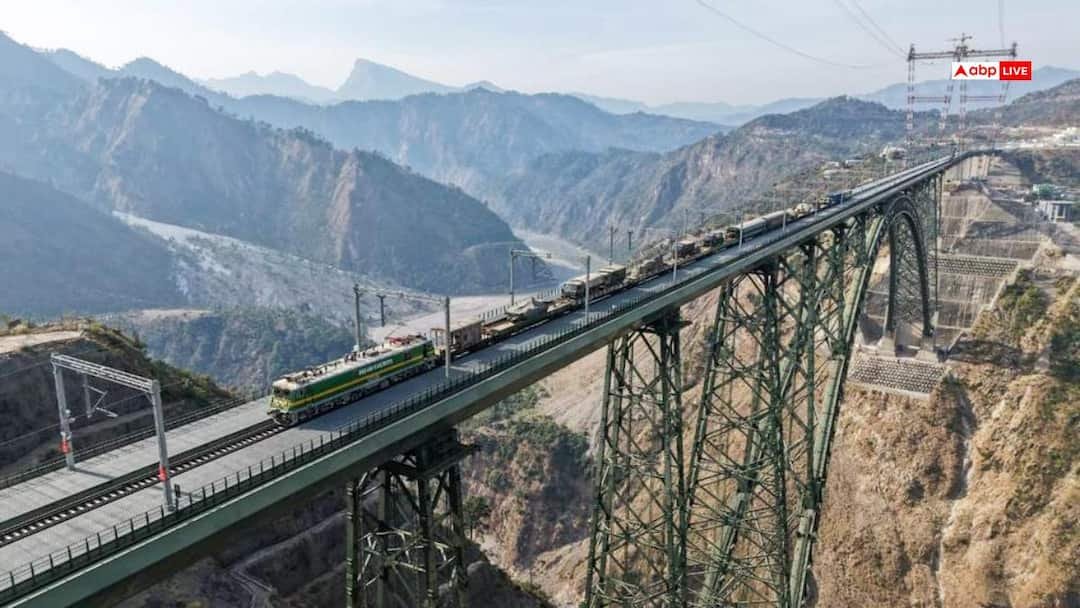
Taking a major policy decision, the Central Government has banned the expansion of railway lines in Kashmir Valley with immediate effect. According to official sources, this decision has been taken keeping in mind the interests of local communities, environmental protection and potential threats to the important horticulture economy of the region.
The central government has put on hold the ambitious plan to construct additional railway lines along the Baramulla-Srinagar corridor. Apart from this, three other major projects, where preliminary survey work had already started, have also been put on hold indefinitely. Jammu and Kashmir administration and local public representatives had expressed strong objection to these proposals, after which the Center took this step.
Cooperative federalism and respect for farmers: Ashwini Vaishnav
Railway Minister Ashwini Vaishnav described this stance of the government as a victory of ‘cooperative federalism’. He said that the projects have been stopped respecting the concerns of the state government and local MPs. Initial assessments had revealed that the railway expansion could cause huge damage to the apple orchards of Kashmir, which are the backbone of the economy there. The minister clarified that the government is committed to sustainable development and will not take any step that would jeopardize the livelihood of local farmers.
Big relief to agricultural economy: Mehbooba Mufti
People’s Democratic Party (PDP) President Mehbooba Mufti has strongly welcomed this decision of the Centre. They said that Pahalgam And blocking railway lines in areas like Shopian will save millions of rural families from uncertainty.
Mufti asserted, “Development that displaces farmers is not progress. Protecting the scarce fertile land from destruction was imperative to protect the social fabric of Kashmir.” He demanded that farmers and local communities should be included in any future plan in a transparent manner.
Environmental and local sensitivity paramount
Sources say that considering the geographical sensitivity and environmental risks of the valley, these projects will now be reviewed in depth. This decision of the government indicates that now priority will be given to ‘eco-friendly’ and cooperative model for the development of Kashmir.