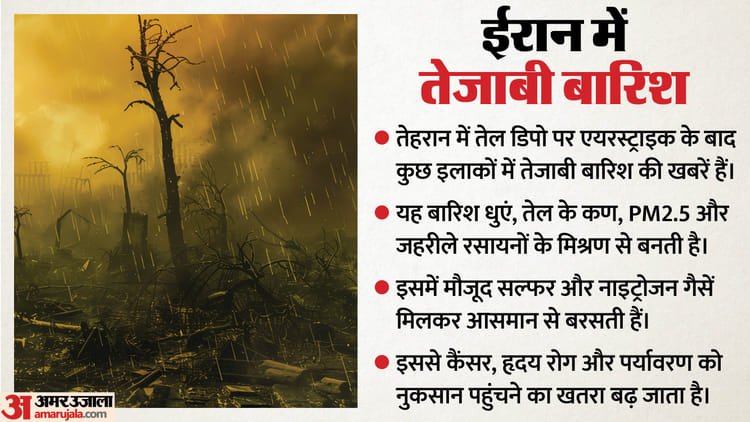
Following the US-Israel air strikes on oil depots in Iran over the weekend, there are reports of black rain in some areas. In many media reports it is being described as acid rain. According to the local people, the rain water is appearing black and an oil-like layer is also seen in it, which is accumulating on buildings and vehicles. Some people have also complained of headache and difficulty in breathing. Iran’s Red Crescent Society has also warned that the rain following these attacks could be extremely dangerous and acidic.
Scientists working on atmospheric chemistry and air pollution say that this situation may not be limited to just normal acid rain, but it is likely to involve many dangerous pollutants. According to him, there could be a more serious situation.
Why is it raining black?
Rain is a major way to remove pollutants from the atmosphere. When large amounts of pollutants are present in the air, rain drops carry them with them to the ground. After the attack on the oil depot, a huge amount of smoke and pollutants would have spread into the atmosphere. Due to this, the rain drops are falling down carrying these pollutants with them, creating a situation of black rain.
There is a possibility of many dangerous substances being present in this rain.
According to experts, many hazardous substances may be present in this rain, including hydrocarbons, extremely fine particles and polycyclic aromatic hydrocarbons (PAHs). PAHs are chemicals that are known to be carcinogenic.
Apart from this, rain may also contain a mixture of many other unknown chemicals. These may include heavy metals and inorganic compounds, which are released from buildings, structures and other materials destroyed in the explosion.
Fire in oil depots also releases gases like sulfur dioxide and nitrogen dioxide in large quantities. These gases react chemically in air to form sulfuric acid and nitric acid. When these acids dissolve in rain drops, the same rain is called acid rain.