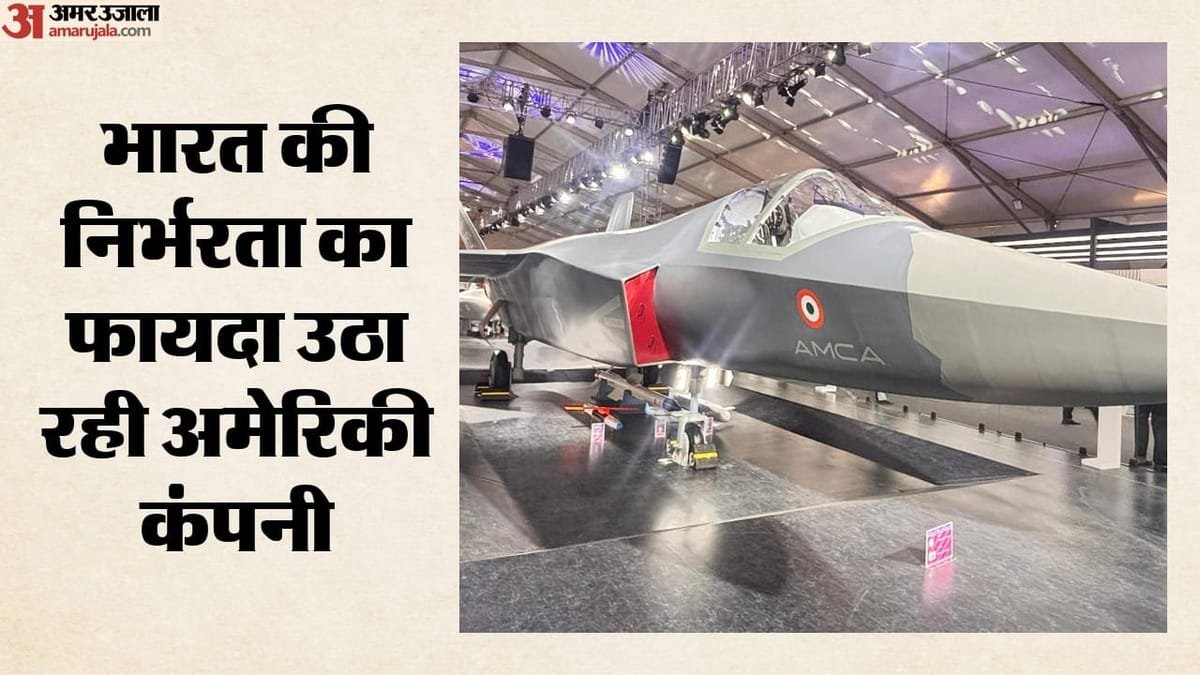
Difficulties have arisen in the way of the fifth generation indigenous stealth fighter aircraft Advanced Medium Combat Aircraft (MCA). American aerospace company General Electric (GE) has quoted the price of the F414 engine proposed for the Amca to be almost three times higher than before, leading to a standstill in commercial talks between the two parties.
This unexpected price increase has worried defense policymakers. After this demand of the company, India has started considering other options. The Indian Aeronautical Development Agency (ADA) and the Defense Ministry expected that the per engine cost of the GE-F414 engine for the upcoming fighter aircraft to be manufactured in India would be around Rs 70 to 80 crore. However, the new price offered by General Electric is almost three times this estimate.
What reason did the American company give for increasing the price?
The US company has also sought an additional amount of around Rs 6,000 crore to set up a dedicated F414 assembly and local manufacturing line in India. The crisis in the global aerospace supply chain, rising prices of raw materials and increased costs in American factories have been cited as the reasons behind this increase. According to sources, American company GE is taking advantage of India’s dependence on its engines for the Amca project.
Kaveri engine failure
India started indigenously manufacturing Kaveri engines for Tejas aircraft in the 1980s. But due to technical challenges and not achieving the expected performance levels, this engine could not be approved for the Tejas fighter aircraft. Due to lack of indigenous engine, India had to resort to American GE-F404 engine for Tejas Mark-1. After this, the GE-F414 engine was selected for the more powerful Tejas Mark-2 and initial variants of the Amka.
During PM Narendra Modi’s visit to the US in June 2023, an agreement was signed for co-production of these engines by Hindustan Aeronautics Limited (HAL) in India with significant technology transfer between the two countries. Now negotiations have reached a deadlock over commercial terms.
What options does India have?
Sources say that India has started seriously considering Plan-B for the engine. India has kept the talks open with French company Safran and Britain’s Rolls-Royce. Both these companies are proposing the development of new high-thrust engines with technology transfer to India.
British aerospace company Rolls-Royce has offered joint development of a new fighter engine in the 110-130 kilonewton range in its proposal. According to the company, if the proposal is approved, the engine can be ready by 2030, tests can begin by 2032, the first test flight can take place in 2034 and production can be started by 2036. Meanwhile, talks are also going on at the diplomatic level with America to resolve this deadlock.