NEWYou can now listen to Fox News articles!
The Supreme Court sided Thursday with a “habitual” marijuana user who challenged a federal law banning anyone who uses illegal drugs from legally possessing a firearm, a Second Amendment case that tested the limits of restricting gun ownership.
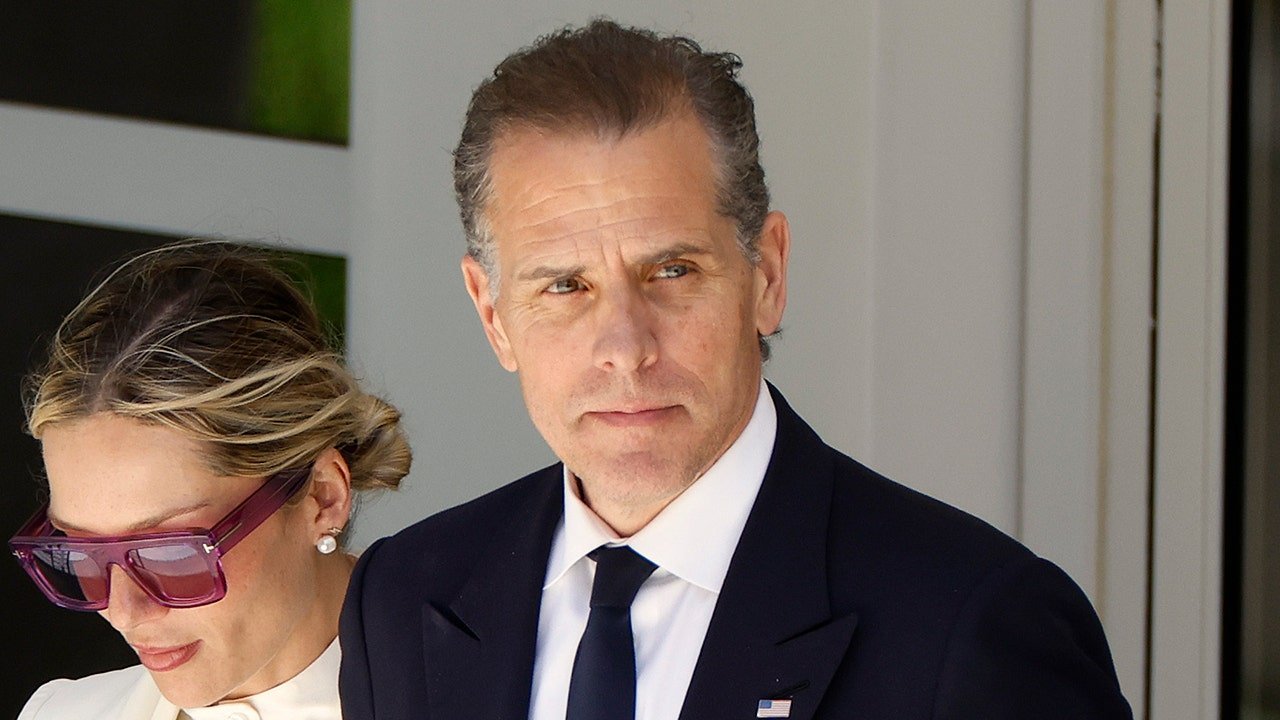
The court ruled the law, which was used to prosecute Hunter Biden, was overbroad and improperly deprived the man at the center of the case of his right to possess a firearm in his home. But the high court also said in its narrow ruling the law limits but does not end government power to take guns from drug users.
“We do not address efforts to ban addicts, or those presently intoxicated, from possessing a firearm,” Justice Neil Gorsuch wrote for the majority.
The case involved a Texas man charged with a felony after FBI agents raiding his home found a handgun he kept for self-defense and he admitted to smoking marijuana every other day.
SUPREME COURT UNANIMOUSLY STRIKES DOWN GUN LAW USED TO PROSECUTE HUNTER BIDEN
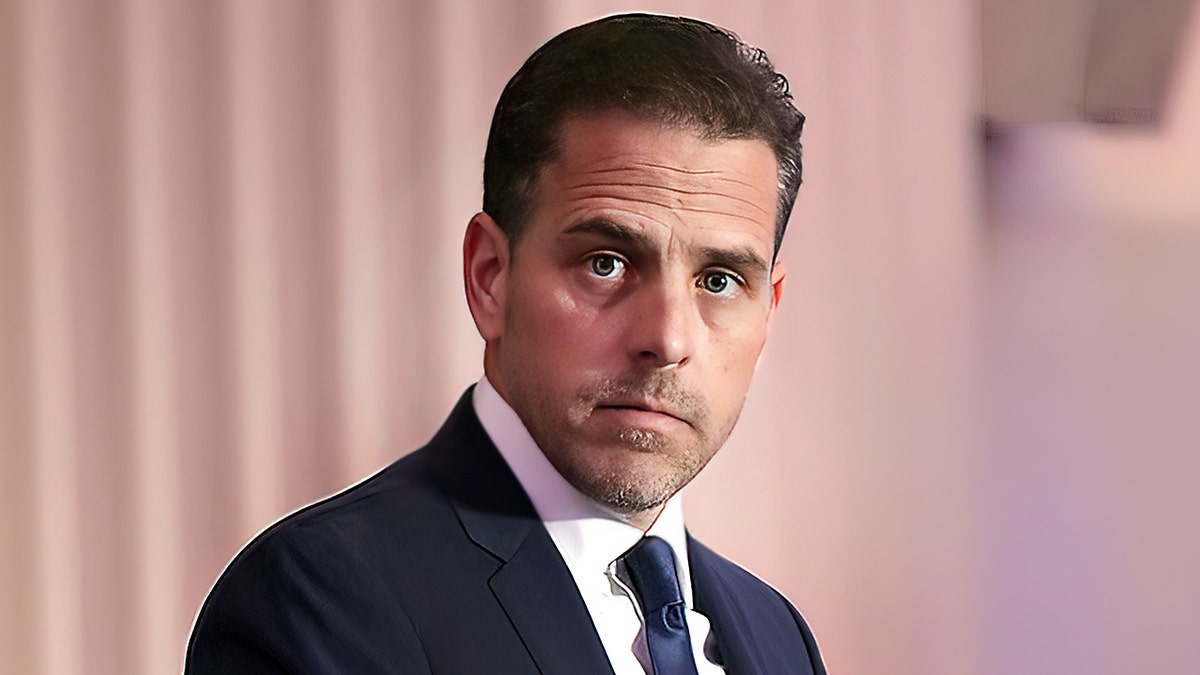
Hunter Biden’s lawyers are going on offense against his critics. (Getty images)
In an opinion written by Gorsuch, the court held that the government’s prosecution of Ali Hemani under a federal law prohibiting firearm possession by unlawful users of controlled substances violated the Second Amendment. Justices Samuel Alito and Elena Kagan concurred only in the judgment.
The government argued that people who regularly use illegal drugs could be disarmed based on historical laws that restricted the rights of so-called “habitual drunkards,” but the court said the old laws the government relied on were too different from the modern gun restriction to justify it.
“The government’s analogy fails under every measure it asks us to consider,” Gorsuch wrote. “The historical laws on which it relies targeted different kinds of people, did so for different reasons, and operated in different ways.”
The court said the old laws focused on people whose substance abuse left them unable to manage their lives, while the federal law broadly covered regular drug users regardless of whether they posed a threat to anyone.
Gorsuch noted that under the government’s interpretation of the law, the ban could extend beyond marijuana users to “a college student who routinely uses a friend’s Adderall to cram for exams” and “a husband who regularly takes his wife’s prescription Ambien to sleep.”
The court found that prosecutors never alleged Hemani was addicted to marijuana, had used a firearm while intoxicated, threatened anyone, or posed a danger to himself or others. Instead, the government relied solely on his admission that he used marijuana “about every other day.”
The opinion also questioned the government’s argument that marijuana users are categorically dangerous, pointing to the federal government’s own actions in reducing marijuana enforcement and efforts to move marijuana to a less restrictive drug schedule. The court noted that most states now permit some form of marijuana use.
SEVERAL GROUPS SAY CANNABIS MAY HELP AGING AMERICANS MANAGE PAIN
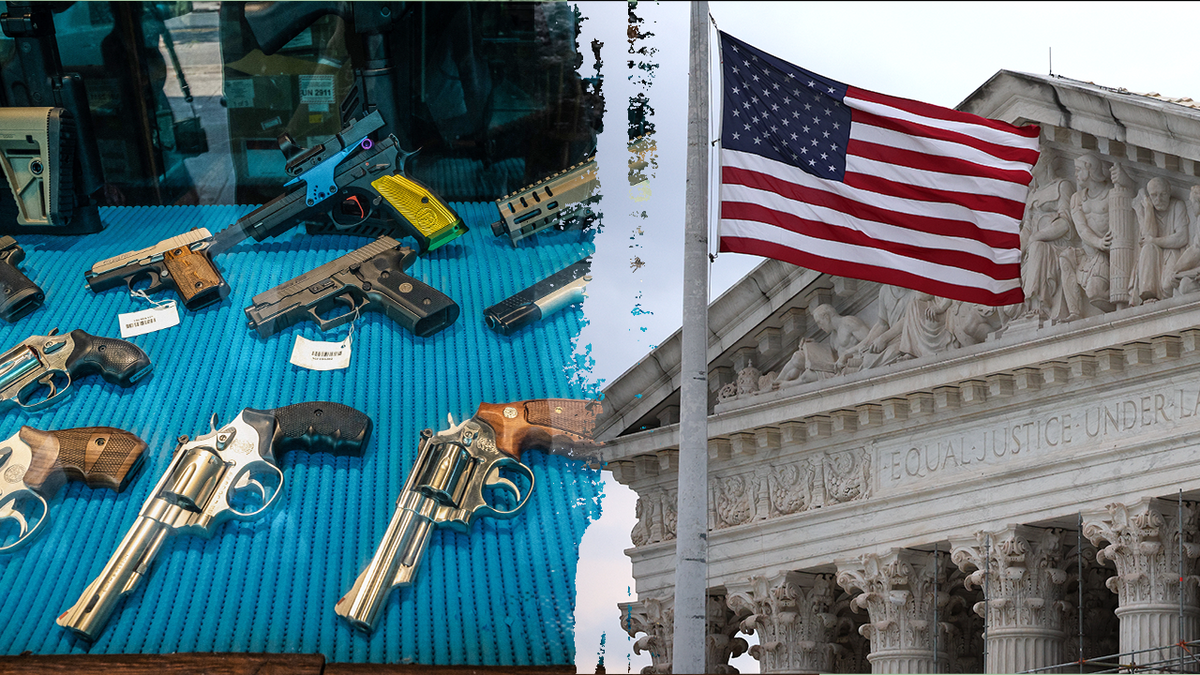
Gun store, Supreme Court building (Getty Images)
“Whatever one thinks of these developments, the federal government has not just tolerated them; it helped fuel them,” Gorsuch wrote.
The court warned that accepting the government’s theory would grant officials excessive authority to strip constitutional rights from broad categories of people.
“Affording the government ‘broad power to designate any group as dangerous and thereby disqualify its members from having a gun’ would risk allowing it to ‘quickly swallow’ the Second Amendment.”
‘THE VIEW’ HOSTS DEFEND GUN OWNERSHIP AS CHECK TO TYRANNY AFTER YEARS OF SHOW CRITICIZING GUN RIGHTS
Carrie Severino, president of the Judicial Crisis Network, praised the ruling as a significant victory for gun rights.
“It’s a good day for the Second Amendment when all nine justices can agree to protect gun rights,” Severino said. “The mere fact of illegal drug use, without more, isn’t enough to justify prosecution for gun ownership. Historically, ‘habitual drunkards’ who habitually lost use of their reason could have their rights restricted, but not just regular drinkers — even including Founding Fathers like John Adams, who drank ‘a tankard of hard cider’ with breakfast, or James Madison, who ‘consumed a pint of whisky daily.’”
“Hemani, who used marijuana a few times a week, doesn’t fit the historical mold of a ‘habitual drunkard’ whose rights can be limited on those grounds alone,” Severino added.
ALEX BERENSON: I WARNED ABOUT CANNABIS DANGERS 7 YEARS AGO AND NOBODY WANTED TO LISTEN
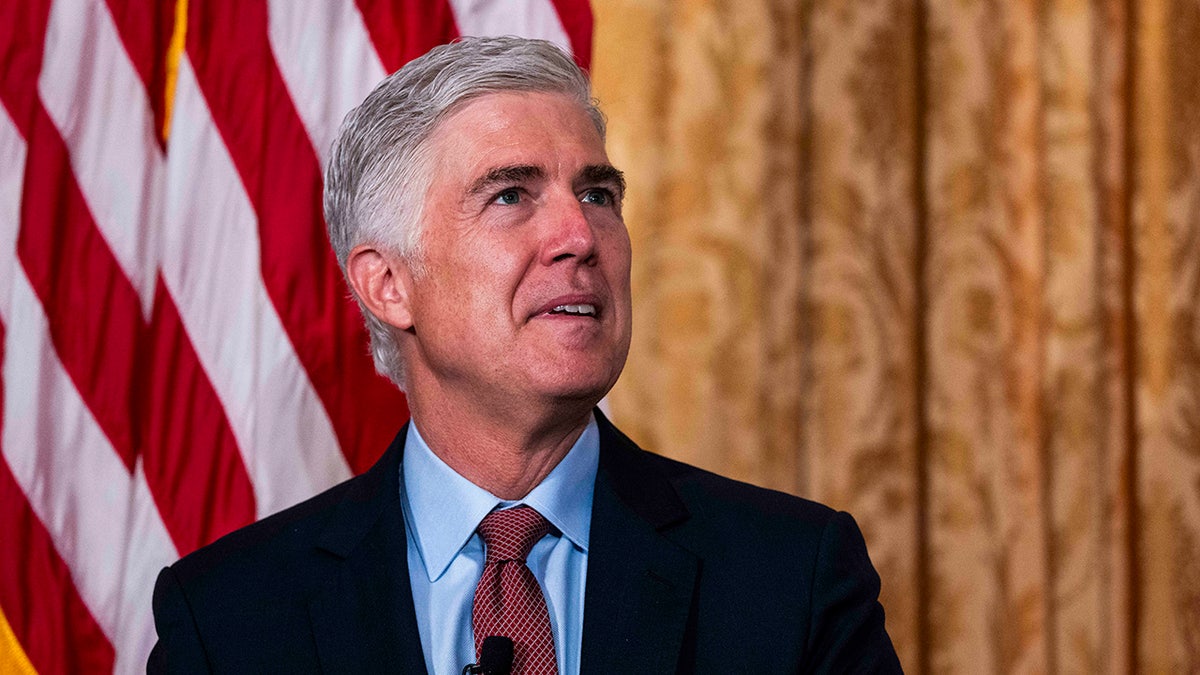
Supreme Court Justice Neil Gorsuch speaks at the Nixon Presidential Library and Museum in Yorba Linda, California, on Friday, Aug. 9, 2024. (Paul Bersebach/MediaNews Group/Orange County Register via Getty Images)
In a separate opinion, Justice Samuel Alito, joined by Justice Elena Kagan, agreed with the outcome but said the government failed to prove that Hemani resembled the severely impaired “habitual drunkards” regulated under historical laws.
“The mismatch between the Government’s historical analogues and the theory on which the Government defends the constitutionality of §922(g)(3) as applied to respondent is clear,” Alito wrote.
Tyler Yzaguirre, president of the Second Amendment Institute, also welcomed the decision, saying the ruling reaffirmed that constitutional rights cannot be set aside by the government without historical justification.
“While the justices offered different legal reasoning, they unanimously agreed that applying this federal gun ban to Hemani violated the Second Amendment,” Yzaguirre said. “This ruling reinforces the principle that firearm restrictions must be consistent with our nation’s historical tradition of gun regulation, not modern political preferences.”
CLICK HERE TO DOWNLOAD THE FOX NEWS APP
The justices emphasized that their ruling was limited to Hemani’s case and did not address whether the government can bar firearm possession by addicts, people who are intoxicated, felons, or drug users shown to be dangerous.
“Gun control activists will inevitably claim that the sky is falling. It isn’t,” Amy Swearer, senior legal fellow at Advancing American Freedom, told Fox News Digital. “The ruling still leaves the government room to disarm addicts or prosecute people who possess firearms while actively intoxicated.”