To strengthen the economy from the adverse effects of the West Asia crisis, Prime Minister Narendra Modi on Sunday appealed to reduce the use of petrol/diesel, not to buy gold for a year, adopt organic food along with chemical food in chemical fertilizers and reduce the consumption of edible oil and avoid unnecessary foreign trips. His statement comes at a time when crude oil and gold account for the largest share of India’s import expenses and is severely impacting India’s foreign exchange reserves.
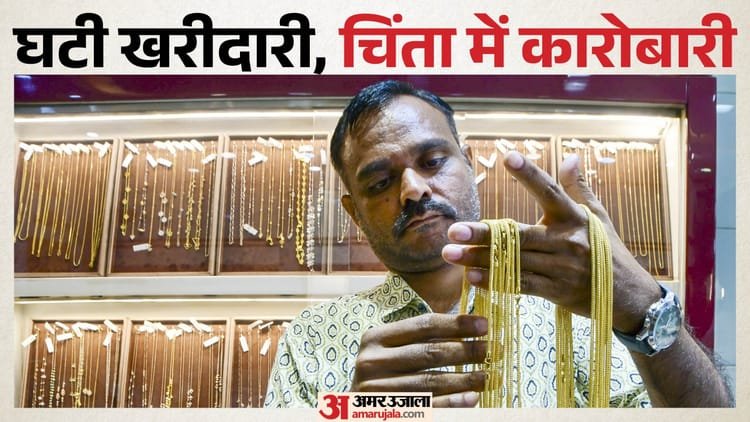
After this call of Prime Minister Narendra Modi, there was a decline in the shares of jewelery companies listed in the stock market on Monday and a lot of mixed reactions were received from the jewelers’ organization and the Mumbai Bullion Market. At the same time, due to high prices of edible oil, a decline of more than 10 percent is already being seen in the demand. After this appeal, there may be more pressure on business.
Surendra Mehta, National Secretary of the Indian Bullion and Jewelers Association (IBJA) told Amar Ujala.com that this appeal of the Prime Minister will impact the business and the demand will reduce by 5 percent. It is not that the purchase of gold will stop completely but it will affect the demand. They say that due to already high gold and silver prices, the demand for gold is less.
Funding problems will increase in business
Mehta says, this will affect the business, but the biggest impact will be on funding in the business. Because the demand is already low due to high prices of gold and now when the Prime Minister himself is asking to reduce the purchase of gold, in such a situation if the businessman goes to the bank to increase his loan limit, then the bank may hesitate to increase his limit. The biggest challenge the industry faces, I think, is the problem of fading, which may increase.
Livelihood of 3.5 crore people associated with bullion ecosystem may be affected
Pankaj Arora, National President of All India Jewelers and Goldsmiths Federation, says, this appeal of the Prime Minister may affect the livelihood of 3.5 crore people associated with the jewelery and bullion ecosystem. Of which 6 lakh are jewelery shops, of which 2 lakh are hallmark registrars and the remaining 4 lakh are small shopkeepers and goldsmiths. Apart from this, artisans, manufacturers, wholesalers, refiners including designers and daily wage laborers are associated with it. He says, due to the tariff imposed by America on India, tension in West Asia due to which the high prices of gold have affected the business in the bullion market by 80 percent in the last one year. Of the 30 percent business that is left, there is a possibility that after this appeal of the Prime Minister, up to 10 percent more business may be affected. The organization has urged the government to immediately initiate inter-ministerial discussions, so that the goals of protecting foreign exchange, supporting small jewelers, livelihood of artisans and making India a global bullion-jewellery hub can be simultaneously achieved.
The request to recycle gold is right for the industry
Mahesh Bafna, president of Mumbai Wholesale Gold Jewelers Association, says the demand for jewelery is already low due to high gold prices. 50 percent business has been affected since last one year and after this appeal of the Prime Minister, business will be affected. If the Prime Minister had called upon people to buy new gold instead of old gold lying at home, i.e. adopt recycling, it would have been a relief for the industry. There are more than 5 lakh businessmen in Mumbai city alone who will be affected by this.
Small jewelers shopkeepers will be affected
Kumar Jain, national spokesperson of Bombay Bullion Association, says, we are not opposing the Prime Minister’s call of not buying gold. In a sense, this is in the interest of the country. But it will definitely have an impact on business. There has been pressure on jewelery sales in the last one year, now such an appeal will affect it further. If the demand reduces further, it will affect small jewelers the most, while big branded jewelers companies can bear such developments. He says, every year 800 to 900 tonnes of gold is imported in India and it is also consumed. Due to which the government’s account is being affected.
10 to 12 percent decline in demand due to increase in edible oil prices and heat.
Shankar Thakkar, National General Secretary of Confederation of All India Traders (CAIT) and National President of All India Edible Oil Traders Federation, says, Prime Minister Narendra Modi has already appealed thrice to reduce oil in food. At the same time, after Corona, people have adopted a healthy lifestyle, due to which there has been a decline of 3 to 4 percent in the demand for edible oil since Corona. On the other hand, after the imposition of tariffs by America and the start of the war in West Asia, oil prices have increased by 25 to 40 percent. Palmolein oil, which was Rs 120 per liter before the war, became Rs 140 to Rs 150 per liter after the war started. Due to high prices and extreme heat, edible oil demand is already seeing a decline of 10 to 12 percent. Businessmen were already troubled and now after the Prime Minister’s appeal, their challenges may increase further.
18 percent decline in edible oil imports in April
At present 60 to 65 percent of edible oil is imported in India. In which the consumption of palmolein is 50 percent, mustard oil is at second place and soybean oil is at third place, which is the highest in the country. In comparison to last year, there was a decline of 29 percent in the import of edible oil in March, whereas in April the decline was 18 percent.
expert opinion
Commodity experts say that due to high prices, businesses ranging from edible oil to jewelers were already in trouble. Now this appeal of Prime Minister Narendra Modi in the national interest will have an impact on the people, it cannot be said that people will completely accept it, but the effect will definitely be seen. Dr VK Vijayakumar, Chief Investment Strategist, Geojit Investments, said Prime Minister Modi’s appeal to reduce consumption of petrol/diesel, gold, chemical fertilizers and edible oil and avoid unnecessary foreign trips is a crisis management response to the current account deficit problem caused by high crude oil prices. This call for austerity will have a slight negative impact on economic growth in FY2027.
What do the figures say?
It is no secret that Indians have a deep love for gold. We are one of the world’s largest consumers, typically importing 700-800 tonnes of gold annually to meet more than 90 per cent of our domestic demand. This huge import of gold constitutes a major part of our import bill, especially now when the import cost is also increasing due to rising prices. Gold imports to rise by 24 per cent to all-time high of $71.98 billion in 2025-26. Gold import in 2024-25 was $58 billion. It was $45.54 billion in 2023-24 and $35 billion in 2022-23. Due to increase in imports of these precious metals, the country’s trade deficit is likely to increase to $333.2 billion during 2025-26.