Sanaa, Yemen – It was August 2023, and Enaya Dastor was reading a school textbook while also keeping an eye on her goats as they grazed near her village, Jabal Habashy, in central Yemen’s Taiz governorate.
Whenever the livestock moved away, the then-13-year-old would walk or run to bring them back to the pasture near her house.
Recommended Stories
list of 3 itemsend of list
That afternoon, she was following them as usual when an explosion rang out.
A landmine had detonated beneath her.
“People gathered around me after the blast, and I was taken to the hospital immediately. It was a horrible moment, ” Dastor told Al Jazeera. Surgeons were forced to amputate her left leg, leaving her with a lifelong disability.
The incident took place more than a year after fighting between Yemen’s government and Houthi forces largely stopped, following a ceasefire in April 2022.
But landmines left behind on former battlefields and front lines continue to kill and injure Yemenis.
The hidden risks have turned fields, roads, and villages into areas of ongoing danger. Landmines and other explosives have killed at least 339 children and injured 843 since the 2022 truce, according to Save the Children. The organisation found that nearly half of child casualties related to the conflict were due to landmines and explosive remnants of war.
‘Sleeping killers’
The parties to Yemen’s conflict planted thousands of mines during the civil war, which began in 2014.
Two months before Dastor’s incident, a boy in a nearby village had stepped on a landmine. One of the boy’s legs was amputated in the explosion, she told Al Jazeera.
“Landmines are sleeping killers, waiting for the innocents to step on them or move them without caution. That is how they wake up to shed blood and take human souls,” said Dastor.
“I used to go with other girls to the pasture. We grazed the cattle and play for hours. We were not aware of the danger, and we did not know when these deadly objects were planted,” she added.
After the landmine explosion took her leg, her family and others fled the village, which had previously been on a front line.
To date, Dastor’s family has not returned. They now live in the city of Taiz.
“I do not want to see another child harmed or hear another landmine explosion. I loathe walking on the soil under which mines were planted,” she said.
In the first half of 2025 alone, 107 civilians were killed or injured, most of them children, according to Save the Children. Included in that number are five children who were killed while playing football on a dirt field in Taiz.
Lost hope
From 2015 through 2021, ground fighting was brutal, and warplanes continuously bombed across Yemen, killing and injuring thousands of civilians.
The landmines have added a lasting layer of danger. A study carried out in 2022 by Yemeni human rights groups found that 534 children and 177 women were killed by mines between April 2014 and March 2022.
In addition, 854 children, 255 women, and 147 elderly people were injured during the same period in 17 Yemeni provinces, with the heavily fought-over Taiz recording the highest number.
In 2018, Mohammed Mustafa lost his left leg in a landmine explosion in Taiz’s Maqbna district. He was only 20 years old. Eight years on, he can still recall the details of that moment.
“I stepped on a landmine when I was walking in a mountainous area at sunset time. After the blast, I looked towards my feet, and I found my left leg was gone,” he told Al Jazeera.
Mustafa was in a rural area with no hospitals nearby. He had to travel five hours by ambulance to the city of Taiz, and the distance he covered to reach a healthcare centre added to his pain.
“I fainted repeatedly on the way to Taiz city. The next day, I woke up in the hospital, and saw my leg amputated up to the knee,” he said.
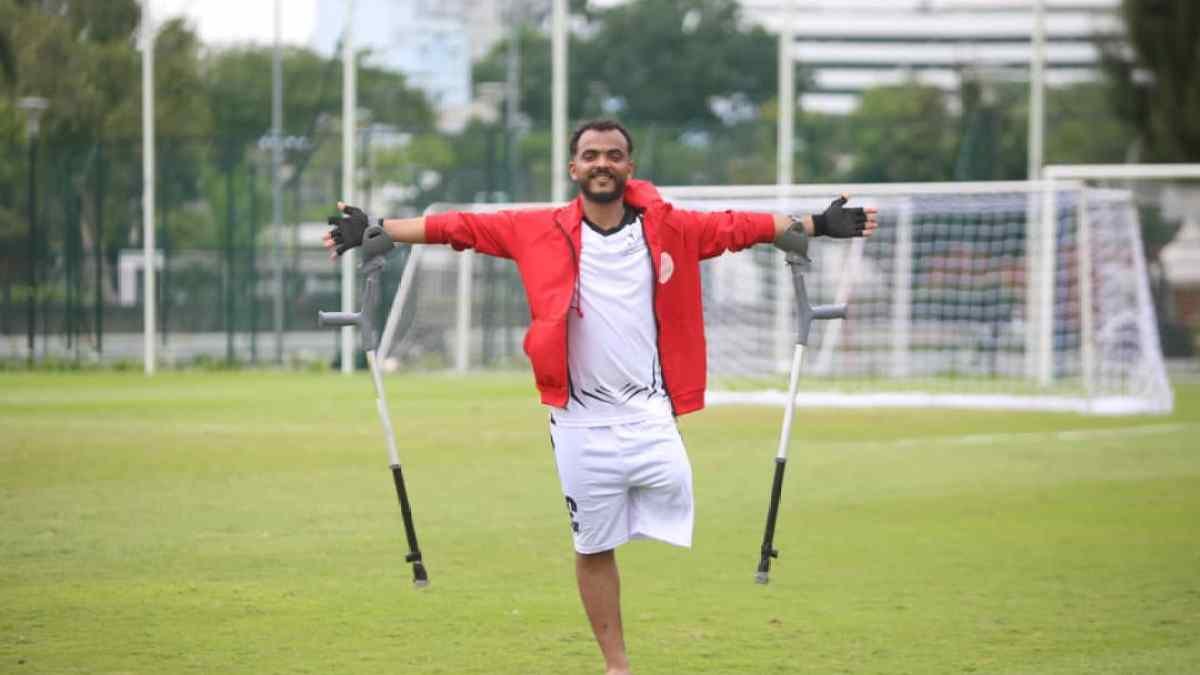
With support from family, relatives and friends, he recovered. Mustafa is now a member of the Yemeni Amputee Football Federation, a father, and a small business owner.
“My family and friends stood by me, lifted my morale, and accompanied me on outings in the city to help me forget my pain and worry. I realised I was not alone,” he said.
De-mining challenges
Efforts to remove landmines from many areas in Yemen continue. But totally ridding the country of the problem remains complex, particularly as no final deal has been agreed upon to end the war.
Project Masam, a de-mining team funded and initiated by Saudi Arabia, said in a statement in March that, since the project’s launch in July 2018, a total of 549,452 mines, unexploded ordnance, and improvised explosive devices (IEDs) had been removed by March 20, 2026.
During the same period, the project’s teams cleared explosives from 7,799 hectares (19,272 acres) in Yemen. Similarly, the Danish Refugee Council (DRC) said early this month it has cleared more than 23,302 square metres (250,820sq ft) of Yemeni land from mines and explosive remnants of war.
Adel Dashela, a Yemeni researcher and non-resident fellow at the MESA Global Academy, focusing on conflict and peace building studies, said that many factors make the de-mining process challenging.
“The mines have been planted indiscriminately in different areas, and some of the territories are under the control of different armed groups, which makes them inaccessible to de-miners,” Dashela told Al Jazeera.
“Other challenges facing the de-mining process in Yemen include the lack of clear maps and the lack of qualified local personnel to handle these mines effectively. There is also a shortage of government’s modern equipment for detecting these devices and explosives,” he added.
Dashela noted that flash floods, such as those Yemen experienced in August 2025, sweep away explosives from one area to another, complicating the clearance process and exposing more people to further risks.
This means many more Yemenis will likely suffer.
The loss of a limb might bring lasting sorrow to landmine survivors, but some, like Dastor, are determined not to dwell on the past. She is focusing on the future.
“Today, I am in tenth grade, and I will finish high school in two years,” she said. “After that, I will enrol in law college and will graduate as a lawyer. I want to defend those who face injustice.”
“The injury has changed how I move or walk, and separated my family from our home,” she said. “But it cannot disable my mind or stop my dreams.”