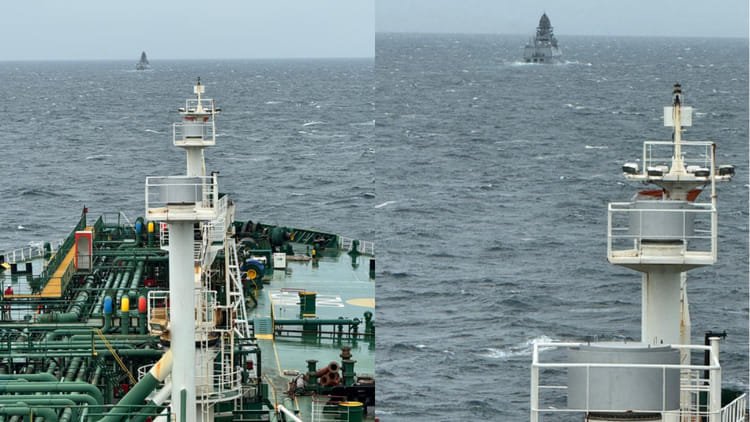
There is another relief news for India amidst the ongoing war in West Asia. Indian flagged LPG tanker Green Shanvi passed safely through the Strait of Hormuz on the night of 3 April 2026. According to official sources, the ship was carrying about 46,650 metric tonnes of LPG cargo. In the coming days, two more India-flagged LPG tankers Green Asha and Jag Vikram will also transit the Strait of Hormuz and head towards India.
Seven Indian ships crossed Hormuz
It is noteworthy that since the beginning of the West Asia War, a total of seven Indian LPG tankers including Green Shanvi have crossed this sensitive waterway. After the transit of Green Shanvi, there are now a total of 17 Indian ships present in the Persian Gulf. These include three other LPG tankers, four crude oil tankers, one LNG tanker, one chemical products tanker, three container ships, two bulk carriers and two vessels undergoing routine repairs.
Impact of India’s diplomatic talks
India has held diplomatic level talks with Iran to ensure safe movement of its ships. Iran had recently clarified that ships of countries which maintain coordination with it and do not fall in the enemy category are being allowed to pass through the strait. Iran’s Foreign Minister Abbas Araghchi had also said that ships from countries like India, China, Russia, Iraq and Pakistan are being allowed to pass through this route.
Why is Hormuz so important?
The Strait of Hormuz, an extremely narrow but strategic sea route located between Iran and Oman, is considered the pivot of global energy supplies. Every day more than 20 million barrels of crude oil passes through this route. This volume accounts for about one-fifth of the world’s total oil consumption and about a quarter of seaborne oil trade. A large amount of the world’s liquefied natural gas (LNG) is also transported through this route.
In such a situation, if there is an interruption in this route even for a short while, its impact is not limited to the oil market only, but is felt in the financial markets, global supply chain and the household budget of common consumers. This is the reason why the eyes of the whole world are focused on America, Iran and energy markets regarding the current crisis in Hormuz.