Delhi government has implemented Air Pollution Mitigation Action Plan-2026 against pollution. Chief Minister Rekha Gupta said that now the no PUC-no fuel rule will be strictly enforced throughout the year. Entry of non-BS-5 heavy vehicles into the capital will be stopped from November 1.
Delhi government has taken strict steps to control the increasing pollution in Delhi. The Chief Minister on Friday launched the Air Pollution Mitigation Action Plan-2026, in which a strategy has been made to work together on all the major causes of pollution. In the first meeting chaired by the Chief Minister, many important decisions were taken, in which a strict action plan has been implemented on the major causes like vehicle smoke, road dust, construction work, industrial pollution and burning of garbage. Work will be done in a total of 11 sectors and the responsibility of each department has been fixed. CM said that this is not just a plan, but a campaign running with fixed timeline, technology and accountability.
Maximum strictness on vehicles
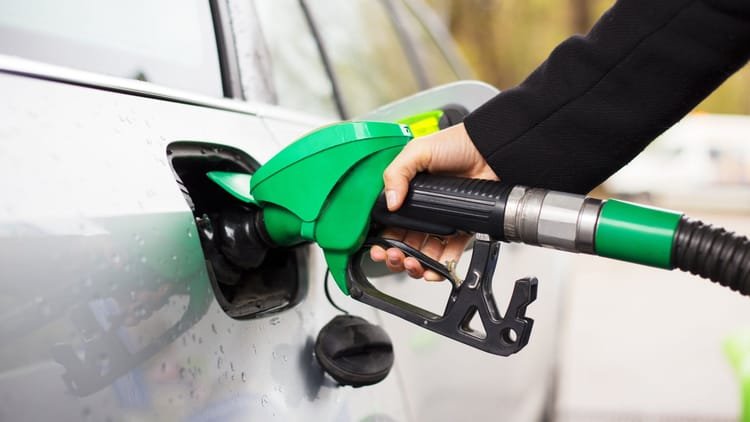
The government has taken a tough stance on vehicle pollution. No PUC-No Fuel rule will be strictly enforced. For this, ANPR cameras and digital systems are being installed so that vehicles without PUC do not get petrol and diesel. The biggest decision is that from November 1, only BS-5, CNG and electric goods vehicles will get entry in Delhi. Heavy vehicles coming without essential work will also be banned. In case of increased pollution, steps like work from home, change in office timings and additional restrictions on vehicles will also be taken.
Focus on public transport and EV
The government’s emphasis is on reducing private vehicles. For this, a target has been set to increase the number of buses to 13,760 by 2028-29, of which a large number will be electric buses. Last mile connectivity will be improved by connecting feeder buses, e-autos and shared rides with the Metro and RRTS networks. To promote electric vehicles, 32,000 charging points will be installed in the next four years. In the new EV policy, special attention will be given to two-wheelers and commercial vehicles, while government vehicles will also be converted to clean fuel.
Action on jam and dust
Traffic jam is considered a major reason for pollution in Delhi. For this, 62 big hotspots have been identified, where time bound improvements will be made. Also, Intelligent Traffic Management System is being implemented in the city. To control road dust, water sprinklers, anti-smog guns and mist spray systems are being installed on a large scale. These will be monitored in real-time through GPS and central dashboard.
Road and construction monitoring
About 3,500 kilometers of roads will be redeveloped, which will reduce dust. Timely repair of potholes and road management system will also be implemented. AI based C&D Portal 2.0 will be launched to keep an eye on the construction works, which will enable real-time monitoring and strict action.
Plan to eliminate garbage and landfill
The government has also set a deadline to eliminate the old garbage mountains. Okhla landfill is targeted to be removed by July 2026, Bhalswa by December 2026 and Ghazipur by December 2027. Burning of biomass has been completely banned and alternative arrangements like electric heaters will be made available.
Industry and surveillance systems
To prevent industrial pollution, online emission monitoring system has been made mandatory in all units. Strict action will be taken against those who break the rules. Besides, expansion of air quality monitoring network, green war room and integrated command center will be created.
Emphasis on public participation and greenery
The government will increase people’s participation through Vayu Rakshak teams and 311 platform. Apart from this, a target has been set to plant 70 lakh saplings in 2026-27 and more than one crore saplings in the long run.