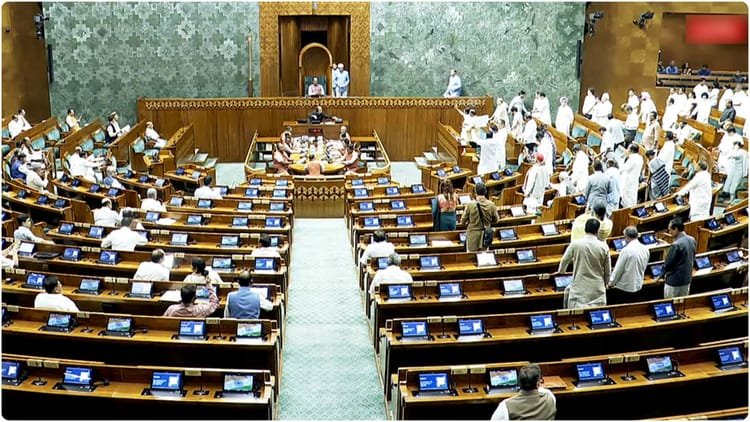
The government has taken steps towards securing one-third seats for women in the next general elections. This issue is being discussed extensively not only with the opposition parties but also within the ruling coalition. In the meeting held on Wednesday, a consensus was reached on the Constitution Amendment Bill amidst some questions like separate quota for backward classes. The government will now decide the time to introduce this bill after final talks with Congress and other regional parties.
During the meeting, Home Minister Amit Shah explained in detail to the alliance partners why the government has become so active on this subject. He clarified that the process of boundary determination after the census will be completed only by 2029. In such a situation, the government wants to fulfill its promise of implementing the Nari Shakti Vandan Act in the upcoming general elections. He also informed that the number of seats in different regions will be increased by 50 percent on a proportional basis.
No impact on assembly elections
According to the plan the government is discussing with the opposition, women’s reservation is to be implemented from the 2029 Lok Sabha elections. In the meeting of the ruling party, it was made clear that while bringing the bill in the year 2023, it was resolved to make it effective in 2029. Opposition leaders also believe that the government has not given any indication of implementing it in the assembly elections of Uttar Pradesh or other states to be held in the coming years. The government wants to fulfill its promise of implementing the Nari Shakti Vandan Act in the upcoming general elections. -Amit Shah
Constitutional position on backward class quota
When the question of separate reservation for backward classes was raised in the meeting, the Home Minister said that it is not possible to do so constitutionally. He argued that as soon as women’s reservation is implemented, the number of public representatives coming from backward classes will automatically increase. The reason for this is that no political party would want to cause political loss to itself by ignoring such a large section at the time of ticket distribution.
Challenges of caste census
There was also discussion in the meeting on collecting data of castes in the census of 2027. While sharing the memories of the old calculations, a senior minister said that at that time, due to the emergence of lakhs of castes and sub-castes, the use of those data had become difficult. Since there is no fixed format for declaring caste and it is based on the individual’s own information, this time also this number may increase a lot.
Bill introduction strategy
The government will take the final decision on this important decision only after dialogue with the opposition parties. Currently two options are being considered. The first option is to call an additional two-day meeting for the same purpose after the conclusion of the current session and the second option is to call a special session in the month of May after the elections in five states. According to government sources, major opposition parties have agreed on this in principle and discussions are pending with other parties.