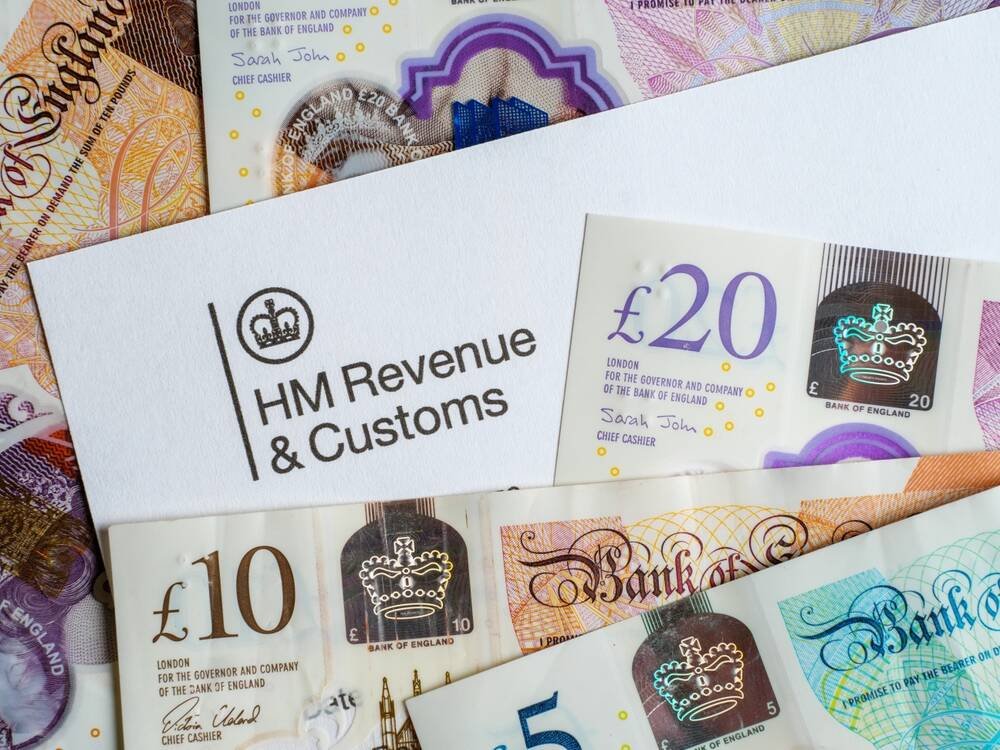
The UK’s tax collection agency has awarded Amazon Web Services – the only remaining bidder – a contract worth nearly £500 million to migrate services from three Fujitsu-run datacenters and host them for up to a decade.
His Majesty’s Revenue and Customs (HMRC) said the British branch of AWS’s Luxembourg-based subsidiary submitted the only tender it received and assessed for the deal in a contract award notice published on March 23.

UK govt office admits ability to negotiate billions in cloud spending curbed by vendor lock-in
The agreement, priced at £472.8 million including VAT, is scheduled to run for a minimum of seven years from April 2026 with an option to extend it to ten years. HMRC can pay for extras including business services transformation, migration of services not run from the three Fujitsu datacenters, and application modernization.
The “Procurement for the provision of Hyperscaler Services to enable Data Centre Exit” contract is intended to let the tax collector end its use of three datacenters managed by Fujitsu by June 2028. As the project’s title suggests, the tender was aimed at the largest cloud suppliers.
In its initial March 2025 contract notice, the total financial value was estimated at £500 million including VAT. HMRC said it “anticipated that the appointment will be limited to a single Hyperscaler” able to migrate services and infrastructure from the Fujitsu-run bit barns – which use about a dozen operating systems including HP’s Unix, IBM’s AIX, and Sun’s Solaris – to UK-based cloud hosting.
When it published the tender in June, HMRC added “Hyperscaler services” to the title and said “modern hyperscaler cloud technologies would be the preferred solution.”
The notice stated that 70 percent of the contract decision would be based on quality, with just 20 percent on price and 10 percent on social value, with the full list of criteria provided to shortlisted suppliers.
Sources close to the bidding process told The Register in October that HMRC unofficially shortlisted AWS, Google, and IBM. Microsoft, the only other supplier of a similar scale to AWS, was not in the running. One insider suggested the tender had been written so that only AWS or Microsoft could realistically win it.
“[It was all about] ability to execute, a proven history of working with departments like this – seven-year track record of hosting massive hyperscaler-type services. It could only be AWS or Microsoft.”
HMRC specified it did not want hybrid cloud services so IBM decided not to bid further, a person familiar with the matter added. Google also decided to drop out. Bidding for contracts is an expensive exercise.
“There was only one company capable of bidding [at that point],” he added. “AWS was going into a tender negotiation knowing the value of the contract, and there was zero power for government to negotiate.”
“This is hugely political,” a well-placed source said. “Politicians stand up and talk about standardizing frameworks for procurement to get better discounts and value for money… sometimes it appears contracts are already locked down.”
In January 2025, the Competition and Markets Authority (CMA) said it planned to look at how AWS and Microsoft dominate the UK market for cloud services, saying that “competition is not working as well as it could.” The pair account for up to 80 percent of cloud services market in Britain.
Earlier this month, in a parliamentary written question, Conservative MP Julia Lopez asked the Department for Science, Innovation and Technology how much this limited competition was costing public sector bodies.
Minister Kanishka Narayan said the CMA’s investigation had “identified a number of potential competition concerns with clear negative impacts for UK businesses, consumers and the public sector” without providing a cost. Previously, the CMA estimated businesses and the public sector were paying around £500 million more annually for cloud services than they should.
Narayan pointed out that the CMA had recommended its board prioritize a strategic market status investigation into this back in July, but as it was independent of government, this was up to the authority.
Kip Meeks, former cloud inquiry lead at the CMA, quit the agency in January over the slow rate of progress amid questions about the regulator’s independence.
In an article for The Register earlier this week, former Irish government chief information officer Bill McCluggage wrote: “If the UK is serious about digital sovereignty, fiscal responsibility, and fostering innovation and economic growth, then the CMA must act swiftly. Because the longer this drags on, the more expensive the outcome becomes for the UK taxpayer.”
The UK government is to draft an outage blueprint following the massive AWS outage in October that knocked out services at several departments, including HMRC. Clearly that didn’t deter the latest contract award heading in the direction of Amazon. ®