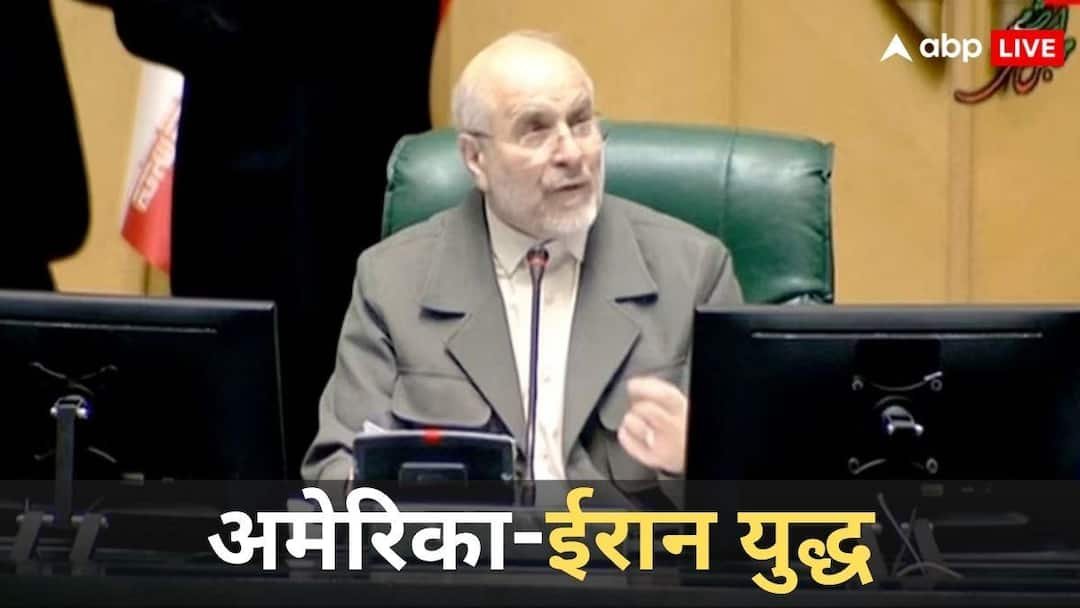
Amidst the sudden major changes in Iran’s politics and military strategy, one name has rapidly come into focus – Mohammad Baqer Qalibaf. According to reports, after the death of Ali Larijani, the command of the Iranian regime’s war efforts is now believed to be in the hands of Qalibaf. This has not only changed Tehran’s internal power structure, but may also affect the direction of regional tensions.
Qalibaf, a former police chief and associated with the Islamic Revolutionary Guards, has long been close to Iran’s power and is considered a strong pillar. In 2005, he made his presence felt in national politics by contesting the presidential race. After this, as the Mayor of Tehran and then the Speaker of the Iranian Parliament, he further strengthened his hold in Iranian politics.
After the death of President Ibrahim Raisi in a helicopter crash in 2024, Qalibaf had decided to contest the presidential elections once again. Although he had lost elections twice before and had once backed down to avoid radical vote-splitting, his political ambitions remained steadfast.
Qalibaf’s aggressive attitude
In the current crisis, Qalibaf’s stance seems very aggressive. This month he took direct aim at the US and Israeli leadership, saying, “Right here, very clearly and clearly, I say to Trump and Netanyahu and their agents and proxies, I repeat, I say to these two dirty criminals and all of their agents: You have crossed our red line, and you will pay the price.”
This statement came at a time when the news of the death of Iran’s supreme leader Ayatollah Ali Khamenei in air strikes came to light. This incident completely changed the power equations of the country. Now Qalibaf’s role is being considered decisive in wartime strategy and diplomatic decisions.
What message was given after meeting Putin?
Qalibaf’s activism has also increased at the international level. President of Russia during the BRICS Parliamentary Forum in 2024 Vladimir Putin His meeting with Iran had indicated that Iran was on its way to strengthening its strategic partnership with Russia.
Analysts believe that Qalibaf’s military background and tough political stance could make Iran’s current policy more aggressive. This is likely to further deepen the already ongoing tension in the Middle East, which may impact the global energy market, diplomacy and security balance.