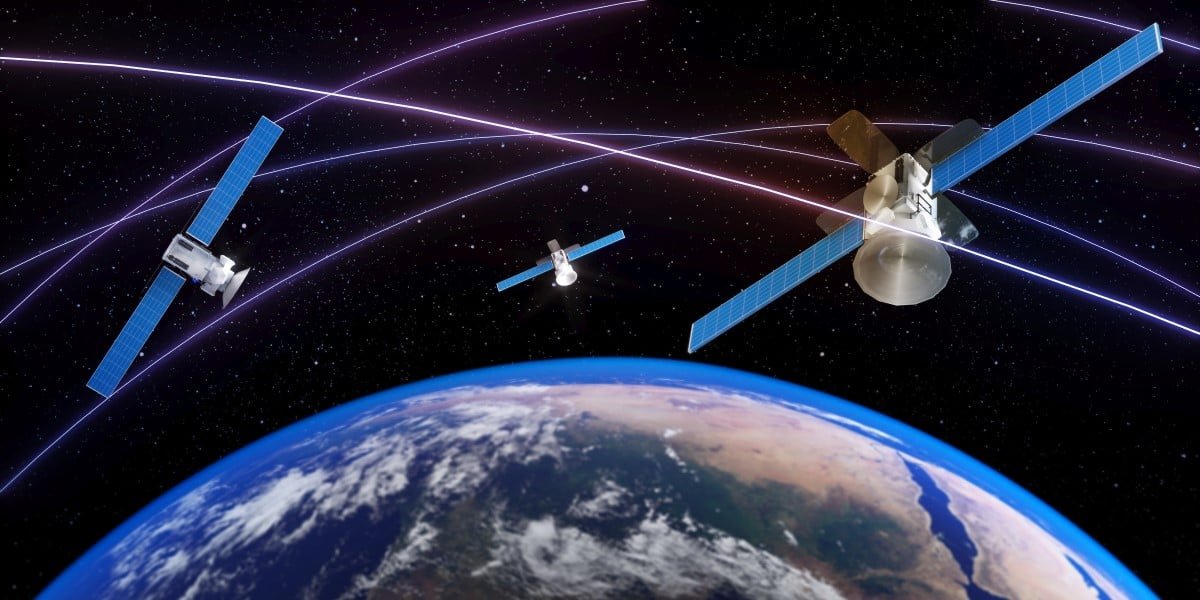
SpaceX has fired back at Amazon with a letter to the US telecoms regulator, after Amazon objected to its plans for orbiting datacenters.
The Elon Musk-owned biz delivered a missive to the Federal Communications Commission (FCC) on Friday, noting that rival space company Blue Origin has filed an application to launch up to 51,600 data processing satellites into low Earth orbit.
Blue Origin is owned by billionaire Amazon founder Jeff Bezos. Earlier this month, Amazon filed an objection with the FCC against SpaceX’s own application asking for permission to launch an orbiting cluster of datacenters.
In what we suspect was a planned counterstrike, SpaceX senior satellite policy manager Cecilia Tenge-Rietberg, notes in the latest letter: “Blue Origin suggests its application is ‘similarly situated’ to SpaceX’s pending orbital datacenter system application,” and argues with impeccable logic that the FCC should apply the same treatment to both applications.
Amazon had criticized the SpaceX application as “incomplete, speculative, and unrealistic,” arguing that the filing had provided only the barest outline of how Musk’s firm expects to deliver on its grandiose plans to operate up to a million satellites in low Earth orbit, considerably more than the total currently up there.
Blue Origin’s letter says the SpaceX application seemed to describe “a lofty ambition rather than a real plan,” and dismissed it as a “speculative placeholder rather than a complete application under the Commission’s rules.”
Now SpaceX has turned the tables on Amazon, submitting its rival’s own petition to deny the orbital server farm application, along with all related public comments on the record, to the US telecoms regulator.
The company “requests the Commission assess the same substantive and procedural arguments with respect to Blue Origin’s application.”
Elsewhere, Musk is moving ahead with plans for what will fill those spaceborne data processing facilities. Over the weekend, his firms Tesla, SpaceX, and xAI revealed plans for a chip fabrication outfit called “Terafab,” with the intention to produce enough silicon each year to consume a terawatt of energy.
This is more than the world’s chipmakers currently produce every year, but the billionaire boasted that his companies have developed a “recursive process” that allows rapid chip production, involving “some very interesting new physics.”
This doesn’t explain how Musk will find the resources to make any of this happen, as our report notes.
Gartner recently branded talk of placing datacenters in space as “peak insanity.” It said companies are wasting money on this fad due to the prohibitive costs of getting anything resembling a server farm into orbit and the immense technical challenges of operating them there. ®