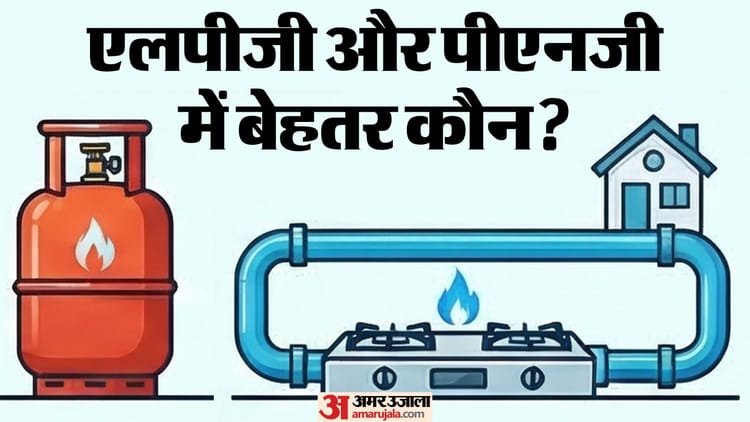
6. LPG and PNG – From where and how much do we import both types of gas?
In case of both LPG and PNG (Natural Gas), India is highly dependent on imports for its needs. Data from the Petroleum Planning and Analysis Cell (PPAC) and other trade databases reveal the reality of this dependency and supply chain.
The demand for LPG in India has increased very rapidly in the last decade. The main reason for this has been the government’s successful expansion of ‘Pradhan Mantri Ujjwala Yojana’ (PMUY) to provide clean cooking fuel in rural India. However, domestic production has not increased proportionately to meet this huge demand.
According to PPAC data for the first half of financial year 2025-26, India produced a total of 6,219 TMT of LPG, while consumption in the same period was recorded at 16,200 TMT. To bridge this huge gap, India had to import 10,731 TMT of LPG, which clearly shows that India imports 62 percent of its total LPG demand from abroad. In the year 2024, India was to become the world’s 5th largest importer by spending approximately $30.7 billion on importing petroleum gas. India’s LPG import supply chain is completely focused on West Asia. The table below shows the top petroleum gas suppliers in India.
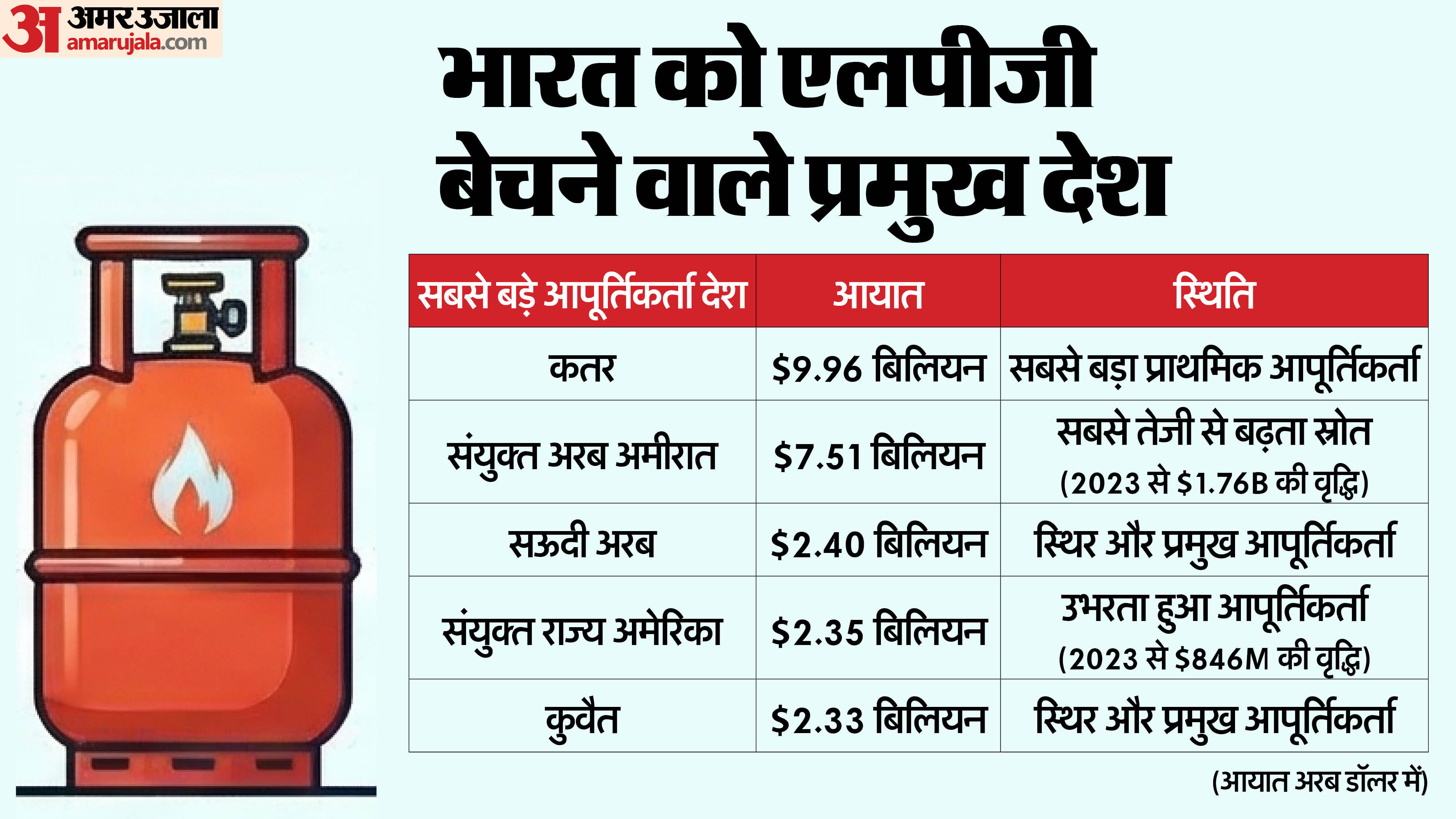
Source: OEC World 2024 / PPAC
-
natural gas
India, on the other hand, meets about 50 percent of its natural gas demand from domestic production, while the remaining 50 percent is met through imports of liquefied natural gas (LNG). According to 2023 data, India is the world’s fourth largest LNG importer, consuming 2.2 trillion cubic feet (Tcf) of natural gas. This volume of LNG imports is continuously increasing. Cumulative imports for the current financial year up to December 2024 were recorded at 28,586 MMSCM, showing a strong growth of 24.1 per cent over the same period last year. India’s position on the LNG import front is more secure than that of LPG as its sources are much more geographically diverse.
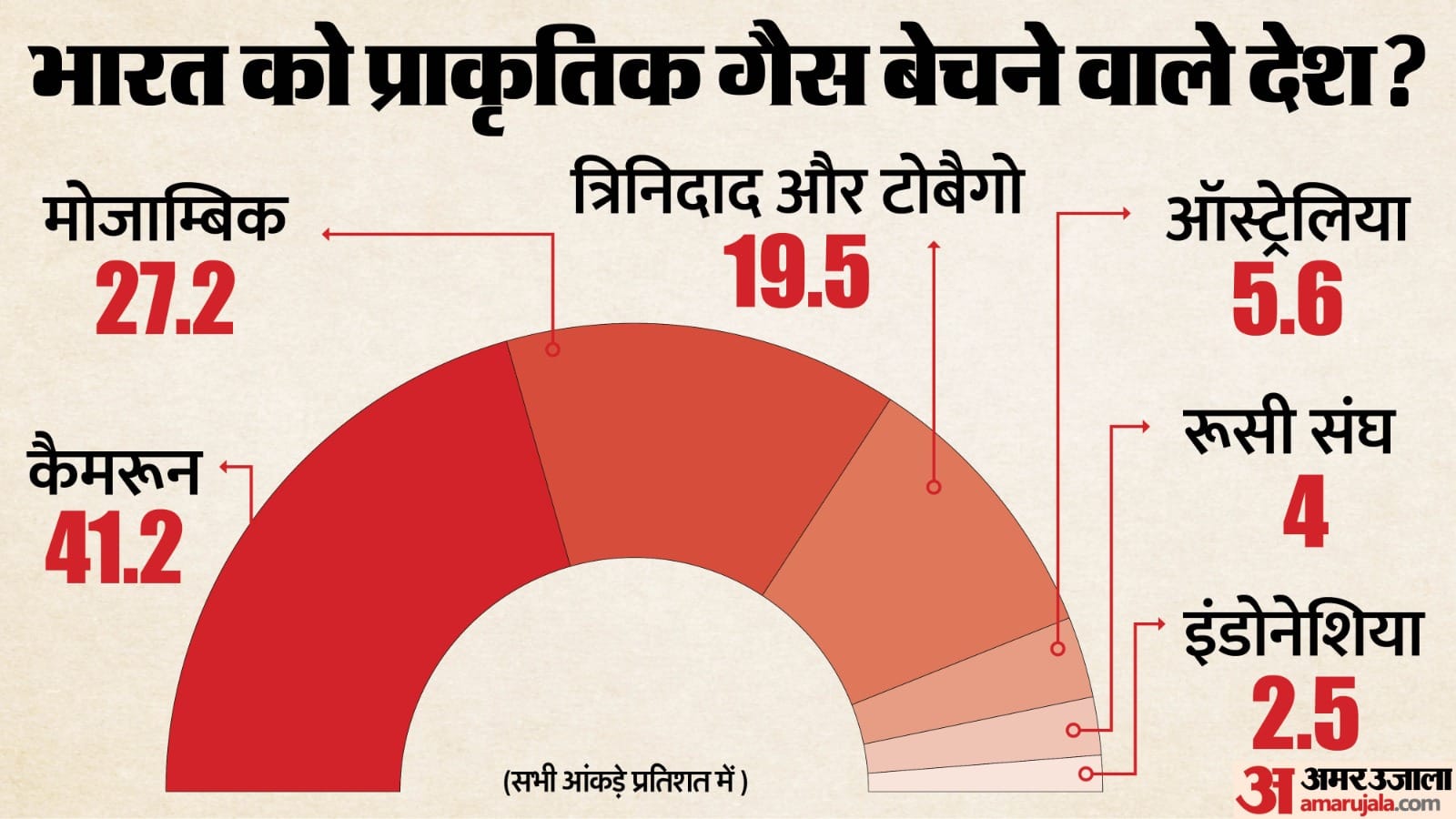
Source: WITS World Bank Trade Flows 2024
7. Which of the two fuels is safer from safety point of view?
In terms of safety, PNG is unquestionably a safer option than LPG. LPG is heavier than air; In case of leakage, it accumulates near the floor, posing a high risk of explosion. At the same time, methane, the main component of PNG, is lighter than air, which in case of leakage quickly rises up and evaporates into the atmosphere. Furthermore, LPG is stored at an extremely high pressure of eight bars in the cylinder, while PNG is distributed in domestic pipelines at a very low pressure of only 21 millibars.
8. Is using PNG cheaper than LPG?
Yes, from a consumer perspective, adopting PNG is more economically beneficial. According to industry estimates, PNG consumers pay about Rs 300 to Rs 400 less per month than LPG consumers for the same amount of cooking. The main reason for this is that PNG does not include the cost of bottling, commission of gas agencies and transportation of heavy cylinders by trucks. Also, PNG is meter-based, where the consumer pays only for the gas used.
9. What benefits will the expansion of the PNG network bring to logistics and the environment?
Traditional LPG distribution involves moving millions of heavy cylinders through trucks, which is a nightmare from a logistics point of view. PNG eliminates this entire logistics hurdle as the fuel flows directly to the kitchen 24/7 through underground pipelines. On the environmental front too, the combustion of PNG releases only 53.06 kg of carbon dioxide gas (CO2) per million Btu. Additionally, due to the high energy efficiency of the pipeline transmission network, its ‘well-to-burner’ carbon footprint is much lower than that of sea and road transportation of LPG.
10. What is PNGRB’s plan for India’s long-term energy security?
According to the Petroleum and Natural Gas Regulatory Board (PNGRB), the government aims to increase the share of natural gas in India’s energy mix from 6.4 percent by 2022 to 15 percent by 2030. City gas distribution (CGD) consumption is projected to increase by 2.5 to 3.5 times by 2030. For this, about 33,500 km of Natural Gas Pipeline (NGPL) network has been authorized to connect the entire country, out of which about 25,000 km has started operating. Since natural gas (LNG) is imported from diverse countries like the US, Australia and Africa, it will not allow India to become geopolitically hostage to any one geographical point like LPG.