Last Updated:
Tribes and Traditions: In the forests of Amazon, the sting of ‘Bullet Ant’ gives pain like a bullet wound. But the boys of Sater Mawe tribe have to wear gloves filled with these poisonous ants to become men. This is considered one of the most painful rituals in the world.
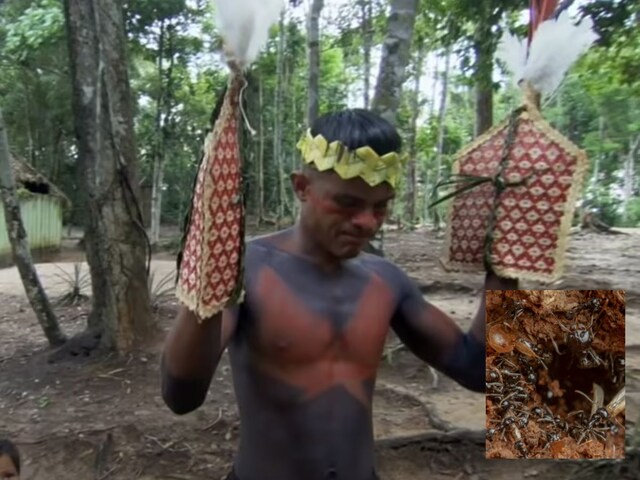

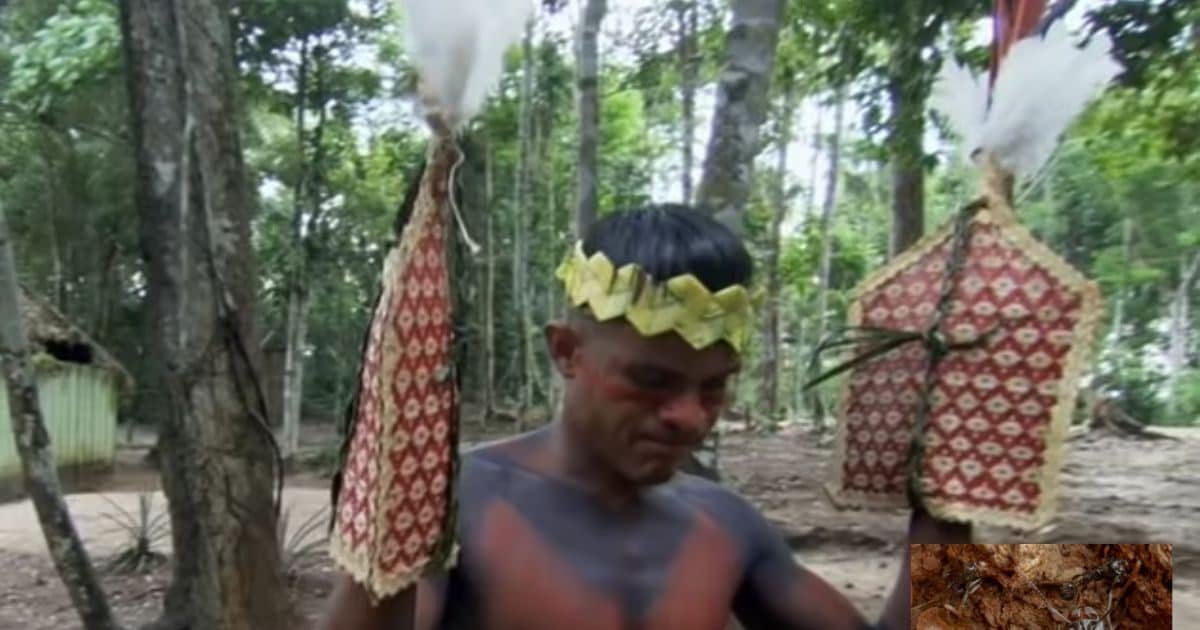
The elders of the tribe collect bullet ants and put them to sleep with a mixture of cashew leaves, so that they can be woven into gloves. (Photo- Social Media)
Even today, some such traditions are alive in the world’s most dense and mysterious Amazon forests, which give goosebumps to the modern society. Imagine having to put both your hands in a glove filled with hundreds of poisonous ants and each sting feeling like a gunshot. The heart will tremble just hearing this, but in ‘Satere-Mawe Tribes’, one of the oldest tribes of Brazil, boys have to go through this hell-like pain to become men. This ritual is called ‘Waumat’, where ‘Bullet Ant’ is used, whose sting can cause pain to the extent of driving a person crazy. Today we are going to tell you about this tradition under the ‘Tribes and Traditions’ series.
In fact, the bullet ant is one of the largest ant species in the world and its sting tops the ‘Schmidt Sting Pain Index’. Regarding its sting, experts say that it is the most painful compared to any other insect. Its poison directly attacks the central nervous system of the human being, causing not only pain like drilling in the bones, but also terrible tremors, sweating and sometimes hallucinations in the body. Doctor Sam Robinson says that this pain is not like a bee sting, which gets cured in 10 minutes, but it is felt deep inside the bones for 24 hours. But to prove their manhood, the young boys of the Satere-Maw tribes have to put their hands in those ants-filled gloves. Only the one who completes this is considered eligible to become the leader of the tribe.
Preparation is also scary
The preparation for this dreadful tradition is also very scary. The elders of the tribe first collect bullet ants and put them to sleep with a mixture of cashew leaves, so that they can be woven into gloves. These gloves are made in such a way that the stings of ants remain on the inside. When ants’ intoxication wears off, they become very aggressive. After this, boys above 12 years of age have to put their hands inside these gloves one by one. During the ritual, the boys dance in a circle to hide the pain and try to maintain their composure amidst the smoke. As soon as the poisonous ants inject their poison into the boys’ hands, they fall on the ground in pain and start writhing. Many times the hands and body parts of the boys become numb and they keep trembling for hours. Only the boys who complete this are considered men.
The Satere-Mawe tribe believes that the boy who bears this unbearable pain without crying or giving up is eligible to become the leader of the tribe in the future. According to him, this ritual prepares boys for the difficult challenges and sorrows of life. A man may have to go through this process several times in his lifetime so that he can prove his strength. For these tribes of Amazon, this tradition is not just a ritual but also a part of the fight for their survival. As the outside world and loggers are encroaching on their forests, these tribes are holding on to their cultural identity more strongly. This ritual reminds them that they can overcome any difficulty. Although, to the western world this may seem like torture, for the Satere-Mawe people it is a matter of honor and pride.
About the Author

Working as Senior Associate Editor in News18 Hindi (Network 18) Digital. Incharge of International, Web Story, Offbeat, Regional Cinema. Active in media for more than one and a half decade. Apart from Network 18, Times Group, …read more