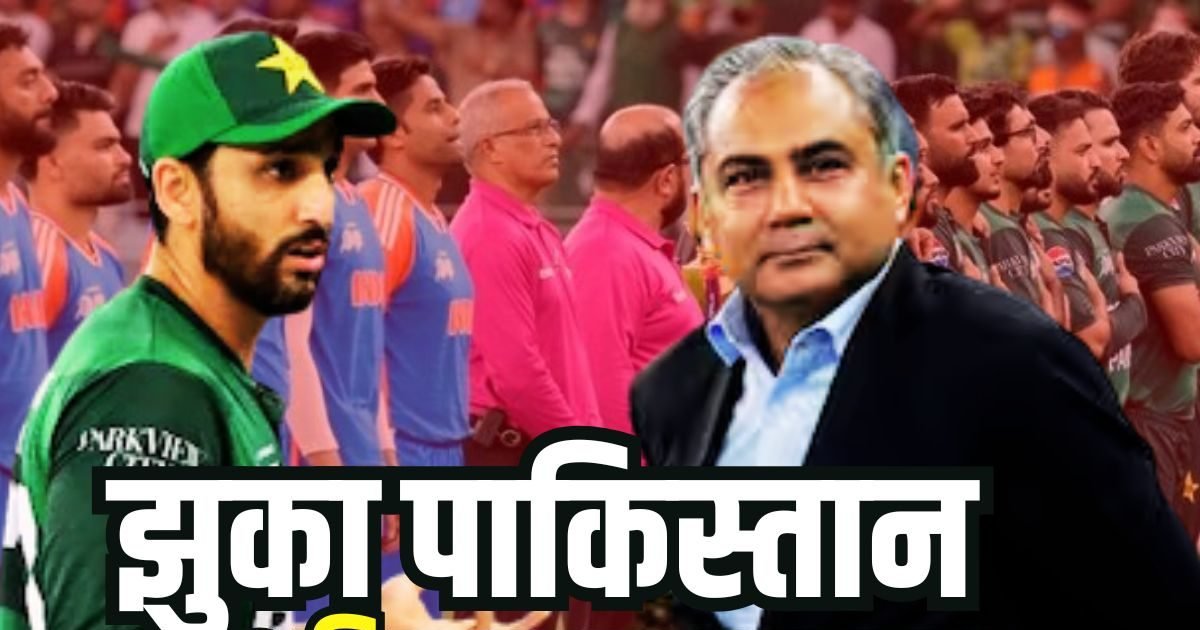
New Delhi. The controversy regarding the ICC T20 World Cup match to be played between India vs Pakistan has finally ended. On February 1, the news of Pakistan government boycotting the match against India came to light and by February 9, the news of the matter being settled came to light. The International Cricket Council (ICC) has accepted some demands of PCB and BCB in a three-party meeting held in Lahore on Sunday. This brings to an end the weeks of speculation and confusion regarding the 2026 T20 World Cup. Now this big match between India and Pakistan is just waiting for the formal announcement.
ICC deputy chairman and Singapore representative Imran Khawaja was chosen by the board as the arbitrator on this controversial issue. He is considered an influential figure in the ICC and holds voting rights on the board as an Associate Member Director. Mohsin Naqvi from PCB side and former player Aminul Islam from Bangladesh side participated in the meeting. Together, all three resolved this impasse and ended the uncertainty that had been going on for weeks.
1 February- The Pakistani government had announced that their team would play in the tournament, but not against India. Until the ICC received formal confirmation from the PCB, it had warned that there would be serious consequences if Pakistan withdrew from the match. However, Pakistan remained firm on its decision.
Later, Prime Minister Shehbaz Sharif also publicly reiterated this stance, making the boycott threat almost official. In less than ten days, the PCB’s tough stance softened. Reversing its decision on Monday, world cricket’s biggest rivalry restarted.
3 February – There were talks behind the scenes between ICC and PCB. ICC had intensified its efforts to organize this big match of Group A. ICC deputy chairman Imran Khawaja and Emirates Cricket Board chairman Mubashir Usmani held several calls and meetings with PCB chief Naqvi and PSL chief and Naqvi’s senior advisor Salman Naseer. These efforts had started a week ago. These became more intense after the tweet of Pakistani government.
5 February – Sri Lanka Cricket (SLC) President Shammi Silva wrote a letter to Naqvi urging him to reconsider his decision to abandon the match against India. Warned that this decision could cause serious economic crisis in Sri Lanka, because large-scale preparations have already been made for the contest. The PCB was also reminded of Sri Lanka’s past cooperation, which included touring Pakistan at a sensitive and challenging time.
6 February – According to reports, Naqvi assured his Sri Lankan counterpart that he would respond after consulting the Pakistan government.
7 February – Shortly after Pakistan’s nervous win in the T20 World Cup opener against Netherlands, a big revelation was made in a PTI report. PCB has formally written a letter to ICC demanding implementation of the ‘Force Majeure’ clause. This attempt was to justify the boycott of the match against India. The ICC was not satisfied with this and along with solid reasons it also asked for proof that all possible solutions had been tried.
8 February – Khawaja, appointed as the mediator, reached Lahore and held a meeting with Naqvi and Bangladesh Cricket Board (BCB) president Islam. The meeting lasted for more than five hours, in which Pakistan made several demands, although both sides did not publicly disclose the outcome.
9 February (morning) – After Sri Lanka, the Emirates Cricket Board also wrote a letter to the PCB urging it to reconsider its stand. The ECB warned that a boycott would “damage the game” and cause huge economic losses to many member countries, especially associate teams.
9 February (evening) – Naqvi once again met Prime Minister Shehbaz Sharif and informed him about the discussions held in Lahore and the appeals of BCB, SLC and Emirates Board. Sharif also spoke on phone to Sri Lankan President Anuar Kumar Dissanayake, who reiterated his request to play the match with Pakistan. The Pakistani government later clarified that the purpose of reversing the boycott decision was to “protect the spirit of cricket and support the continuity of this global game in all participating countries”.