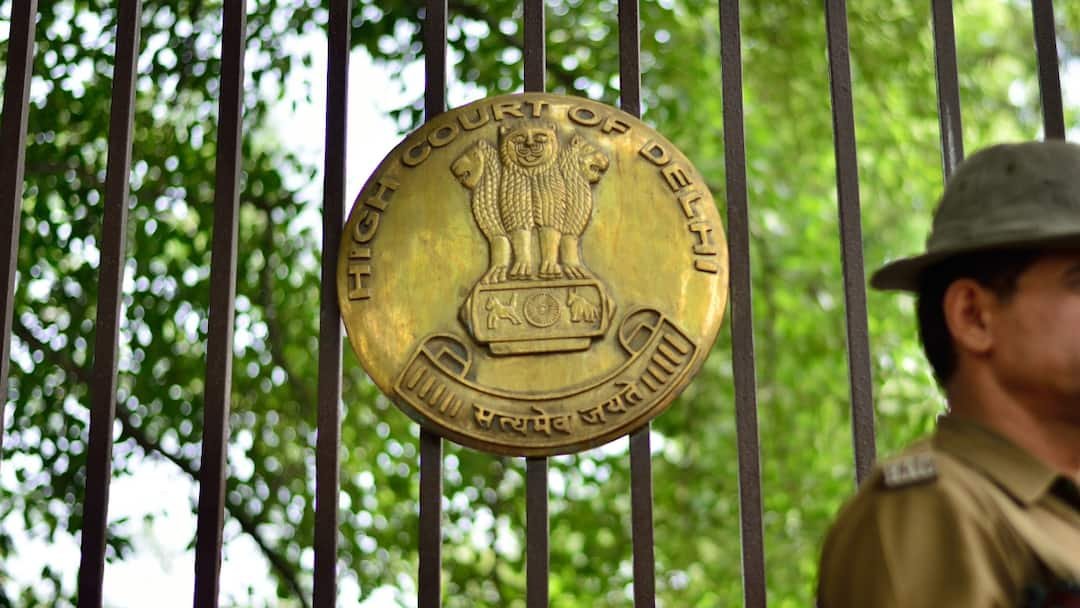
The Delhi High Court has taken a tough stance on a very serious and shocking lapse in the criminal justice system. A murder convict, who was sentenced to life imprisonment, remained absconding for 13 years after coming out on parole. But the administration was not even aware of it. Expressing deep displeasure on this matter, the bench of Justice Naveen Chawla and Justice Ravinder Dudeja has termed it as a ‘big failure of the system’.
This case is related to a criminal named Sonu. In 2009, he was found guilty of murder and sentenced to life imprisonment. Sonu challenged this decision in the High Court and in December 2010, his sentence was suspended for two months. According to the rules, he had to return to jail after two months, but he never returned.
Surprisingly, the High Court had also rejected his appeal in September 2012, yet the police and jail administration failed to catch him. Ultimately, he could be arrested on 13 October 2025, i.e. after about 13 years.
Court’s rebuke: ‘Credibility is becoming hollow’
Describing this delay as ‘extraordinary’, the High Court said that it is not just a human error, but is the result of a huge lack of coordination between the trial court, jail administration and police. The court commented, “If a criminal continues to roam outside for more than a decade even after being convicted, it destroys the confidence of the common man in the justice system.”
Strict guidelines issued for the future
To ensure that such a situation does not arise in the future, the High Court has implemented new and strict rules. If the sentence of any convict is suspended, then this information will have to be immediately given to the trial court, the concerned police station and the jail superintendent. The date of surrender will be fixed once the bail period is over. If the convict does not appear on time, the Jail Superintendent will immediately inform the trial court and the police will have to issue orders for immediate arrest.
The court has directed the Registrar General to send a copy of this order to all criminal courts, police commissioner and jail department so that the rules are strictly followed.